“Boycott Tractor Supply”: Viral Video Sparks Outrage After Trump Supporter Claims He Was Banned Over Political Views
A North Carolina hot dog vendor expected to spend the day serving customers outside a Tractor Supply store. Instead, he says he left with a message that quickly ignited a political firestorm online.
Jeff Hartman, owner of All American Hot Dogs and Catering, claims he was barred from selling food at Tractor Supply properties because he publicly supported Donald Trump. His accusation has triggered boycott calls, angry customer posts and difficult questions for a retailer whose brand is deeply connected to rural America.
However, one critical detail remains unresolved. Tractor Supply has not publicly confirmed Hartman’s explanation, and no evidence released so far independently establishes that his political views caused the company’s decision.
A routine vending day suddenly turns political
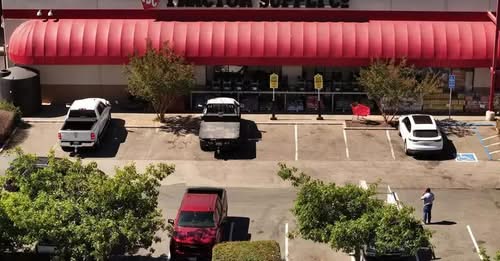
Hartman said he had set up his food business outside a Tractor Supply location in Spring Lake, North Carolina, when store management informed him that he could no longer operate on the company’s properties. According to Hartman, the instruction had come from regional management rather than simply from the local store.
In a video that quickly spread across social media, Hartman claimed he was told the decision was connected to posts on his Facebook page. He summarised the alleged reason in five words: “Because we are Trump supporters.”
Hartman described the situation as unfair and said he was disappointed by the company’s reported decision. His video did not include a written notice from Tractor Supply, an email from company officials or a recorded conversation confirming the political explanation.
That distinction matters. Hartman’s account may accurately reflect what he says he was told, but it remains his allegation unless Tractor Supply, another witness or documentary evidence confirms it.
Boycott calls spread faster than the facts
The claim quickly reached conservative social media accounts, where users called for customers to stop shopping at Tractor Supply. Several commenters argued that Trump supporters make up a significant part of the retailer’s customer base and accused the company of insulting the communities that helped build its business.
Some users compared the controversy to previous consumer boycotts involving companies accused of becoming too political. Others demanded that Tractor Supply investigate the situation, reverse the alleged ban or discipline whoever made the reported decision.
The outrage reflects how quickly an individual dispute can become a national brand crisis. A short video, an emotionally powerful allegation and an existing political divide can produce thousands of reactions before the public knows the company’s side of the story.
For longtime customers, the allegation also feels personal. Tractor Supply sells animal feed, farming equipment, tools, clothing, fencing, and other goods associated with rural and small-town life, making the company more than an ordinary retail name in many communities.
Tractor Supply’s history complicates the accusation
The claim that Tractor Supply punished someone for supporting Trump appears difficult to reconcile with the company’s recent public decisions. In June 2024, Tractor Supply responded to pressure from conservative customers by announcing major changes to its corporate policies.
The company said it would eliminate diversity, equity and inclusion roles, retire its existing DEI goals and stop sponsoring activities such as Pride festivals and voting campaigns. It also withdrew its carbon emissions goals while promising to focus its charitable activities more closely on agriculture, animal welfare, veterans and rural communities.
Tractor Supply said at the time that it had heard from customers who felt the company had “disappointed them.” The announcement was widely viewed as an effort to rebuild trust with conservative shoppers who believed the retailer had moved away from their values.
That history does not prove Hartman’s allegation is false. A decision made by a local or regional manager may not necessarily reflect corporate policy, but the company’s previous actions make the claim of an organization-wide anti-Trump position far from established.
Vendor access can involve more than politics
Businesses routinely control who may sell products or food on their private property. Decisions may involve insurance, permits, food safety requirements, customer complaints, contracts, store policies or disputes between vendors and local management.
Tractor Supply’s public vendor information says prospective product suppliers must meet formal compliance requirements, including agreements, ethical standards and insurance obligations. However, the company’s publicly available vendor pages do not clearly explain the rules governing independent food sellers operating outside individual stores.
Without a company explanation, it is impossible to know whether Hartman’s politics played a role or whether another disagreement influenced the decision. Treating the allegation as proven would therefore go beyond the evidence currently available.
The fair questions are straightforward. Was Hartman formally banned from every Tractor Supply property, who authorized the decision, and what written policy or incident prompted it?
A high-risk controversy for a rural retail giant
Tractor Supply describes itself as the largest rural lifestyle retailer in the United States. As of September 27, 2025, the company operated 2,364 Tractor Supply stores across 49 states and employed more than 52,000 people across its business.
That scale makes any politically charged accusation dangerous. A dispute involving one vendor and one location can quickly threaten customer trust across thousands of stores, especially when online users believe the issue represents a broader attack on their identity.
The company also knows the power of organized consumer pressure. Its 2024 policy reversal followed criticism from conservative activists, demonstrating that management pays close attention when political controversy begins affecting its relationship with shoppers.
Silence may protect the company from responding before it completes an investigation. Yet silence also leaves an information vacuum that social media users will fill with assumptions, anger and competing narratives.
What remains unverified
As of publication on July 28, 2026, the reports and official company materials reviewed did not include a public Tractor Supply response specifically addressing Hartman’s allegations. There was also no independently verified document showing that his support for Trump was the official reason for removing his vending access.
Hartman’s video establishes that he made the allegation. It does not, on its own, establish that Tractor Supply adopted a corporate policy against Trump supporters or that senior executives approved the alleged reasoning.
The next step belongs to Tractor Supply. A clear statement explaining whether Hartman was banned, why the decision was made, and whether political affiliation influenced it could either validate public concerns or prevent an unverified narrative from hardening into accepted fact.
Until then, the “Boycott Tractor Supply” campaign rests on an explosive but disputed claim. The outrage is real, the reputational danger is real, but the central allegation still requires evidence.