Elon Musk Brands UK Government “Treasonous and Illegitimate” in Explosive Immigration Attack
Elon Musk rarely enters a political argument quietly. On August 31, 2025, the billionaire owner of X plunged into Britain’s heated immigration debate with a statement designed to hit like a thunderclap.
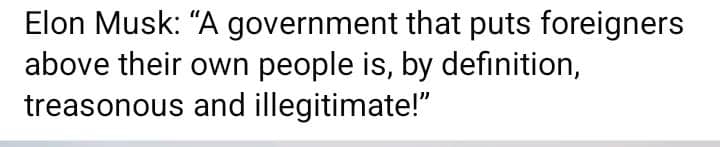
“A government that puts foreigners above their own people is, by definition, treasonous and illegitimate,” Musk wrote. He added that British citizens deserved leaders who represented their interests rather than what he described as shadowy foreign organizations. The post attracted millions of views and poured fresh fuel onto an already raging dispute over asylum seekers, local communities and the authority of British courts.
A hotel dispute became a national political storm

Musk’s attack did not appear out of nowhere. It followed a legal battle over the Bell Hotel in Epping, Essex, which the British government was using to accommodate asylum seekers.
Epping Forest District Council argued that housing asylum seekers at the property amounted to a significant change in how the hotel was being used and required planning permission. A High Court judge initially granted an injunction that would have forced the remaining asylum seekers to leave by September 12, 2025.
The Home Office and the hotel’s owner appealed. The Court of Appeal overturned the injunction, allowing approximately 138 asylum seekers to remain while the wider legal dispute continued.
Justice David Bean said the original judge had made “a number of errors in principle.” He also warned that treating demonstrations outside the hotel as a reason to close it could encourage further lawlessness. The court stressed that removing people from one location would simply create an urgent need to house them somewhere else.
The case had already become emotionally charged. Protests followed allegations that a resident of the hotel had sexually assaulted a teenage girl. The accused man denied the allegation and was awaiting trial at the time of the appeal ruling. Some demonstrations were peaceful, while others led to arrests, violence and injuries involving police officers.
That complicated background mattered. Residents were demanding safety, consultation and accountability, while the government was legally responsible for accommodating people whose asylum applications were still being considered.
Ministers rejected the claim that migrants came first
Education Secretary Bridget Phillipson was pressed repeatedly about whether asylum seekers’ rights were being placed above the interests of local residents.
“It is about a balance of rights,” Phillipson said. She argued that the government had a responsibility to examine asylum claims while also recognizing its duty to people living near the hotels. She promised that the government intended to close asylum hotels, but said the process had to happen in an orderly manner.
Her answer was quickly circulated online in shortened clips and political posts. Some accounts portrayed her response as an admission that foreign nationals had more rights than British citizens. Musk’s dramatic intervention followed that framing.
However, then Home Secretary Yvette Cooper directly rejected the accusation during a House of Commons debate. When Conservative lawmaker Esther McVey asked whether people arriving by small boats should take precedence over Epping residents, Cooper replied, “No, that is wrong.”
Cooper said the government wanted the Bell Hotel and other asylum hotels closed as quickly as possible, but argued that suddenly shutting one site without alternative accommodation would create disorder elsewhere in the system.
Asylum Minister Angela Eagle offered a similar explanation. She said the government appealed the injunction so hotels could be closed in a “controlled and orderly way,” rather than through a rushed legal scramble that might destabilize accommodation arrangements nationwide.
The distinction was far less exciting than Musk’s accusation, but legally important. The Court of Appeal was not declaring asylum seekers superior to British citizens. It was deciding whether an emergency planning injunction was an appropriate way to remove them from one hotel before the full case had been heard.
Musk’s words turned legal complexity into political dynamite
Opposition politicians still accused the Labor government of ignoring local anger.
Conservative leader Kemi Badenoch said communities should not “pay the price” for Labor’s handling of illegal immigration. Epping Forest District Council leader Chris Whitbread expressed deep disappointment after the injunction was overturned, although he also called for calm and emphasized his support for peaceful protest.
Musk went much further. By using words such as “treasonous” and “illegitimate,” he transformed a complicated argument about planning law, asylum duties and hotel capacity into a sweeping attack on the democratic standing of Britain’s elected government.
His statement also blurred several different categories. An asylum seeker is someone asking a government for protection. That claim can later be accepted or rejected, but the person is not automatically proven to be unlawfully present simply because the application remains unresolved.
The government’s hotel policy was unpopular, expensive and controversial. Even ministers admitted the system needed major reform. At the end of June 2025, more than 32,000 asylum seekers were living in hotels, although that remained below the September 2023 peak of more than 56,000. Labor pledged to end hotel use before the close of the parliamentary term.
The Bell Hotel litigation also continued after Musk’s post. A permanent injunction was later rejected, and in March 2026 the Court of Appeal found no sufficient basis to revive the council’s challenge. The judges considered the limited planning harm, the government’s continuing need for accommodation and the council’s decision not to use ordinary planning enforcement procedures.
Musk’s declaration therefore captured genuine public frustration, but it did not accurately summarize what the courts or ministers had said. The government was not formally announcing that foreigners outranked citizens. It was arguing that asylum seekers could not simply be removed from one building without considering the law and what would happen next.
That explanation may lack the fireworks of an all-caps social media post. Yet in this dispute, the dull details were the difference between a political slogan and the verified story.