Trump’s $22.5 Billion Dulles Overhaul Promises a Better Airport, but Travelers Could Pay the Price.
The people movers may finally disappear, but Dulles passengers could face years of construction, heavier airport debt, expensive parking and new costs hidden behind promises of private financing.
American air travelers already pay for nearly every inconvenience surrounding a flight. They pay to check a bag, choose a seat, park a car, buy airport food and sometimes change a reservation. At Washington Dulles International Airport, they may soon help finance one of the most expensive airport makeovers in the country.
President Donald Trump has announced a $22.5 billion transformation of Dulles Airport, promising new concourses, modern security checkpoints, a larger customs facility and an expanded AeroTrain system. The project would also retire the airport’s infamous mobile lounges, known to generations of frustrated travelers as the “people movers.”
The proposal addresses genuine problems. Concourses C and D feel dated, connections can take too long, and the mobile lounges belong to another era. Yet the announcement leaves Americans with an uncomfortable question: how much will fixing decades of poor planning eventually cost the passengers who have already endured it?
Officials say airlines and airport-generated revenue will finance much of the project. That sounds reassuring until we remember where airline and airport revenue originates. It comes from tickets, parking, concessions, terminal fees and passengers purchasing their way through the system.
The $22.5 billion promise still lacks crucial answers.

The administration presented gleaming architectural renderings, but renderings do not reveal interest costs, passenger charges or construction delays. They do not show travelers dragging luggage around blocked corridors or families paying higher parking rates to service airport debt.
The U.S. Department of Transportation says the redevelopment will create more than 5 million square feet of new or renovated space. Officials also predict thousands of jobs, billions of dollars in economic opportunity and hundreds of additional flights.
Those claims may eventually prove accurate, but the announcement did not include the detailed financial and operational studies needed to evaluate them. We have a bold vision and an enormous price tag. We do not yet have a complete public accounting of how the vision becomes reality.
Airport-generated money still comes from ordinary people.
Officials have emphasized that the Dulles renovation will rely on municipal bonds, airline participation and possible public-private partnerships rather than a giant federal appropriation. That distinction matters, but it does not make the project free.
Municipal bonds are loans. Investors provide money upfront, and the airport repays them with interest over many years. The Metropolitan Washington Airports Authority says revenue from its aviation enterprise secures its airport bonds.
That revenue can come from airlines, parking, concessions, rental cars, facility charges, and other airport operations. Airlines can then recover their expenses through fares and fees. Restaurants and retailers can pass higher rents into already inflated airport prices. We should therefore treat “airport-generated revenue” as a funding description, not a promise that passengers will remain financially untouched.
The airport authority has no taxing power, according to its financial and governance disclosures. That limits its options. If construction costs rise or passenger growth weakens, the authority cannot simply collect a local tax to close the gap. It must find money within the aviation system, secure additional outside investment or pursue government support. Every option comes with conditions, costs or risks.
Travelers could pay more before they experience anything better.
Americans have heard this infrastructure promise before: accept disruption and higher costs now because something magnificent will arrive later. The problem is that airport projects rarely arrive as one clean, finished package. Dulles will remain open while crews construct tunnels, train connections, concourses, baggage systems, security areas and parking facilities around active passengers.
That means years of temporary walkways, changing pickup zones, blocked entrances, confusing signs and construction noise. Travelers could experience the inconvenience immediately while waiting years for the promised benefits.
Dulles handled a record 29.01 million passengers in 2025, an increase of 6.4% from the previous year. International traffic reached 10.53 million passengers, according to the Metropolitan Washington Airports Authority. The airport expects further growth. More passengers will therefore move through Dulles precisely when major parts of it may become construction sites.
Officials have not announced a firm completion date for the entire overhaul. Transportation Secretary Sean Duffy said construction could begin in spring 2027, while the airport authority says the transformation will unfold in phases over several years. “Several years” can become a dangerously flexible phrase in a project costing $22.5 billion.
The people movers became a monument to delayed action.
Dulles’ mobile lounges were not always absurd. When the airport opened in 1962, they represented a daring attempt to reduce walking and protect passengers from weather, noise and jet exhaust.
Each lounge could carry as many as 102 passengers between the terminal and aircraft. Travelers entered Saarinen’s beautiful terminal, walked a short distance and boarded a climate-controlled vehicle for the trip across the airfield.
The idea belonged to a smaller aviation system. Dulles served only 52,846 passengers between its opening and the end of 1962. The airport now processes tens of thousands of passengers on a busy day.
Instead of disappearing as traffic increased, the vehicles remained embedded in airport operations. Dulles currently uses 19 mobile lounges and 30 plane mates. Mobile lounges average about 630 trips per day, while plane mates average approximately 150.
For passengers, the experience can feel like an unnecessary extra boarding process. Travelers crowd into a slow-moving vehicle, wait for doors to close and cross an active airfield before reaching the terminal or concourse.
A November 2025 accident made the system look more troubling than quaint. A mobile lounge struck a Concourse D dock, sending 18 passengers to hospitals with non-life-threatening injuries, according to the Associated Press.
The retirement announcement is therefore welcome, but it also exposes how long Dulles allowed an increasingly unpopular system to survive. Americans are now being presented with a $22.5 billion solution to problems that airport planners have discussed for decades.
The people movers will not disappear anytime soon.
The announcement creates the impression that Dulles will simply park the mobile lounges and switch on a new train. The operational reality is far more complicated. The existing AeroTrain connects the main terminal with Concourses A, B and C. It does not directly serve Concourse D, where United Airlines operates numerous flights. Passengers must walk from Concourse C or use a mobile lounge.
Plane mates also transport international arrivals along secure routes to customs processing. Federal rules prevent those passengers from mixing with domestic travelers or the general public before completing immigration and customs procedures.
Dulles cannot retire these vehicles until it builds replacement train stations, walkways and secure international corridors. Any delay affecting those projects could extend the life of the mobile lounges. The airport must also preserve backup transportation during AeroTrain outages.
Eliminating mobile lounges without a reliable alternative could leave passengers facing longer walks, crowded buses or missed connections. We may therefore spend years hearing that the people movers are “being eliminated” while still standing inside one, waiting for it to move.
Concourses C and D reveal decades of temporary thinking.
Concourses C and D present another embarrassing chapter in the Dulles story. The airport constructed them as interim facilities during the 1980s, yet they remain central to United Airlines’ hub operations more than four decades later.
The joined concourses now cover approximately 923,000 square feet and contain 58 aircraft parking positions. They handle a substantial share of the airport’s domestic and international connections.
Their age shows. Travelers frequently encounter narrow corridors, limited seating, crowded gate areas, and an environment that feels disconnected from the architectural ambition of the main terminal.
The new plan would eventually eliminate the existing C and D structures and replace them with larger, permanent concourses. That represents necessary progress, but it will create a difficult construction puzzle.
United cannot surrender dozens of gates while waiting for replacements. Dulles must build new capacity, shift flights, alter passenger routes, and demolish old facilities without paralyzing the airport. A mistake in phasing could create gate shortages and tighter connections. A delayed concourse could force airlines to continue using facilities that officials have already publicly condemned.
A massive parking garage could bring massive parking bills.
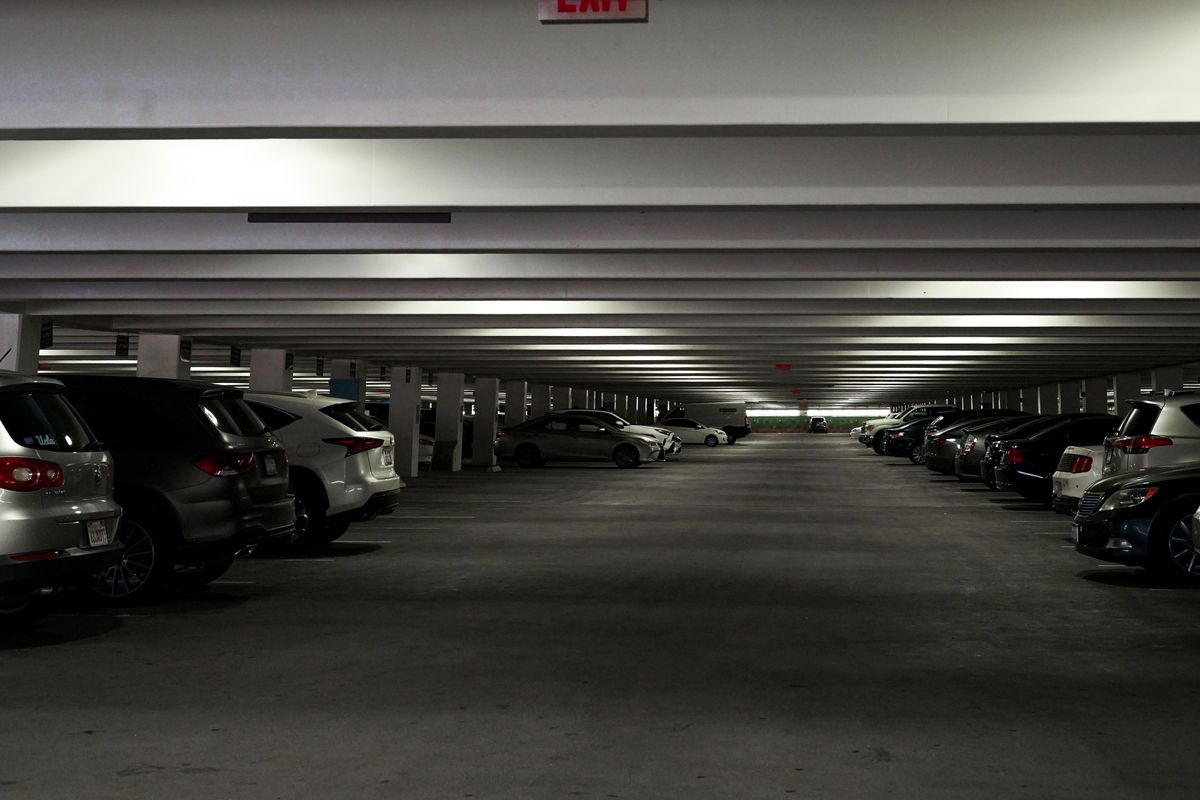
One of the most striking proposals is an above-ground garage near the terminal with space for approximately 32,000 vehicles. Recent airport documents list about 18,400 revenue-producing public parking spaces at Dulles. Officials have not clarified whether the proposed garage would add 32,000 spaces, replace existing capacity or combine several parking operations into one structure.
The difference is important. A 32,000-space garage would require enormous amounts of concrete, steel, lighting, security, ventilation and ongoing maintenance. It would also concentrate traffic near the terminal.
Dulles already contains 198 lane miles of airport roads. Adding a huge garage without equally ambitious traffic improvements could move congestion closer to the check-in hall rather than eliminate it. Parking also produces dependable airport revenue. Once Dulles carries billions of dollars in additional debt, the temptation to increase daily parking rates will not disappear.
Drivers could end up paying more for the privilege of reaching a closer garage, particularly during holidays and peak travel periods. Meanwhile, passengers who cannot afford higher rates may still rely on distant lots and shuttle buses.
The Silver Line gives passengers a rail alternative, but it does not serve every traveler conveniently. Families with small children, people carrying heavy luggage, and passengers arriving from communities outside the Metrorail system will continue to depend heavily on cars.
United Airlines could gain even more power at Dulles.
United Airlines has a clear reason to support the project. Dulles is one of its major hubs, and new gates could support more routes, larger aircraft and additional connecting passengers.
The airline will also gain more lounge space, including plans for one of the world’s largest United Polaris lounges. Concourse E, scheduled to open later in 2026, will add 14 United gates with direct AeroTrain access.
The 435,000-square-foot facility will include jet bridges, larger seating areas, 46,000 square feet of concessions and a 40,000-square-foot airline club, according to the airport’s Dulles Next program.
These improvements may help travelers, but United’s growing physical presence could strengthen its control over the airport’s most desirable gates and connecting traffic. A dominant carrier can support frequent service and international expansion. It can also weaken competitive pressure on fares when travelers have fewer practical alternatives.
Officials have not explained how new gates will be allocated among United and Dulles’ other carriers. Nor have they disclosed whether participating airlines will receive preferential terms in exchange for financing construction.
Passengers deserve those details before celebrating hundreds of promised flights. More flights do not automatically produce lower fares if one airline controls much of the network.
The plan does not add runway capacity.
The Dulles makeover will rebuild much of the passenger experience, but it will not add or expand runways. Dulles currently has four runways, including two that measure 11,500 feet. The airport has enough land for extensive development, and its long-range planning has previously contemplated a fifth runway. However, construction of that runway remains unscheduled.
This creates a basic tension. Officials promise hundreds of new flights, additional gates and growing passenger totals without adding runway capacity under the announced project.
New concourses can reduce gate congestion, but they cannot prevent every weather delay, taxiway conflict or air traffic bottleneck. More aircraft using the same runway system could produce new pressure during peak periods.
Dulles may handle the growth efficiently, but officials have not released enough operational analysis to support the most optimistic claims. Americans should not assume that a beautiful gate area will make an aircraft take off on time.
The international arrival experience remains a major risk.
Dulles processed a record 10.53 million international passengers in 2025. For those travelers, the proposed customs improvements may become the project’s most valuable component. The plan calls for a walkable connection to a new, larger U.S. Customs and Border Protection facility.
This could eliminate the awkward plane-mate journey that greets many passengers after a long international flight. However, customs facilities involve more than architecture. They require federal staffing, inspection technology, baggage systems, and secure separation between arriving international passengers and the public.
A larger hall will not solve slow processing if the government does not provide enough officers. Faster baggage belts will not help if luggage arrives before passengers clear immigration or if connecting travelers must navigate long secure corridors.
The airport can construct an impressive building. It cannot independently control federal staffing levels, immigration procedures or future government shutdowns.
The historic terminal may survive while its surroundings become unrecognizable.
The administration has promised to preserve Eero Saarinen’s main terminal, one of America’s most recognizable aviation buildings.
That is a necessary safeguard. The curved roof and glass exterior give Dulles an identity that newer airports often lack. Destroying the terminal would trade a genuine landmark for another enormous complex of steel, glass and retail space.
Preservation will also complicate construction. The airport authority must consult the National Capital Planning Commission and the Advisory Council on Historic Preservation before making major exterior changes.
Additional projects may require Federal Aviation Administration approval, environmental review and congressional action. Every review can alter the design, delay construction or increase costs. The Trump administration reviewed more than 30 proposals before selecting the announced concept.
Yet conceptual selection does not equal final engineering approval. The renderings represent what officials hope to build. They do not guarantee what passengers will eventually receive.
A $7 billion modernization plan suddenly became a $22.5 billion vision.
Before this announcement, Dulles already had an approximately $7 billion modernization program. The new proposal increases the scale to more than $20 billion. That dramatic jump deserves close scrutiny.
Officials say the administration’s plan accelerates and expands work already contained in the Dulles Master Plan. However, tripling the scale of a capital program can also multiply borrowing costs, construction risks and management challenges.
Large projects frequently encounter labor shortages, material inflation, design changes and contractor disputes. Even a small percentage increase becomes enormous when applied to $22.5 billion.
A 10% overrun would equal $2.25 billion. That amount alone would exceed the cost of many major public infrastructure projects. Officials have not announced who will absorb overruns. Without firm guarantees, passengers, airlines and future public budgets could all face pressure.
What Americans should demand before the digging begins
Dulles needs modernization. The mobile lounges should retire, Concourses C and D should be replaced, and international passengers deserve a direct route to customs. Necessity, however, should not protect a $22.5 billion project from scrutiny.
Before major construction begins, officials should disclose an itemized budget, a realistic schedule and the financial commitments of each participating airline. They should explain how much debt the airport will issue and whether parking rates, facility fees or airline charges are expected to rise.
They should also publish measurable passenger goals. How much time will the new train save? How quickly should baggage arrive? How many additional travelers can customs process per hour? How will construction affect connections? Without those benchmarks, nearly any completed building can be declared a success.
Dulles has spent decades layering new systems over old decisions. Temporary concourses became permanent. Futuristic people movers became daily frustrations. The AeroTrain arrived without directly serving one of the airport’s busiest concourses. Now Americans are being offered the most expensive correction yet.
The final result may become a remarkable international gateway. But before that happens, travelers could spend years navigating construction while paying higher prices inside an airport financed by their own fares, fees, meals and parking receipts. The people movers may finally disappear. The bill will not.