Fauci’s Silence Reopens America’s Pandemic Wounds as States Look Beyond Biden’s Pardon
Americans who lost businesses, jobs, classroom time, and final moments with loved ones are once again watching Washington demand trust while offering few answers. Dr. Anthony Fauci spent the pandemic speaking with extraordinary confidence. He appeared at White House briefings, testified before Congress, and became one of the most influential voices shaping how Americans understood COVID-19.
When senators finally questioned him about recently released records, however, that familiar voice nearly disappeared. Fauci invoked the Fifth Amendment more than 100 times during a contentious Senate hearing on July 29, 2026. He declined to answer questions about COVID-19’s origin, federal research funding, pandemic restrictions, and entries in his personal diary. He even refused to answer questions about the date, his tie, and the color of the carpet.
His silence may prove legally defensible. Politically and morally, it is devastating. Millions of Americans were ordered to rearrange their lives around government health guidance. Parents watched children fall behind. Small-business owners burned through savings. Workers faced vaccine requirements. Nursing-home residents spent months separated from their families.
Funerals were restricted, while powerful institutions often appeared to operate under different rules. Those Americans were repeatedly told to trust the experts. Now, one of the most powerful experts of that period is refusing to explain himself under oath.
A Government Voice That Suddenly Had Nothing to Say
Fauci appeared under subpoena before the Senate Homeland Security and Governmental Affairs Committee. The committee’s official hearing record identifies him as the former director of the National Institute of Allergy and Infectious Diseases, an agency he led from 1984 until 2022.
Committee Chairman Rand Paul questioned Fauci about federal funding connected to research in China, possible gain-of-function experiments, and government discussions about the origin of COVID-19. Paul also confronted him with material from 1,141 pages of Fauci’s pandemic-era diary. Fauci did not meaningfully address the accusations. Instead, he repeated that he was declining to answer on the advice of counsel under the Fifth Amendment.
According to Reuters, Fauci refused to answer more than 100 questions. Fox News counted 111 invocations. The spectacle left Americans with an unavoidable question: How could the official who once seemed willing to appear on every television network now be unable to answer basic questions before Congress?
Fauci said he believed the hearing was designed to trap him. He accused Paul of pursuing an “unhinged” campaign to place him behind bars. His attorney, David Schertler, characterized the accusations against him as false and politically motivated. Those explanations may describe why Fauci’s lawyers recommended silence. They do not repair the public damage created by it.
Americans Remember What Pandemic Policies Cost Them
For Washington, the pandemic debate often sounds like an argument over emails, scientific definitions, and congressional procedure. For ordinary Americans, it was brutally personal. Restaurant owners watched empty dining rooms drain their bank accounts. Salon operators, bartenders, musicians, hotel workers, and independent contractors suddenly found their livelihoods classified as nonessential.
Some businesses survived by taking on debt. Others never reopened. Parents attempted to manage remote classes while keeping their own jobs. Children stared at computer screens instead of teachers. Students missed sports, graduations, friendships, and academic support that could not simply be restored after restrictions ended. Families were separated from elderly relatives in hospitals and nursing homes.
Some people said goodbye through windows or electronic devices. Others never received a final goodbye at all. Workers also faced difficult decisions surrounding vaccination requirements. Some accepted the rules reluctantly. Others risked their careers because they objected to the mandates or believed their individual medical circumstances were being ignored.
Fauci did not personally issue every closure, mandate, or local restriction. Presidents, governors, health departments, school boards, and private employers made their own decisions. Yet Fauci was one of the nation’s most visible advocates for aggressive measures, and his public recommendations carried enormous political authority. That influence is precisely why Americans expected direct answers.
The Fauci Diary Raises New Questions About Public Trust
Paul released more than 1,100 pages of Fauci’s diary shortly before the hearing. He argues that the entries reveal a troubling gap between Fauci’s private discussions and his public presentation of the pandemic.
The diary reportedly chronicles Fauci’s meetings, media appearances, and conversations during the most chaotic years of the crisis. Critics claim some entries show that he understood uncertainties and competing theories that received far less attention in his public statements.
Fauci disputes that interpretation. A review provided by his representative said the entries were consistent with his earlier testimony, interviews, and published positions. His defenders also argue that private scientific discussions naturally include possibilities that officials are not yet prepared to present as conclusions.
That defense does not eliminate the trust problem. Americans were not merely listening to a scientist thinking aloud. They were responding to an official whose statements influenced restrictions, workplace rules, and national attitudes toward dissent.
When government officials speak with certainty in public while acknowledging greater uncertainty in private, people naturally feel manipulated. When the same officials later decline to explain those differences, suspicion grows even faster.
Questions About Wuhan Funding Refuse to Disappear
The most serious dispute involves research connected to the Wuhan Institute of Virology. Paul has long accused Fauci of misleading Congress about whether the National Institutes of Health funded gain-of-function research in Wuhan through EcoHealth Alliance. Fauci has denied lying and argued that the disputed experiments did not meet the federal government’s regulatory definition of gain-of-function research.
That distinction became one of the most frustrating features of the entire debate. Americans heard elected officials and scientific authorities use the same words while apparently assigning them different meanings. The disagreement was never merely academic. It involved taxpayer money, laboratory oversight and research conducted in the same Chinese city where the first known COVID-19 outbreak emerged.
The origin of the virus remains unresolved. Some American intelligence agencies have favored a laboratory-related incident, while others have favored natural transmission. Confidence levels have frequently been limited, and China’s lack of transparency has made definitive conclusions difficult.
None of this proves that Fauci committed a crime or caused the pandemic. It does, however, justify careful questioning about what federal officials funded, what risks they understood, and how honestly they communicated those risks. Refusing to answer those questions ensures that the suspicion will continue.
Biden’s Sweeping Pardon Made the Distrust Worse
Former President Joe Biden granted Fauci a full and unconditional pardon on January 19, 2025. The pardon covered possible federal offenses connected to Fauci’s government service between January 1, 2014, and the date of the pardon.
The official Justice Department document was extraordinarily broad. It covered conduct related to Fauci’s service as NIAID director, a member of the White House coronavirus teams and chief medical adviser to the president.
Biden said the pardon was intended to protect Fauci from unjustified, politically motivated prosecution. He did not say Fauci was guilty of a crime. That distinction did little to calm public suspicion. A pardon issued before charges are filed creates an obvious appearance problem. Americans reasonably ask why a government official requires sweeping protection when no wrongdoing has supposedly occurred.
Legally, accepting a pardon does not prove guilt. Politically, however, the pardon made Fauci appear protected by the same Washington system that Americans already believed would never hold its most powerful figures accountable.
The pardon covered a decade of potential federal conduct without identifying a specific accusation, prosecution or offense. It provided legal security while leaving the public with uncertainty.
State Investigators Are Moving Into the Gap
Biden’s pardon applies only to federal offenses. It cannot erase violations of state criminal law, prevent state investigations or automatically defeat private civil claims. The nonpartisan Constitution Annotated confirms that presidential pardon authority does not extend to state crimes or private civil wrongs.
That limitation has attracted the attention of Republican officials in Florida, Louisiana, and Alabama. Florida Attorney General James Uthmeier announced that his office would examine possible violations of Florida law. His representatives said the inquiry would focus on what Fauci knew, when he knew it, and whether alleged deception produced physical or financial harm for Floridians.
Louisiana Attorney General Liz Murrill followed with her own announcement. She referred to Fauci’s earlier deposition in litigation involving Louisiana and Missouri, accusing him of claiming not to remember important details that may now appear in contemporaneous records.
Murrill said Louisiana would investigate whether any offenses could be pursued in state court. The Louisiana attorney general’s office has also sought information from Congress concerning possible state violations connected to the pandemic response.
These announcements represent investigations, not convictions. No cited state court has found Fauci guilty of a crime, and no announced indictment has established that he violated state law. Still, the investigations demonstrate that Biden’s pardon did not end the controversy. It merely redirected it.
Tommy Tuberville Promises a Relentless Alabama Fight
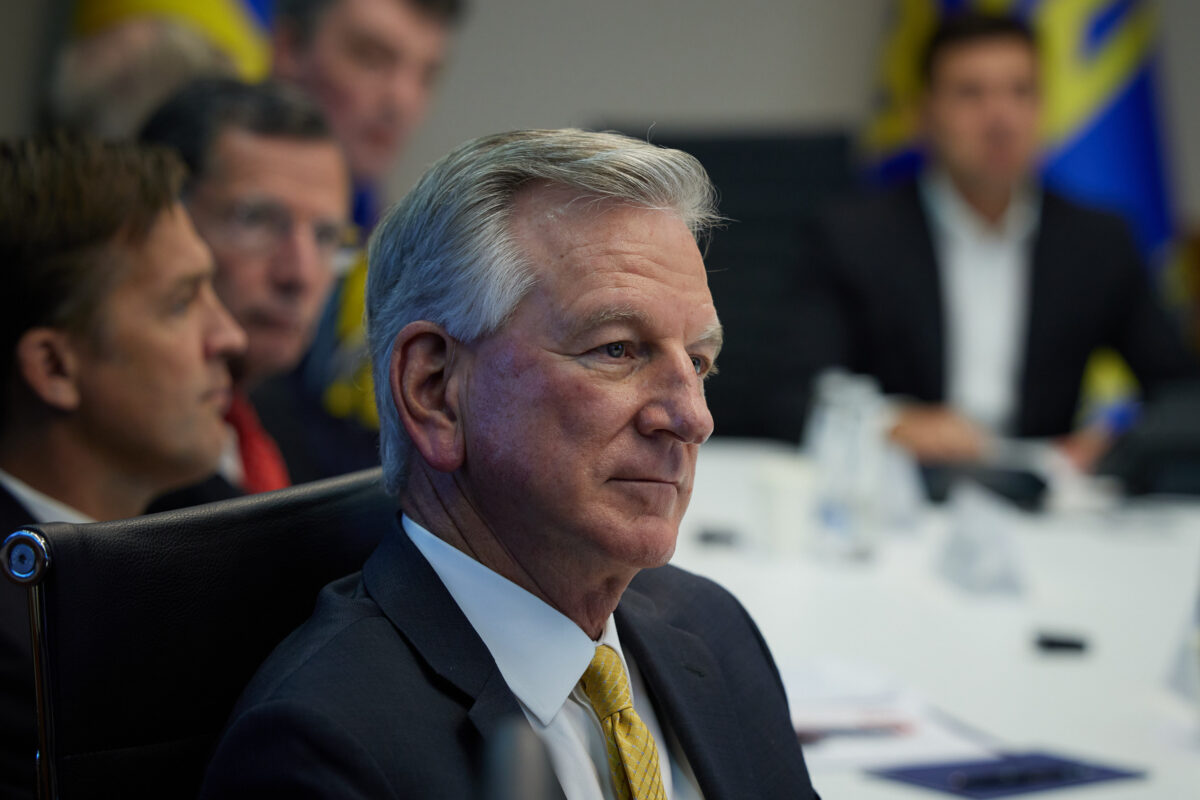
Sen. Tommy Tuberville has adopted the most aggressive position. Tuberville, who is running for governor of Alabama, said he would explore possible state action against Fauci if elected. He also encouraged Alabama families to pursue civil lawsuits related to pandemic deaths and injuries.
His language reflected the anger that still exists among Americans who believe government restrictions destroyed livelihoods while officials escaped accountability. Tuberville promised to keep Fauci facing legal proceedings if prosecutors or private plaintiffs could establish viable cases. The senator’s accusations remain allegations. He has not publicly identified a completed Alabama prosecution or a court judgment finding Fauci responsible for the deaths he referenced.
However, his message is politically powerful because it speaks to a widely shared frustration: ordinary Americans can face devastating consequences for a single mistake, while senior officials can make decisions affecting millions and later describe accountability efforts as partisan attacks. That double standard, real or perceived, is poisoning public confidence.
State Prosecution Would Face Serious Obstacles
Anger alone cannot produce a lawful conviction. A state prosecutor would need to identify a specific statute Fauci allegedly violated. The state would then need to prove jurisdiction, criminal intent, causation, and every other element of the offense beyond a reasonable doubt.
Statutes of limitations could block older claims. Federal immunity doctrines could protect actions taken within the scope of official duties. Federal law could preempt certain state theories. Prosecutors would also need to show why conduct by a federal official in Washington created criminal liability in a particular state.
Civil plaintiffs would face similar problems. They would need standing, a timely claim, a legally recognized duty, and evidence directly connecting Fauci’s conduct to a specific injury. A family’s suffering, however genuine, does not automatically create a successful lawsuit against a federal adviser.
Courts require proof, not political outrage. That is why state officials must do more than announce investigations on television or social media. They must identify evidence, applicable laws and a credible path through the courts.
The State Threat Strengthens Fauci’s Fifth Amendment Defense
The state investigations create an uncomfortable contradiction for Fauci’s critics. Republican senators argue that Biden’s pardon removed Fauci’s federal criminal exposure and therefore weakened his basis for invoking the Fifth Amendment. At the same time, Republican state officials insist that he remains vulnerable to prosecution outside the federal system.
Both positions cannot be treated as though the legal risk has disappeared. The Fifth Amendment protects a witness from being compelled to provide testimony that could be used in a criminal case or lead investigators to other incriminating evidence. The Supreme Court explained this principle in Kastigar v. United States.
If Florida and Louisiana are actively examining possible charges, Fauci’s testimony could potentially supply admissions, investigative leads, or contradictions. His lawyers can therefore argue that the threat of state prosecution provides a reasonable basis for remaining silent. That does not necessarily justify refusing every question.
A court may eventually need to determine whether Fauci properly invoked the privilege in response to questions that appeared incapable of incriminating him. His blanket silence may have been legally cautious. To Americans who lived under policies promoted in his name, it looked like contempt for the public’s demand for answers.
A Contempt Vote Could Push the Fight Into Court
Paul has scheduled a committee vote on whether to hold Fauci in contempt of Congress. If the committee approves the measure, additional Senate action and a possible Justice Department referral could follow.
A contempt vote would not automatically prove that Fauci’s Fifth Amendment claims were invalid. It would begin another legal dispute over the subpoena, the scope of the questions, and the existence of genuine state or post-pardon criminal exposure.
Congress could also seek to compel testimony through an immunity process. Under 18 U.S.C. § 6005, Congress may pursue a court-backed immunity order that prevents compelled testimony and evidence derived from it from being used against the witness. The legal conflict could therefore follow several paths.
America’s Pandemic Trust Has Been Shattered
The Fauci confrontation is bigger than one hearing. Americans were asked to surrender normal life during an emergency. Many complied because they believed officials were acting honestly with the best available evidence. When guidance changed, they were told that science evolves. Science does evolve. Public officials must still explain what they knew, what they did not know, and why they made recommendations that caused enormous disruption.
Instead, Americans have watched agencies resist document requests, officials argue over definitions, and politicians turn basic questions into partisan warfare. Fauci’s refusal to testify has become another symbol of a government that demands transparency from citizens while protecting its own inner workings. Invoking the Fifth Amendment is a constitutional right.
Fauci was entitled to legal counsel, due process, and protection against self-incrimination. Americans are also entitled to remember that the government did not offer them similar caution when their businesses, education, medical choices, and family relationships were at stake.
Silence Cannot Restore the Trust Washington Lost.
Fauci has not been convicted of a state or federal crime connected to the allegations raised at the hearing. Investigations must follow evidence, and prosecutors must not use criminal law as a weapon against political opponents. But avoiding reckless prosecution does not require avoiding accountability.
Congress should obtain the records, protect legitimate scientific information, and establish a clear timeline of what federal officials knew. State investigators should identify specific legal theories or acknowledge when evidence does not support charges. Fauci should answer every question that can be answered without violating his constitutional rights.
Americans endured the consequences of pandemic decisions in their homes, schools, hospitals, and bank accounts. They should not be told that asking how those decisions were made is dangerous, disloyal, or anti-science. Fauci’s silence may protect him in court. It will not repair the trust shattered in American kitchens, classrooms, and hospital rooms.
Until the government provides direct and verifiable answers, the bitterness surrounding the pandemic will remain, and every attempt to close the subject will look like one more effort to protect the powerful from the people who paid the price.