Andy Ogles Files Impeachment Resolution Against Judge Who Paused Trump’s Somalia TPS Termination
Rep. Andy Ogles has taken a fast-moving immigration court battle and dropped it directly into Congress.
The Tennessee Republican introduced an impeachment resolution on August 3 seeking the removal of U.S. District Judge Allison Dale Burroughs. He accuses the Massachusetts judge of exceeding her authority by continuing to pause the Trump administration’s termination of Temporary Protected Status, or TPS, for Somali nationals.
The measure, H.Res. 1472, contains one article of impeachment alleging that Burroughs defied federal law and a recent Supreme Court ruling. It has been referred to the House Judiciary Committee, meaning the judge has not been impeached, and no House vote has occurred.
Ogles Says the Judge Defied Congress and the Supreme Court
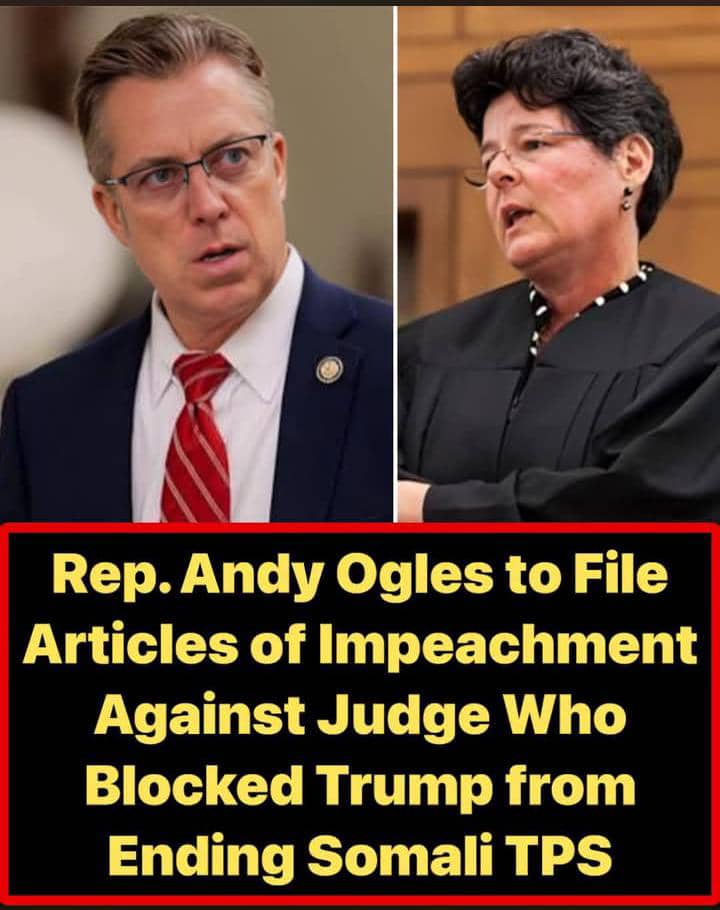
Ogles’ resolution argues that federal law prevents courts from reviewing decisions made by the homeland security secretary concerning the designation, extension, or termination of TPS for a country.
The congressman specifically points to a provision of the Immigration and Nationality Act stating that there is “no judicial review” of those determinations. His resolution accuses Burroughs of trying to get around that restriction by considering allegations that the administration’s Somalia decision was motivated by racial and national-origin discrimination.
“I have just introduced articles of impeachment against radical judicial activist Judge Allison Burroughs,” Ogles wrote while announcing the resolution. He also declared, “America is not Africa’s dumping ground,” while calling for Somali TPS protections to end.
The Department of Homeland Security has been equally blunt. After Burroughs issued another order on July 31, DHS General Counsel James Percival described the litigation as “defiance, obstruction, and delay.”
Ogles’ central argument rests on the Supreme Court’s June decision in Mullin v. Doe. In that case, the justices ruled that the TPS statute blocks judicial review of nonconstitutional challenges to termination decisions. The court also concluded that Haitian plaintiffs were unlikely to win an equal-protection claim alleging that their TPS termination was racially motivated.
But that does not mean every remaining legal question has been neatly packed away. The Supreme Court did not categorically rule that all constitutional claims involving TPS are beyond judicial review. Instead, it said the Haitian discrimination claim before it was unlikely to succeed. That distinction is now at the heart of the Somalia case.
What Judge Burroughs Actually Ordered
Somalia has held a TPS designation since 1991, when civil war and dangerous conditions made returning nationals unsafe. TPS does not provide citizenship or permanent residency. It temporarily protects qualifying people from deportation and generally allows them to work legally in the United States.
Former Homeland Security Secretary Kristi Noem announced in January that Somalia’s designation would end on March 17, saying conditions had improved enough that the country no longer qualified. The decision affected approximately 1,100 Somali TPS holders.
Four Somali nationals, African Communities Together and the Partnership for the Advancement of New Americans sued. They argued that Somalia remained dangerous, that DHS had followed a predetermined plan to eliminate TPS designations and that the decision was influenced by unconstitutional discrimination.
On March 13, Burroughs issued an administrative stay days before the termination was due to take effect. She said allowing TPS to expire immediately could have “weighty” consequences, including detention, deportation, family separation and possible exposure to violence. The order temporarily preserved work authorization and deportation protections while the court reviewed the lawsuit.
Ramla Sahid, executive director of the Partnership for the Advancement of New Americans, said the order meant the Somali community could “rest a little easier for now.”
The legal picture changed after the Supreme Court decided Mullin. The administration asked Burroughs to lift the Somalia stay, arguing that the high court had eliminated the plaintiffs’ main legal theories.
Burroughs instead issued a July 31 order indicating that the previous stay would be dissolved once jurisdiction returned from the appeals court, but that a new administrative stay would take its place while she considered the remaining issues.
On August 3, the First Circuit Court of Appeals returned the case to Burroughs and instructed her to rule promptly. The majority did not decide whether the new stay was lawful. One dissenting judge, however, argued that the open-ended pause had effectively become an injunction without the findings normally required for such relief.
That matters because Ogles’ claim that Burroughs simply ignored the Supreme Court remains an accusation made in his impeachment resolution, not a final ruling from the appeals court.
What Happens to the Judge and Somali TPS Holders Now?

H.Res. 1472 currently sits before the House Judiciary Committee. Filing an impeachment resolution does not suspend Burroughs, overturn her orders, or remove her from the bench.
The House would first need to approve an article of impeachment by a majority vote. The matter would then move to the Senate for a trial, where conviction and removal would require the support of two-thirds of senators present.
Meanwhile, the immigration case continues on a much faster clock. USCIS has repeatedly issued brief extensions for affected employment documents as the orders change. An August 3 update instructed employers to treat certain Somalia TPS work permits as valid through August 5 under the court’s temporary relief.
The dispute has therefore become two fights at once. In Massachusetts, lawyers are arguing over whether the Somali plaintiffs still have a viable constitutional challenge after Mullin. In Washington, Ogles is asking Congress to decide whether Burroughs’ handling of that challenge amounts to an impeachable offense.
For the roughly 1,100 people directly affected, however, the drama is less theoretical. Their ability to work legally and remain protected from deportation continues to depend on court orders that may last only days at a time.