“They’re Not Saying That”: Trump’s Claim of Being One of America’s Greatest Presidents Faces Immediate Pushback
Donald Trump has long described his presidency as one of the most consequential in American history, often pointing to economic policies, foreign affairs, judicial appointments, and his political movement as evidence of a lasting legacy. But during a recent interview, that confidence met a moment of direct challenge when the interviewer questioned Trump’s claim that he is considered one of the greatest presidents ever.
The exchange quickly drew attention because it highlighted a familiar pattern surrounding Trump’s public appearances: his willingness to make sweeping statements about his achievements, followed by intense debate over how those claims compare with historical evaluations, polling data, and the views of political historians.
Trump’s supporters argue that his presidency reshaped Washington, challenged traditional political norms, and delivered policies they believe strengthened the United States. Critics, however, argue that historical rankings depend on broader measures, including institutional stability, leadership during crises, and long-term impact beyond a president’s political base.
The interview moment became another example of the ongoing battle over how Trump’s place in history will ultimately be judged.
Trump’s Confidence in His Presidential Legacy
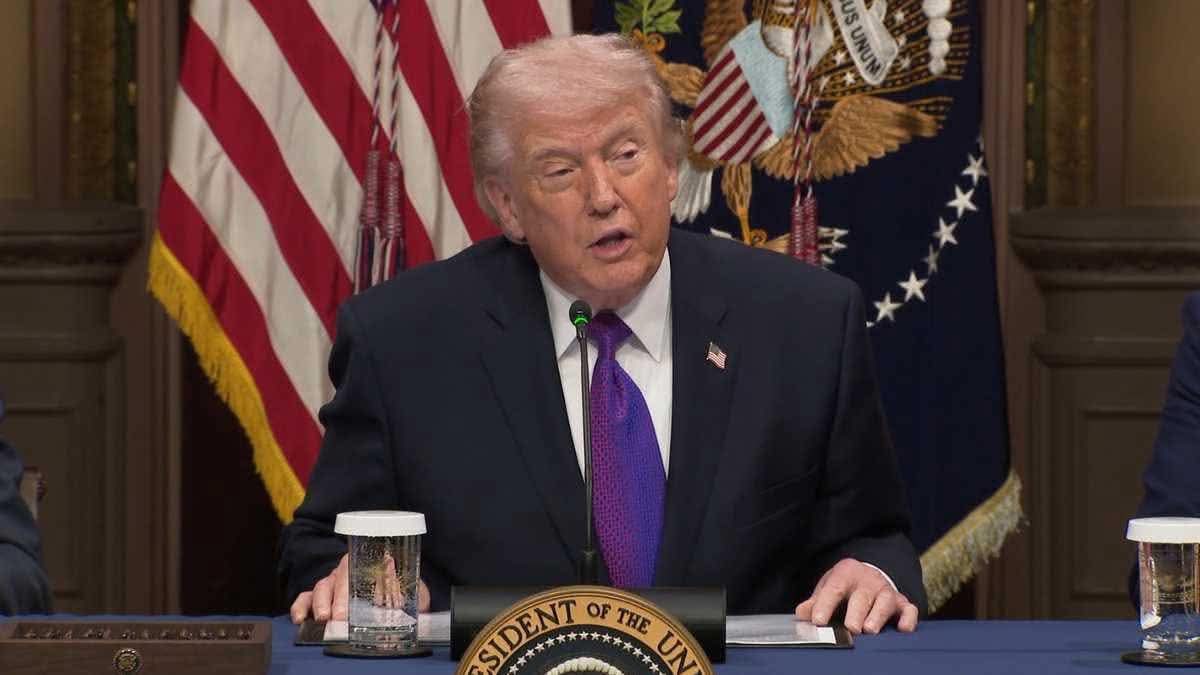
Throughout his political career, Donald Trump has frequently portrayed himself as a transformational leader who changed the direction of the country. His supporters often point to his first administration’s policies on taxes, deregulation, energy production, border enforcement, and international negotiations as examples of a presidency that broke away from previous approaches.
Trump has repeatedly argued that his administration achieved historic results, including economic growth before the COVID-19 pandemic, major changes to the federal judiciary, and diplomatic agreements in the Middle East.
During interviews and public speeches, Trump has often compared his record favorably with previous presidents, suggesting that his accomplishments place him among the most influential leaders in American history.
However, presidential greatness is one of the most debated topics in American politics. Unlike election results, which are determined by voters at a specific moment, historical rankings are shaped over decades by scholars, public opinion, and changing perspectives.
A president who is viewed positively by one generation can be reassessed by another as new information emerges and national priorities change.
The Interview Moment That Sparked Debate
The phrase “They’re not saying that” quickly became the central point of discussion after the interviewer challenged Trump’s assertion that many people view him as one of the greatest presidents.
The response created a sharp contrast between Trump’s self-assessment and the broader debate over his historical reputation.
Trump has consistently argued that mainstream evaluations underestimate his accomplishments, claiming that many Americans recognize his impact even if political opponents disagree. His critics, however, have pointed out that surveys of historians and political scientists have produced mixed assessments of his presidency.
The exchange attracted attention because it touched on a larger question that has followed Trump since he entered national politics: how should a president measure success?
For Trump and his supporters, success is often measured by policy achievements, voter enthusiasm, and the ability to disrupt a political system they believe needed major change.
For critics, presidential greatness is measured through a wider lens that includes national unity, respect for democratic institutions, crisis management, and the ability to govern beyond a political base.
How Presidential Greatness Is Usually Measured
Determining the “greatest” presidents in American history is complicated because there is no single official ranking system. Historians typically consider several factors when evaluating presidential leadership.
These factors often include:
Leadership during national crises: Presidents such as Abraham Lincoln and Franklin D. Roosevelt are frequently ranked highly because they guided the country through major challenges, including the Civil War and the Great Depression.
Economic performance: A president’s handling of jobs, inflation, markets, and long-term economic policies often influences public perception.
Foreign policy achievements: International agreements, military decisions, and global leadership can shape a president’s historical reputation.
Institutional impact: Presidents are also judged by how their actions affected government institutions and democratic traditions.
Long-term influence: Some presidents become historically significant because their decisions continue affecting the country decades later.
Trump’s supporters argue that his approach fundamentally changed American politics and created a movement that continues to influence elections. Critics argue that his presidency remains deeply controversial and that history has not yet reached a final conclusion.
Trump’s Supporters Point to Major Policy Achievements
Those who view Trump as a historically important president often highlight several areas of his administration.
One major argument focuses on the economy before the pandemic. Supporters point to low unemployment levels, market growth, and business confidence during parts of his first term.
Another major issue is the federal judiciary. Trump appointed three Supreme Court justices and hundreds of federal judges, creating one of the most significant judicial impacts of any modern president.
Supporters also emphasize his approach to international relations, including efforts to renegotiate trade agreements and pressure allies on defense spending.
They argue that these decisions represented a willingness to challenge established political practices and prioritize American interests.
For many Trump voters, presidential greatness is connected to whether a leader fulfills campaign promises and changes government policy.
Critics Argue Historical Rankings Remain Uncertain
Opponents of Trump’s assessment argue that presidential reputations are not determined by personal confidence or political popularity alone.
They point to controversies surrounding his leadership style, his handling of political conflicts, and the divisions that emerged during and after his presidency.
Critics argue that historical rankings require distance and perspective. They believe it takes many years before historians can fully evaluate the consequences of a presidency.
Many presidents who were controversial during their time in office later experienced changes in reputation. Some gained appreciation after their policies produced long-term results, while others saw their standing decline as new evidence emerged.
Because Trump remains an active figure in American politics, historians continue to debate his ultimate place in presidential history.
A Debate That Extends Beyond One Interview
The disagreement over Trump’s presidential legacy reflects a much larger conversation about American politics.
The question is not simply whether Trump was successful or unsuccessful. It is about how Americans define leadership in a deeply divided political environment.
Supporters see Trump as a president who challenged Washington, reshaped conservative politics, and delivered policies they believe improved the country.
Critics view his presidency as one marked by controversy, institutional conflicts, and challenges to traditional political standards.
Both perspectives continue shaping how Americans discuss his place in history.
Trump’s Historical Reputation Will Be Decided Over Time
The debate over whether Donald Trump ranks among America’s greatest presidents is unlikely to end soon. Political supporters and opponents remain sharply divided, and historians continue examining the lasting consequences of his leadership.
Presidential greatness is rarely decided during a president’s own lifetime. It is usually determined through decades of reflection, research, and changing national perspectives.
Trump’s supporters believe history will recognize his presidency as a turning point that transformed American politics. His critics believe future evaluations will focus on the controversies that defined his time in office.
For now, the debate continues. The question of where Trump ultimately belongs in the long story of American presidents remains one that history, rather than a single interview, will decide.