How Much Did a Big Mac Cost When You Were Born? A Look at Prices From 1967 to Today
The Big Mac has been a familiar part of McDonald’s menus for decades, but the price attached to the sandwich has changed a lot since it first appeared. Looking back at Big Mac prices offers a simple way to see how everyday menu costs have shifted over time, while also showing why customers in different places have not always paid the same amount.
The sandwich was created by McDonald’s operator Jim Delligatti and first sold in Uniontown, Pennsylvania, in 1967. The original launch price was reported at 45 cents, but that figure represented the price at that location, not a nationwide average. McDonald’s expanded the Big Mac nationally in 1968, turning it into one of the company’s most recognizable menu items.
For anyone curious about what a Big Mac cost during their birth year, the answer depends on the decade, the source, and the location. Some historical figures represent individual restaurant menus, while others are national reference prices used for comparison.
The 1960s: Before and During the Big Mac Debut
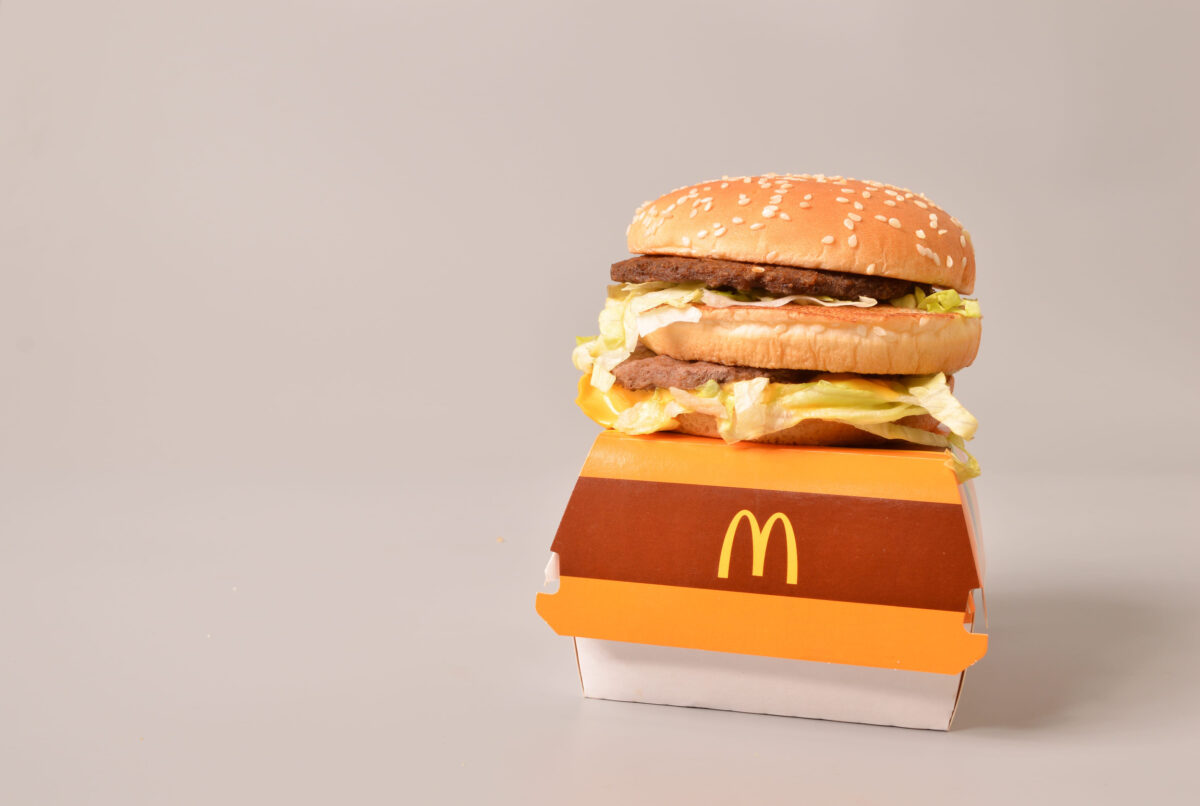
Readers born before 1967 lived in a world before the Big Mac existed. The sandwich arrived when Jim Delligatti introduced it at his McDonald’s restaurant in Uniontown, Pennsylvania.
The reported debut price was 45 cents. That number is often remembered as the original Big Mac price, but it should be viewed as a launch-location price rather than what every McDonald’s customer across the country paid.
After the Uniontown debut, McDonald’s brought the sandwich to restaurants nationwide in 1968, beginning the Big Mac’s long history as a menu staple.
The 1970s: Early Prices Show Local Differences
As the Big Mac became more established, prices started to vary from one restaurant to another.
Historical examples from the 1970s show that a Big Mac could be listed at different prices depending on location. One menu from the decade showed a 65-cent Big Mac, while a New York City location listed the sandwich for 85 cents in 1974.
These examples highlight an important part of Big Mac history: there has never been one single price that applied equally everywhere. Local menus, operating costs, and franchise pricing decisions have always played a role.
The 1980s: The Big Mac Becomes a Global Comparison Tool
The 1980s added a new way to look at Big Mac pricing. In 1986, The Economist introduced the Big Mac Index, using the sandwich as a simple way to compare currencies and purchasing power between countries.
That year, the reported U.S. Big Mac Index figure was $1.60. The index changed the way people viewed the burger. Instead of only being a menu item, the Big Mac became a reference point for comparing prices around the world.
The 1990s: The Burger Moves Past $2
By the 1990s, reported Big Mac prices had moved beyond the $2 mark. A McDonald’s menu from Adak, Alaska, showed a $2.45 Big Mac before the restaurant closed in 1994. That figure is a local example and does not represent a national average.
Eat This, Not That! Also reported a $2.50 U.S. average for 1998. Together, these examples show how prices continued climbing while still differing from one market to another.
The 2000s: More Consistent Price Comparisons Appear
The 2000s provide more consistent year-by-year comparisons through The Economist’s Big Mac Index.
The reported U.S. reference price was $2.24 in 2000, rising to $2.35 in 2002, $2.58 in 2005, and $3.21 in 2008.
These numbers are useful for tracking long-term changes, but they should not be treated as identical prices at every McDonald’s restaurant. Franchise locations can have different menu prices depending on where they operate.
The 2010s: Entering the $4 Range
During the 2010s, the reported U.S. Big Mac reference price moved into the $4 range.
The reported price reached $4.18 in June 2013 and increased to $4.71 in July 2019.
For customers looking back at this period, the numbers provide a national comparison point rather than a guarantee of what every restaurant charged. A customer in one city could have seen a different menu price than someone elsewhere.
The 2020s: Big Macs Move Above $5
Recent years have continued the upward trend in reported Big Mac prices.
The reported U.S. reference price was $4.89 in December 2020 and reached $5.69 in January 2024. Local variation remained visible, with Eat This, Not That! reporting that New York City Big Mac prices ranged from $5.39 to $6.69 in 2024.
That difference shows why location matters when comparing prices. A Big Mac purchased in one city may not cost the same as one purchased somewhere else.
The Latest Big Mac Price Snapshot
The latest U.S. Big Mac Index figure from The Economist was $6.22 in July 2026.
This figure is a national reference point from the Big Mac Index, not a promise that every McDonald’s restaurant charges exactly that amount. Local franchise pricing continues to influence what customers see on menus.
From a 45-cent launch price in 1967 to a $6.22 reference figure in 2026, the Big Mac’s history reflects more than a changing sandwich price. It also shows how everyday purchases can become snapshots of different eras.
For readers checking their birth year, the most important detail is not just the number itself. It is the story behind it: where the price came from, what year it represents, and whether it reflects a local menu or a broader comparison figure.