Stop Throwing Away Split Sauces: Why Mayo, Hollandaise, and Pan Sauces Break and How to Fix Them
Every home cook knows the sinking feeling of watching a sauce break. You whisk with everything you have, and a smooth mixture of egg and oil suddenly turns into an oily, curdled mess. Whether it happens while making homemade mayonnaise, finishing a pan sauce for steak, or prepping hollandaise for brunch, the instinct is to pour it all down the drain and start over.
Before you do that, take a breath. A broken sauce is rarely ruined for good. Once you understand how fat and liquid bond in the first place, you can rescue most splits in a couple of minutes.
Related: Never Buy These 8 Foods Again, They’re Cheaper to Make at Home
The Science of Why Sauces Break
In culinary terms, mayonnaise, hollandaise, vinaigrettes, and pan sauces are emulsions: forced mixtures of two liquids that naturally want to separate, usually fat and water. Egg-based emulsions rely on lecithin in the yolk, which surrounds tiny droplets of fat and keeps them suspended in the liquid instead of clumping back together. Vinaigrettes rely on a different helper, since oil and vinegar have no natural emulsifier.
Sauces typically split for one of three reasons. Pouring fat in too fast overwhelms the emulsifier before it can coat every droplet. Heat that’s too high scrambles egg proteins into tiny curds that can no longer hold fat, while ingredients that are too cold can cause butter to seize. And in a pan sauce, cooking the mixture too long evaporates too much water, leaving too little liquid to keep the fat suspended.
How to Fix Broken Mayonnaise or Aioli
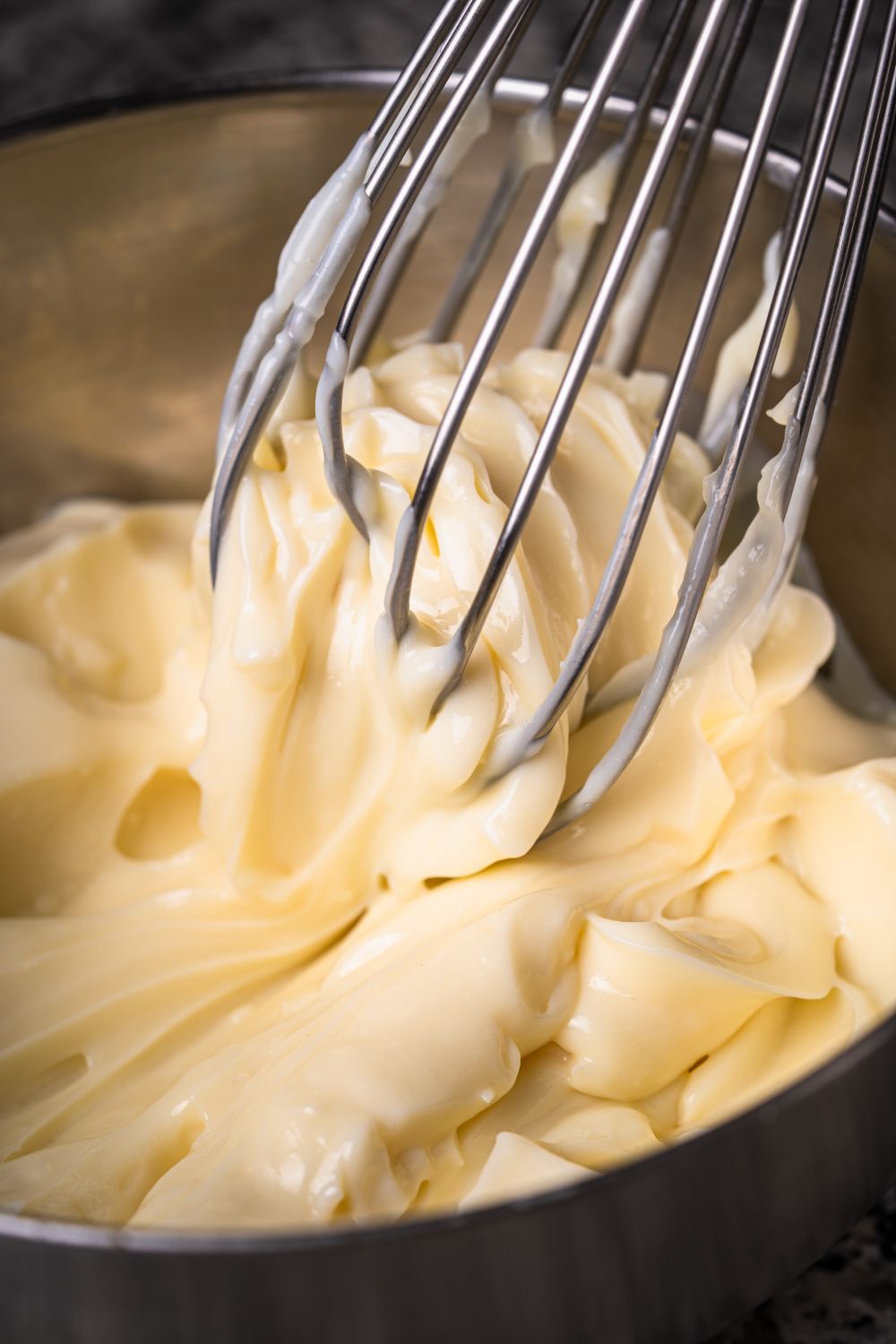
If homemade mayo or aioli separates into a greasy, curdled mess, you don’t need to toss the oil and start from scratch. Grab a fresh bowl and start with a small new base, such as a fresh egg yolk with a teaspoon of water or lemon juice, and whisk it until it’s blended. Add the broken mixture back in just a few drops at a time while whisking constantly. As the new base accepts those first drops and begins to thicken, you can stream in the rest more quickly. The fresh emulsifier grabs onto the fat droplets and rebuilds the bond.
Getting the technique right the first time helps you avoid the problem altogether. In his mayonnaise method for Serious Eats, food scientist J. Kenji López-Alt notes that a spoonful of Dijon mustard does more than add flavor: it helps bridge the oil and water so the mixture holds together as a stable emulsion. He also recommends blending in a jar sized just slightly wider than an immersion blender head, since a mismatched jar is one of the most common reasons homemade mayonnaise refuses to come together at all.
How to Fix a Broken Pan Sauce
Pan sauces made from meat drippings, wine, and butter or cream are their own type of emulsion, and they break for a slightly different reason than mayonnaise does. According to America’s Test Kitchen, when a pan sauce cooks too long and too much of its water content evaporates, there isn’t enough liquid left to keep the butterfat suspended, and the sauce turns oily and curdled. Their fix is counterintuitive: rather than reaching for cornstarch or flour, whisk in about a quarter cup of water and bring the sauce back to a vigorous simmer. The bubbling action re-suspends the fat and restores the glossy texture within a minute or two.
The 15-Second Vinaigrette Fix

Unlike egg-based sauces, a basic vinaigrette is a temporary emulsion that will separate again no matter what you do, since oil and vinegar naturally settle back into layers over time. If you want a dressing that clings to greens a little longer before it splits, whisk in about half a teaspoon of Dijon mustard before adding the oil. The mustard acts as a light emulsifier that briefly bridges the oil and vinegar, giving you a smoother, more cohesive dressing right after shaking or whisking.
A Note on Egg Safety
Because mayonnaise and hollandaise typically rely on raw or lightly cooked egg yolks, they carry some food safety considerations. The U.S. Food and Drug Administration advises using pasteurized eggs or egg products when preparing dishes like mayonnaise, hollandaise, or béarnaise sauce that aren’t fully cooked, and recommends cooking any dish made with raw shell eggs to an internal temperature of at least 145°F. Keep these basics in mind, whether your sauce comes together on the first try or needs a rescue.
Three Rules to Prevent Broken Sauces
Add fat drop by drop for the first thirty seconds, then move to a steady stream. Keep your eggs, citrus juice, and oil close to room temperature before you start blending. If whisking by hand feels unpredictable, an immersion blender shears fat into much smaller droplets almost instantly, making homemade emulsions far more forgiving.