8 Kitchen Appliance Colors That Dominated the ’70s
The 1970s had a visual identity that was difficult to mistake, and nowhere was that more obvious than in the kitchen. While earlier decades often leaned toward pastel shades such as pink and blue, the 1970s moved in a noticeably different direction. Kitchen appliances began appearing in earthy, nature-inspired tones that gave homes a warmer, heavier, and more distinctive look.
Refrigerators, ranges, dishwashers, electric mixers, kettles, toasters, and other appliances were no longer limited to neutral finishes. Manufacturers offered colors ranging from deep green and mustard yellow to brown, orange, beige, red, white, and black.
Some of these shades became so closely associated with the decade that they remain instantly recognizable today. Although modern kitchens often favor stainless steel, white, black, or more subdued finishes, retro-inspired interiors have brought renewed attention to several classic 1970s colors.
Here are eight appliance colors that defined the decade’s look.
Avocado Green
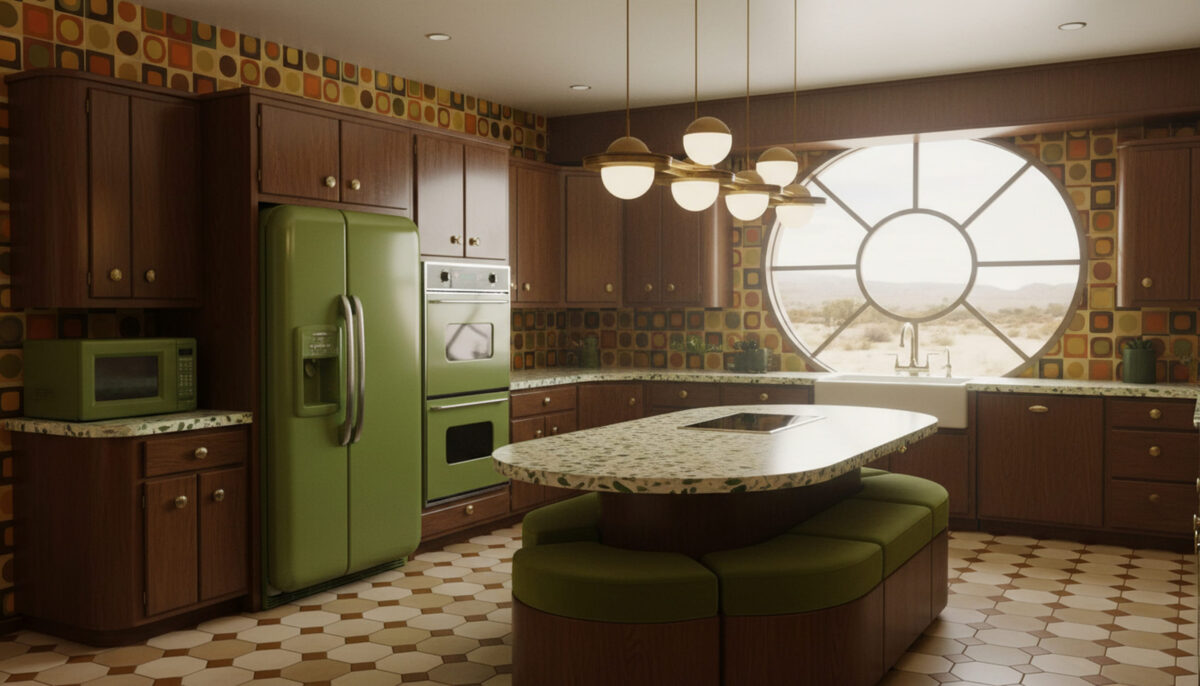
Few colors are more strongly associated with 1970s kitchens than Avocado Green. The shade appeared on major appliances, including refrigerators and ranges, and became one of the era’s defining colors.
Manufacturers didn’t always use the same name for the color. General Electric, for example, marketed a version called Fresh Avocado. Despite the different names, the basic idea stayed the same: a strong, muted green inspired by an avocado.
The color suited the decade’s preference for earthy, natural tones. It was bold enough to make a kitchen feel distinctive while still fitting alongside the browns, yellows, and oranges widely used at the time.
Today, Avocado Green is one of the colors most likely to come to mind when people picture a vintage 1970s kitchen.
Harvest Gold
Harvest Gold was another major appliance color of the 1970s. It was a muted yellow with mustard-like qualities, though the exact shade varied by manufacturer and product.
Different companies used different names for similar colors. General Electric called one version Harvest Wheat, while related shades were also described as Mustard Yellow, Harvest Yellow, and Golden Yellow.
Harvest Gold was used across a wide range of appliances. Dishwashers, ovens, electric mixers, and electric kettles came in variations of the color.
Its popularity made sense within the broader 1970s palette. Unlike the bright, cheerful yellows of some earlier styles, Harvest Gold had a more subdued look. It matched well with other warm colors of the period, including brown and orange.
The shade became one of the era’s most recognizable kitchen colors and remains closely associated with vintage appliance design.
Related article: kitchen-color-schemes-that-never-go-out-of-style/
Coppertone Brown
Brown played an important role in 1970s interior design, and kitchen appliances were no exception. One popular version was called Coppertone Brown, or Copper Brown.
The shade had a reddish-brown appearance and was also marketed as Cocoa or Coffee. These names reflected the color’s deep, warm quality.
Coppertone Brown appeared on a variety of kitchen appliances and contributed to the darker, earthier look that became fashionable during the decade. Compared with lighter tones, it gave kitchens a heavier and more dramatic visual presence.
Alongside Avocado Green and Harvest Gold, brown helped create the classic color combination that many people now associate with 1970s interiors.
Burnt Orange
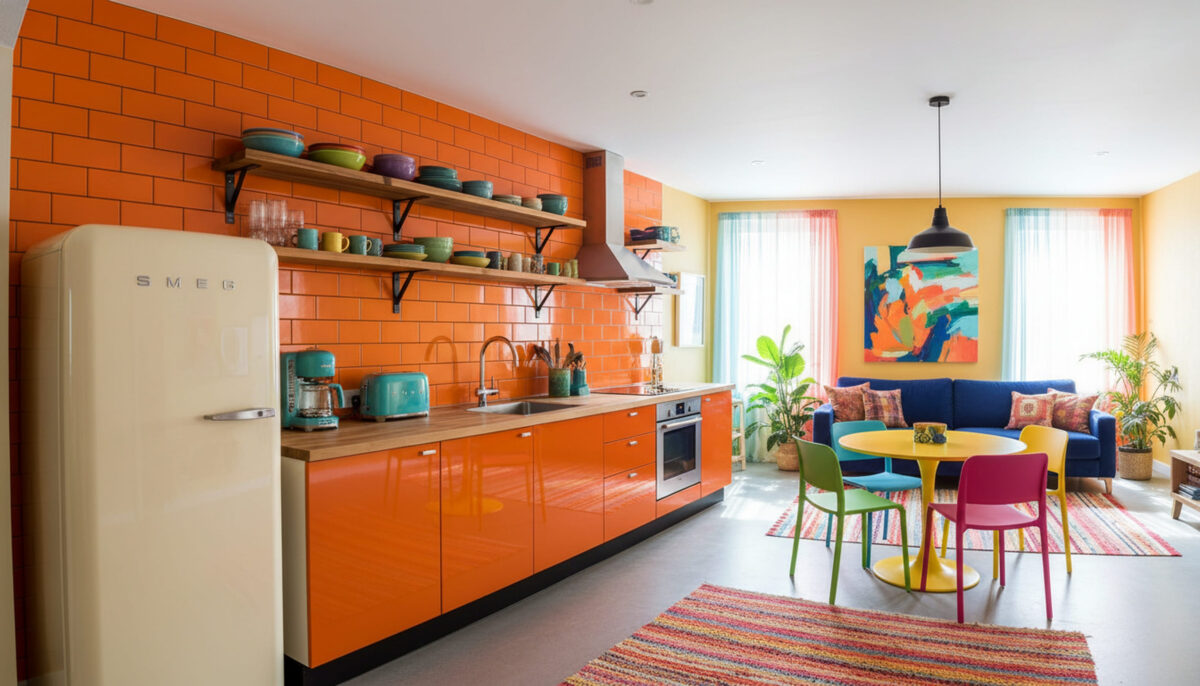
Orange was another important part of the decade’s kitchen palette. Burnt Orange, sometimes described by similar names such as Rusty Orange, appeared on both large appliances and smaller kitchen gadgets.
As its name suggests, the color was a darker and more muted form of orange rather than a bright citrus shade. It fit naturally with the era’s interest in warm, earthy colors.
Burnt Orange was visually striking but still worked well with the browns, yellows, and greens popular at the time. This made it suitable for kitchens where multiple strong colors might appear together.
Its distinctive look also reinforced the unmistakable character of 1970s design. Even today, a Burnt Orange appliance can immediately give a kitchen a retro feel.
Almond
Not every popular 1970s appliance color was dark or strongly saturated. Almond offered a softer alternative.
The color was a beige-like shade inspired by the pale interior of an almond. It appeared on a wide range of appliances, including refrigerators and toasters. Electric frying pans were also produced in Almond tones.
Compared with Avocado Green, Burnt Orange, or Harvest Gold, Almond was relatively restrained. It provided a neutral option for homeowners who wanted something warmer than plain white without choosing one of the decade’s stronger colors.
Its versatility also meant that it could fit comfortably with many of the other shades used in 1970s kitchens.
Poppy Red
Poppy Red added a brighter burst of color to the decade’s otherwise earthy palette.
Although the shade was more vibrant than colors such as brown, green, or gold, it could still look somewhat muted on appliances. Poppy Red did not become as widespread as some of the decade’s better-known colors.
Because it was less common, vintage appliances in Poppy Red can be harder to find than examples in Avocado Green, Harvest Gold, or other widely used shades.
Still, the color shows that the 1970s appliance market wasn’t limited to natural or neutral tones. Manufacturers also offered bolder choices for consumers who wanted their kitchens to make a stronger visual statement.
White
The colorful reputation of 1970s kitchens can sometimes overshadow the fact that white appliances remained common throughout the decade.
White provided a clean, classic option for homeowners who preferred something more traditional. It also paired well with the stronger colors popular during the period.
Like other appliance colors, white could be given specific retail names. One example was Snow White.
Its continued presence shows that the decade’s kitchen design was more varied than its most famous colors might suggest. While avocado, gold, brown, and orange often receive the most attention, many households still relied on familiar white appliances.
Black
Black was also available as an appliance color during the 1970s.
General Electric offered a black shade called Onyx, while other manufacturers also sold kitchen appliances in glossy black finishes.
One example came from Admiral, whose 1970s refrigerator and freezer line included a black side-by-side model with separate refrigerator and freezer compartments. The model also featured a split freezer door.
Black gave consumers another alternative to the earth tones that dominated much of the decade’s design. Its glossy finish could create a more dramatic look while still offering the versatility of a neutral color.
Why These Colors Still Stand Out
The kitchen colors of the 1970s remain memorable because they were so distinctive. Avocado Green, Harvest Gold, Coppertone Brown, Burnt Orange, Almond, Poppy Red, white, and black offered homeowners a wide range of choices and helped establish a visual style still associated with the decade.
Many contemporary kitchens look very different, especially with the widespread use of stainless steel and cleaner, more modern finishes. Even so, retro-inspired design has renewed interest in older colors and appliances. Some homeowners are once again incorporating vintage-style shades into kitchens, while others are using modern appliances finished or painted in colors that recall the past.
Whether viewed as charming, unusual, or unmistakably retro, 1970s appliance colors gave kitchens their own personality. Decades later, shades such as Avocado Green and Harvest Gold can still evoke the era’s style almost instantly.
Other articles you may like:
– 10-gray-kitchen-ideas-that-actually-feel-chic-in-2026/
– 9-kitchen-trends-making-homes-feel-more-personal-and-less-showroom-perfect/
– kitchen-items-to-declutter-today-before-they-take-over-your-home/