10 Kitchen Items Professional Organizers Tell Clients to Let Go Of
A cluttered kitchen can make even simple tasks feel more stressful. When countertops are crowded, drawers barely close, and cabinets are packed with things you rarely use, cooking can quickly become frustrating instead of enjoyable.
Professional organizers often start kitchen decluttering projects by asking one simple question: Does this item actually serve a purpose in your life right now?
The answer is not always obvious. Kitchens tend to collect duplicates, forgotten gadgets, expired food, sentimental items, and “just in case” purchases. Over time, these things take up valuable storage space and make it harder to find what you genuinely need.
If your kitchen feels overcrowded, professional organizers often encourage clients to reconsider these 10 items.
Duplicate Cooking Utensils
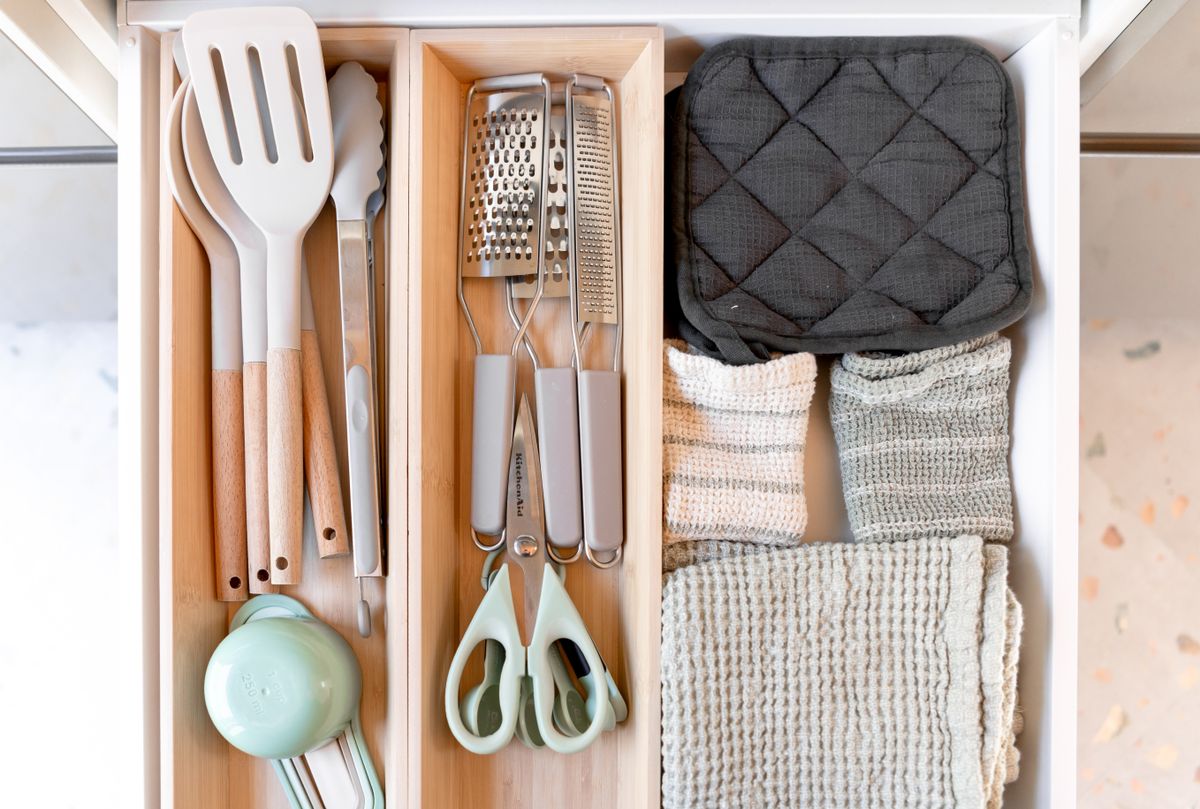
Open almost any overstuffed kitchen drawer and you may find several wooden spoons, multiple spatulas, extra whisks, and more serving spoons than one household could reasonably use.
A few duplicates can be practical, especially if you cook often. But there is usually a point where extras become clutter.
Consider which utensils you reach for regularly and which ones always stay at the bottom of the drawer. Keep your favorites and let go of worn-out, uncomfortable, or unnecessary duplicates.
The goal is not to own as little as possible. It is to make sure everything in your kitchen earns the space it occupies.
Food Storage Containers Without Matching Lids
Plastic and glass food containers are useful, but mismatched sets can quickly become a major source of kitchen clutter.
Containers without lids are difficult to use, and lids without containers rarely serve a purpose. Yet many people keep storing them, hoping the missing piece will eventually reappear.
Pull all your food storage containers out at once and match every lid with its corresponding container.
If something has no partner, consider letting it go. This is also a good time to discard containers that are cracked, warped, badly stained, or damaged.
Once you reduce the collection, storing containers together by size can make the cabinet much easier to maintain.
Expired Spices
Spice cabinets are easy to neglect because dried herbs and seasonings often remain on shelves for years.
While many spices do not suddenly become unsafe after a printed date, they can lose flavor and aroma over time. That means you may be dedicating cabinet space to seasonings that no longer improve your meals.
Check containers for faded color, weak scent, or spices you never use.
If you bought a specialty seasoning for one recipe years ago and haven’t touched it since, it may be time to free up space.
A smaller collection of spices you regularly use is often far more helpful than a packed shelf of forgotten jars.
Single-Purpose Kitchen Gadgets
Professional organizers frequently question gadgets that perform only one highly specific task.
Think avocado slicers, novelty egg tools, specialty cutters, miniature appliances, or gadgets purchased after watching an enthusiastic demonstration.
Some single-purpose tools are absolutely worth keeping if you use them regularly. The problem comes when they sit untouched for months or years.
Ask yourself whether another tool already in your kitchen can perform the same job.
A chef’s knife, for example, can replace many specialty slicing devices. A simple mixing bowl and whisk may eliminate the need for another bulky gadget.
Convenience is valuable, but only if the item is actually convenient for you.
Chipped Plates, Mugs, and Bowls
It can be surprisingly difficult to part with damaged dishes, especially when they belong to a favorite set.
However, chipped plates, cracked bowls, and mugs with damaged rims can add up quickly.
Beyond taking up space, severely chipped or cracked dishes may become impractical or unsafe to use.
Instead of saving every damaged item, evaluate whether you realistically plan to repair it or repurpose it.
If not, letting it go can make room for the dishes you enjoy using every day.
Related Posts:
things-professional-organizers-say-everyone-keeps-too-many-of
Reusable Water Bottles and Travel Mugs You Never Use
Reusable bottles and travel mugs are designed to reduce waste, but owning too many can create a different kind of clutter.
They often accumulate through gifts, promotions, events, and impulse purchases. Before long, an entire cabinet may be devoted to bottles no one actually reaches for.
Keep the ones that fit your lifestyle.
You may need one insulated bottle for work, another for exercise, and a couple of extras for family members. Beyond that, consider donating clean bottles and mugs in good condition if a local organization accepts them.
A smaller collection is easier to store and more likely to be used.
Takeout Condiment Packets
Ketchup packets, soy sauce, hot sauce, plastic utensils, napkins, and other takeout extras have a way of multiplying quietly.
Many households keep them because throwing away something usable feels wasteful. Unfortunately, keeping dozens of packets you rarely use does not necessarily prevent waste. It may simply delay it.
Set a reasonable limit.
For example, keep a small container with a few condiment packets you actually use and decline extras when ordering takeout whenever possible.
If the drawer is overflowing with packets that have been sitting there for months, clearing them out can create an immediate sense of order.
Cookbooks You Never Open
Cookbooks can be beautiful, sentimental, and inspiring, but they can also take up a lot of shelf space.
If you have a large collection, consider how often you actually cook from each book.
Some may contain favorite family recipes and deserve a permanent place in your kitchen. Others may have been purchased for a diet, cooking trend, or cuisine you no longer care about.
You do not have to discard every unused cookbook. Consider donating some, moving sentimental books elsewhere, or keeping only the volumes you genuinely reference.
Your kitchen shelves should support how you cook today, not how you imagined you might cook someday.
Extra Grocery Bags
Reusable shopping bags are useful until there are 40 of them stuffed into one cabinet.
Paper and plastic bags can also accumulate quickly when you save them without a specific purpose.
Professional organizers often recommend deciding exactly how many bags your household needs.
Keep a manageable number and recycle or donate the excess where appropriate.
The same rule applies to gift bags, insulated grocery totes, and delivery bags. Saving a few makes sense. Saving every single one usually does not.
Appliances You Haven’t Used in Years
Large kitchen appliances can take up some of the most valuable storage space in the room.
Bread makers, juicers, slow cookers, waffle makers, ice cream machines, pressure cookers, and specialty coffee appliances may all be useful but only if they fit your current habits.
If an appliance has been sitting untouched for several years, ask yourself what is realistically stopping you from using it.
Sometimes the answer is simply that your lifestyle changed.
Rather than keeping an appliance out of guilt because it was expensive, consider selling or donating it while it is still in good condition.
The space you regain may be more valuable than the possibility that you could someday use the appliance again.
A More Functional Kitchen Starts With Less
Decluttering your kitchen does not mean stripping it down to bare shelves. It means making intentional decisions about what deserves to stay.
Professional organizers often focus less on how many possessions someone owns and more on whether those possessions support everyday life.
Start with one drawer, cabinet, or category instead of attempting the entire kitchen at once. Remove what is broken, expired, duplicated, or no longer useful. Then organize what remains so you can reach frequently used items easily.
You may be surprised by how different your kitchen feels once you remove unnecessary items.
With fewer things competing for space, cabinets become easier to navigate, countertops are easier to clean, and cooking can feel simpler.
Sometimes, creating a better kitchen isn’t about buying another storage container or installing another shelf.
It is about letting go of what you no longer need.
Posts You May Like:
6-kitchen-storage-habits-that-are-quietly-shrinking-your-small-kitchen