McDonald’s Customers Say Their Higher-Priced Sandwiches Are Now ‘Slider-Sized’
McDonald’s customers are once again debating whether they are getting less food for more money, with some diners saying familiar sandwiches now look surprisingly small for the prices they are paying.
The latest discussion has centered on burgers and sandwiches, including the Big Mac, cheeseburgers, and Filet-O-Fish. In a September Reddit discussion, customers traded very different experiences, with some insisting they had noticed smaller-looking portions while others said the food itself had not changed.
That disagreement gets to the heart of the issue. Higher prices are real, but a higher price does not automatically mean a sandwich has been made smaller.
Customers Are Calling Some Sandwiches “Slider-Sized”
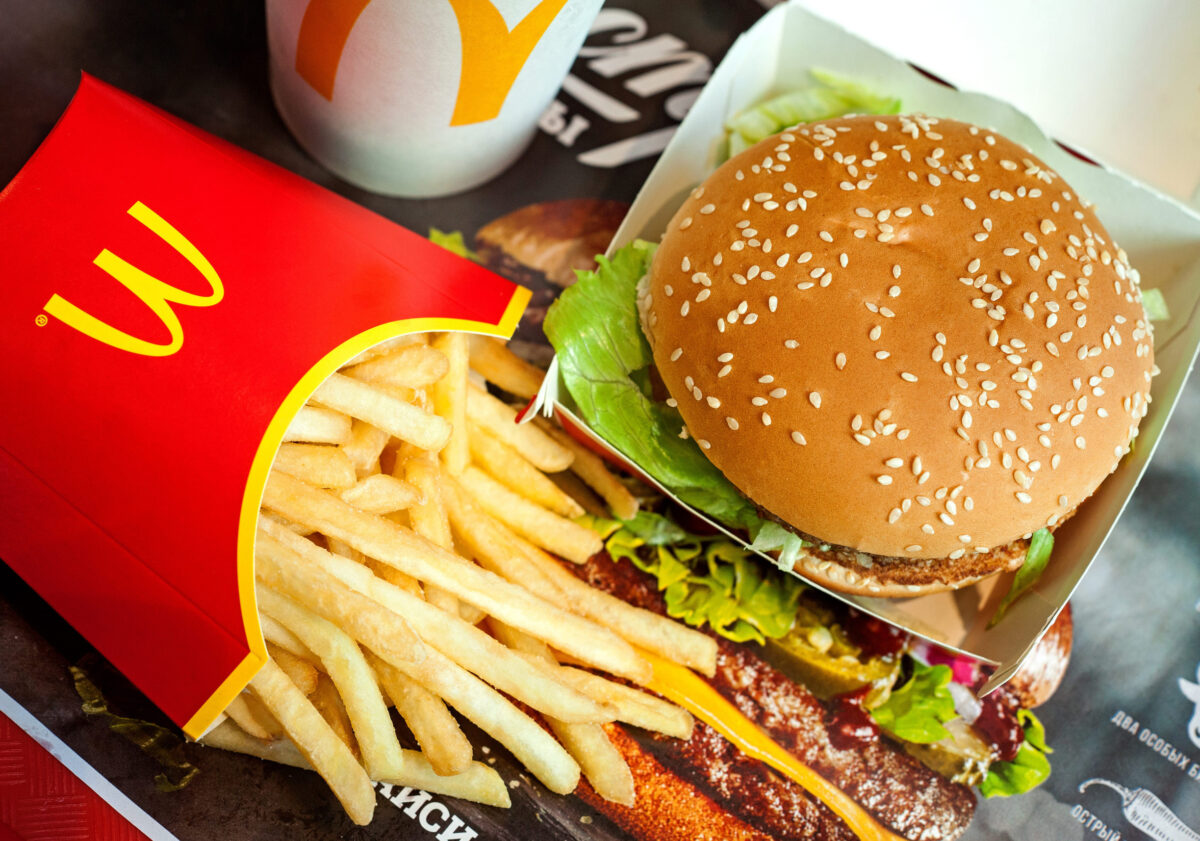
The conversation started with a customer questioning whether McDonald’s had been shrinking its food while raising prices.
The responses quickly split into two camps. Some commenters described the situation as shrinkflation and said they had noticed thinner or smaller-looking burgers. Another customer pushed back, saying, “Raising prices yes, but I have not seen any shrinkage.”
The Filet-O-Fish drew particular attention, with one commenter describing it as “slider-sized now.” Other responses pointed to fries, Big Macs, and regular burgers as examples of food that appeared smaller than they remembered.
The disagreement is hardly new. Customers have been debating the size of McDonald’s sandwiches for years, particularly the Filet-O-Fish. But the latest discussion shows that the combination of higher prices and familiar-looking portions continues to frustrate some diners.
Related: 7 Alarming Reasons McDonald’s Is Facing Growing Backlash From Americans
Big Mac Customers Have Their Own Complaints
The Big Mac has also become a frequent subject of these conversations.
In one 2026 Reddit post, a customer who had not ordered a Big Mac in several months said the patties looked unusually thin and questioned whether that was now normal. Responses again varied, with some people saying the sandwich looked smaller than they remembered and others arguing that the regular patties have always been relatively thin.
That distinction matters because the Big Mac is built with two regular beef patties rather than the larger patties used for the Quarter Pounder. McDonald’s current menu describes the Big Mac as containing two beef patties, while its Quarter Pounder lineup uses quarter-pound patties weighing four ounces before cooking.
So a customer expecting a Big Mac to have the same substantial patty as a Quarter Pounder may come away disappointed even if the sandwich has been prepared according to its standard build.
McDonald’s Has Previously Rejected Filet-O-Fish Shrinkage Claims
The Filet-O-Fish has already gone through a similar size controversy.
In 2024, after customers posted complaints that the sandwich had become smaller, McDonald’s USA said that the size and build of the Filet-O-Fish had not changed in decades. That statement came after social-media users began comparing the sandwich with older memories and photographs.
The same debate included customers describing the sandwich as looking like a fish slider. The complaints focused on how small the finished sandwich appeared, while McDonald’s position was that its established size and construction had not changed.
That history makes the current discussion more complicated than a simple claim that McDonald’s has quietly reduced its portions.
A sandwich can look different from one visit to another because of how the bun, toppings, and patty are positioned. A photograph can also make proportions appear different depending on the angle and presentation.
The Price on Your Local Menu May Be Different
There is another factor customers have to consider before comparing what they paid with someone else’s McDonald’s order.
McDonald’s says prices vary by restaurant because most U.S. locations are independently owned and operated by franchisees. That means a price shown on one restaurant’s app, receipt, or social-media post should not automatically be treated as the national price.
For local diners, this is particularly important. Two McDonald’s restaurants in different markets can charge different prices for the same sandwich, so a complaint about a $7 burger in one location does not establish that customers everywhere are paying the same amount.
Delivery can add another difference, since McDonald’s notes that delivery prices may be higher than restaurant prices.
McDonald’s Is Putting More Focus on Value
At the same time, McDonald’s has clearly recognized that customers are paying closer attention to value.
The company launched McValue in 2025 and expanded it in 2026 with an Under $3 Menu, a $4 breakfast meal deal, and lunch and dinner meal deals starting at $5 at participating restaurants. McDonald’s said the expanded program was intended to give customers more ways to find options that fit their budgets.
McDonald’s has also said that economic pressures have affected consumer sentiment, particularly among lower-income households, reinforcing the importance of value and affordability.
That makes the sandwich-size debate about more than the sandwich itself. When customers feel that prices have climbed, they naturally pay closer attention to portion size, presentation, and whether an order feels worth the total on the receipt.
A Customer Complaint Is Not the Same as Proof of Shrinkflation
The strongest evidence available does not establish that McDonald’s has reduced the standardized size of its core sandwiches nationwide.
What it does establish is that some customers believe their sandwiches look smaller, and those impressions are increasingly being discussed alongside concerns about price.
That difference is important. A customer saying a Big Mac looks “slider-sized” is an observation about an individual order. It does not, by itself, prove that McDonald’s changed the official weight of its patties, reduced its bun size, or cut back on toppings.
To establish an actual size reduction, the same sandwich would need to be compared using documented specifications from different dates.
The Real Argument May Be About Value
For many customers, the debate ultimately comes down to a simple question: Does the sandwich still feel worth the price?
Someone who remembers a particular McDonald’s sandwich from years ago may open today’s version and find it underwhelming, especially when the bill is higher than expected. Another customer may receive the same product and see nothing unusual about its size.
Both experiences can fuel the conversation without proving a nationwide shrinkage.
For now, the “slider-sized” description remains a customer complaint rather than confirmed evidence of a chainwide reduction. But with McDonald’s continuing to emphasize value and customers watching their receipts more closely, the debate over what a fast-food sandwich should cost is unlikely to disappear anytime soon.