These Savory Cheddar Scones Are a Delicious Change From Sweet Breakfast Pastries
Breakfast pastries don’t always need icing, berries, or a cinnamon-sugar swirl to earn their place beside your coffee. Cheddar scones offer another route: buttery dough, sharp cheese, and scallions baked into golden triangles. They bring the familiar appeal of a homemade baked good without making sweetness the main event. For anyone ready to give the muffin basket a morning off, this is a change worth putting on the baking sheet.
This version is King Arthur Baking’s cheddar cheese and scallion recipe, developed by baker and recipe writer PJ Hamel. It makes 10 scones, uses everyday baking ingredients, and takes about 30 minutes from prep to finish. There is no yeast, rising period, or glaze to organize. The recipe’s introduction describes the scones as “perfect with your breakfast scrambled eggs,” giving them a clear role beyond simply looking good on a brunch platter.
The appeal is savory flavor without an elaborate process. Sharp cheddar provides the cheese component, scallions add another layer, and optional Dijon mustard and hot sauce let you adjust the batch’s character. This doesn’t claim savory pastries are automatically healthier than sweet ones. It is a different flavor choice and a practical way to bake something that works for breakfast or alongside another meal.
Sharp Cheddar Takes the Lead
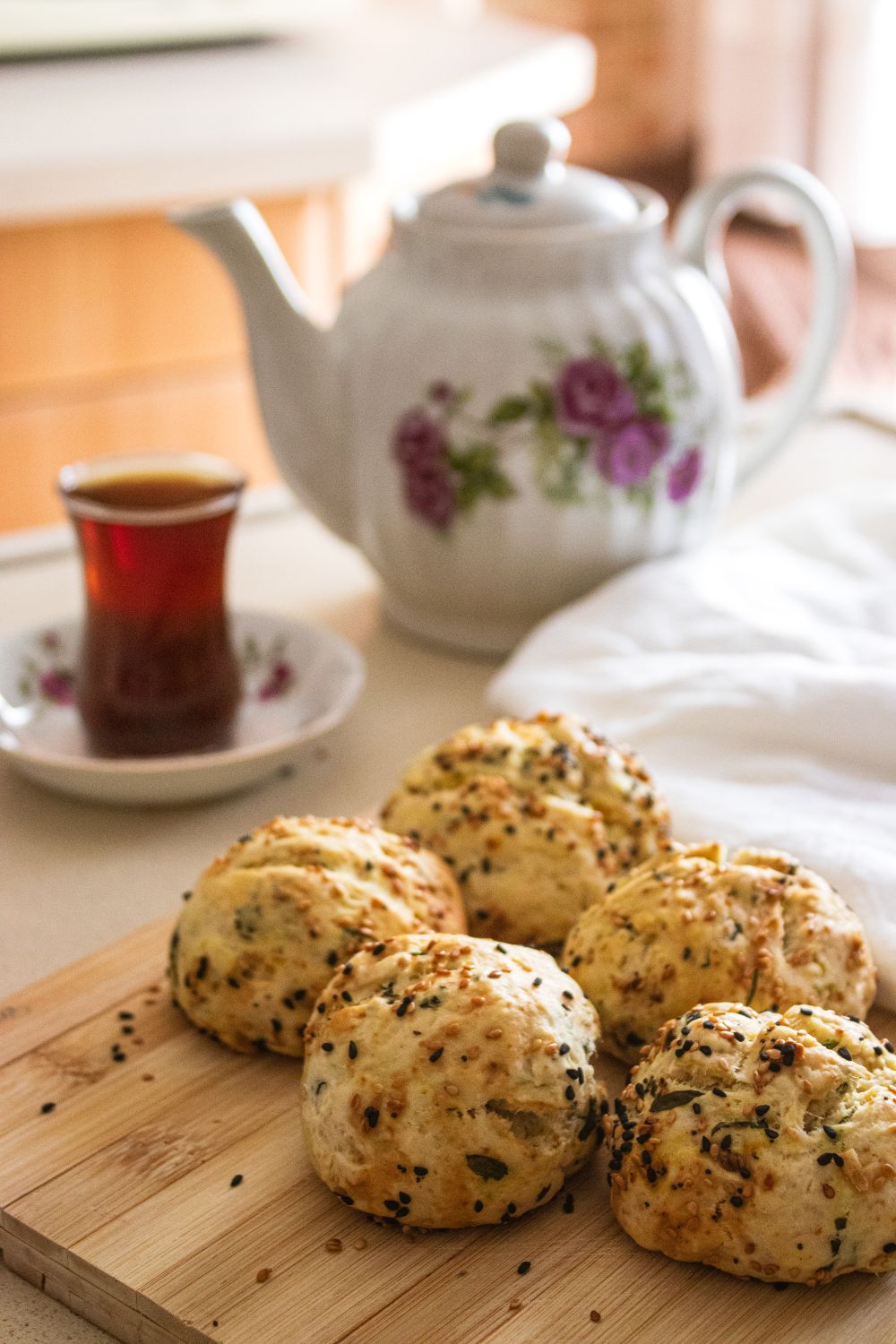
Hamel’s recipe uses 2 cups (240 grams) all-purpose flour, ½ teaspoon table salt, 1 tablespoon baking powder, and 6 tablespoons (85 grams) cold butter. The main additions are 1 cup (113 grams) of sharp cheddar, grated or chopped, and three trimmed, chopped scallions, including both their white and green parts. These quantities make 10 triangular scones, enough to share without committing to a mountain of dough.
The wet ingredients are two large eggs and ⅓ cup of milk, cream, sour cream or ricotta. The published recipe allows any of those dairy options, so you don’t have to assume heavy cream is the only acceptable choice. For extra flavor, it also allows 1 tablespoon Dijon mustard and 1 teaspoon hot sauce. Both are optional; the cheddar-and-scallion combination remains the foundation whether you use them or not.
Unlike some savory scone recipes, this one contains no added sugar. That is a recipe-specific detail, not a rule that every cheese scone must follow. Baker and cookbook author Sally McKenney uses a tablespoon of sugar in her separate ham-and-cheese version, explaining that it “balances the strong savory flavors.” Both approaches illustrate the same point: savory baking is about the overall flavor, not simply removing every ingredient associated with sweets.
Choose one recipe and follow its proportions rather than borrowing ingredients indiscriminately from another. McKenney’s version uses buttermilk, frozen grated butter, and a different oven temperature; Hamel’s uses cold butter pieces and offers several dairy choices. Those are distinct formulas, even though both feature cheddar. For the batch described here, stick to Hamel’s ingredient amounts and method so the dough has the intended consistency.
Related: 11 Grocery Store Items From the 1960s That Vanished From the Shelves. Can You Remember Even 5?
Keep the Butter Cold and the Mixing Brief
Preheat the oven to 375°F and line a baking sheet with parchment or lightly grease it. Whisk the flour, salt, and baking powder together, then work in the cold butter with your fingers. You are looking for an uneven, crumbly mixture, not a perfectly smooth paste. Once that texture is established, toss in the cheddar and scallions so the savory additions are distributed before the liquid arrives.
Cold butter is more than a fussy baking instruction. In her explanation of scone technique,McKenney describes how butter in the flour mixture releases steam as the scones bake, creating pockets that contribute to a flaky interior. “You don’t want to over-work scone dough,” she writes. Her recipe uses frozen, grated butter, but the broader lesson supports Hamel’s instruction to start with cold butter rather than softened butter.
In a separate bowl, combine the eggs and your chosen dairy, adding the mustard and hot sauce if using them. Stir this into the dry mixture just until everything is evenly moistened. Hamel specifically warns that the dough will be very sticky, so stickiness doesn’t automatically mean something has gone wrong. Resist the temptation to keep stirring until it behaves like a smooth bread dough; this recipe doesn’t call for that texture.
Generously flour your work surface and hands, then pat the dough into a 10-by-2-inch rectangle. Cut it into five squares, then divide each diagonally to make 10 triangles. Place them on the prepared sheet with at least an inch between them, then bake for 20 to 23 minutes, until nicely browned. The recipe also offers a larger, flatter shape using a 15-by-3-inch rectangle, but keep the cutting pattern the same.
Breakfast Is Only the Beginning
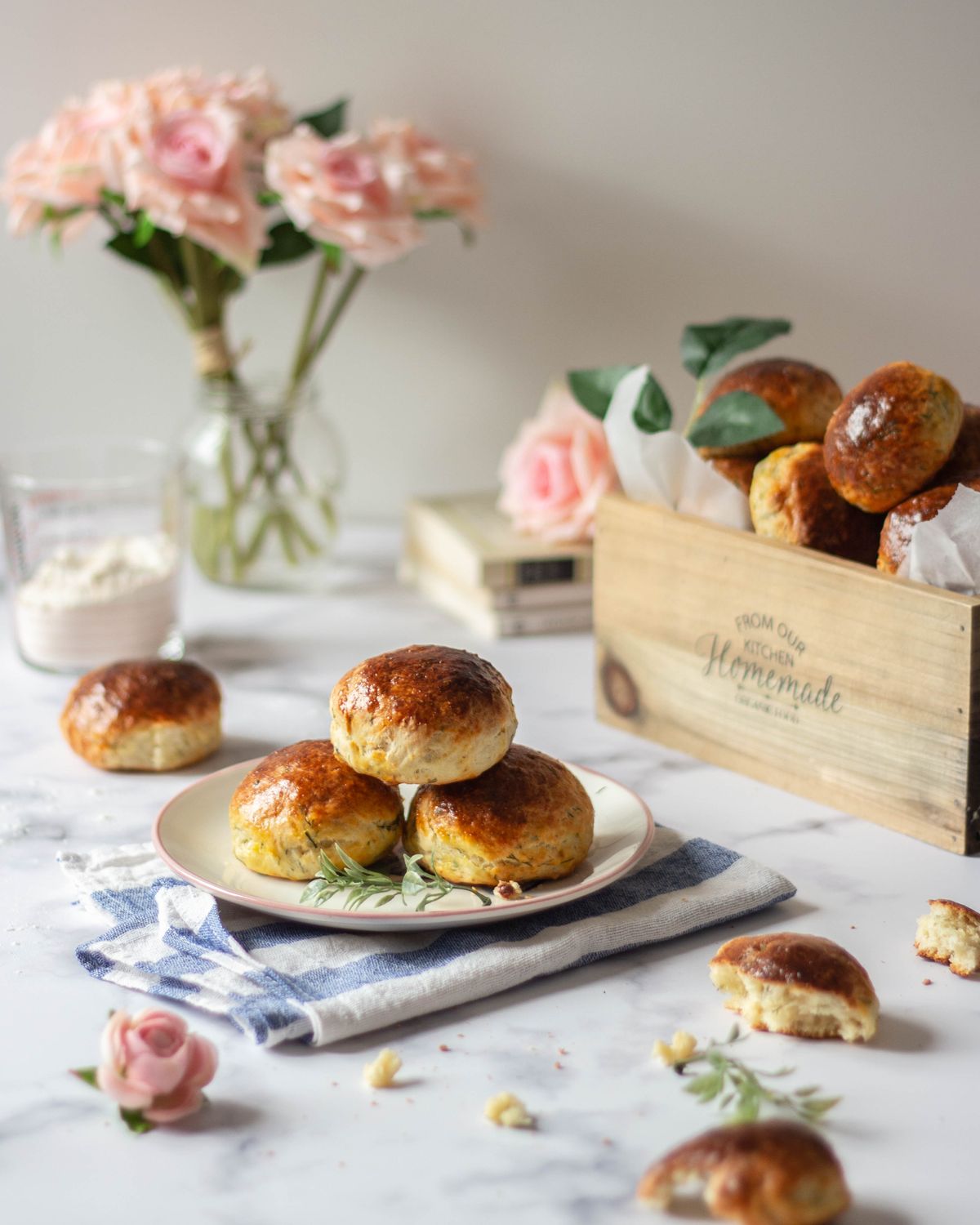
Serve the scones warm or at room temperature; both are explicitly supported by the recipe. Hamel suggests scrambled eggs as the breakfast partner, giving the cheese-and-scallion flavors a straightforward place on the plate. There is no need to invent a complicated topping before serving them. The cheddar, butter, and optional seasonings are already built into the dough, so these scones don’t need icing to finish the job.
Savory scones can also move beyond breakfast, although the pairing should suit the recipe you choose. King Arthur’s separate bacon-cheddar-chive recipe recommends serving its scones with soup or salad, while McKenney suggests scrambled eggs or pumpkin chili for her ham-and-cheese version. These examples show why the savory category is useful: it has room alongside meals where a sugary pastry might feel out of place. They are serving ideas, not a requirement to add meat to this cheddar batch.
For leftovers, King Arthur recommends keeping these cheddar-and-scallion scones well wrapped at room temperature for several days, or freezing them for longer storage. Follow the guidance attached to the recipe rather than assuming all scones have identical storage instructions. That makes a batch of 10 more manageable if you are baking for a smaller household. Breakfast today doesn’t have to mean finishing the entire tray.
The real change is savory, not complicated. A few familiar ingredients produce a breakfast pastry with a different personality: cheese instead of chocolate chips, scallions instead of dried fruit, and no glaze waiting at the finish line. Keep the butter cold, mix only as directed, and let the oven do the work. The muffin basket can have its turn another morning; this batch lets cheddar lead.