5 Discontinued Foods Once Sold on America’s 1960s Grocery Shelves
Walk through a modern grocery store, and it’s easy to forget how experimental the supermarket aisle once was. Food companies constantly tested unusual shapes, flavors, packaging ideas,, and new ways to make familiar foods more interesting. Some became lasting brands. Others disappeared after only a few years, leaving behind little more than old advertisements, vintage packages and memories.
The five products below were sold during the 1960s and eventually disappeared from ordinary grocery distribution. Their stories also show how creative food companies could be when trying to make a product stand out.
Pizza Spins
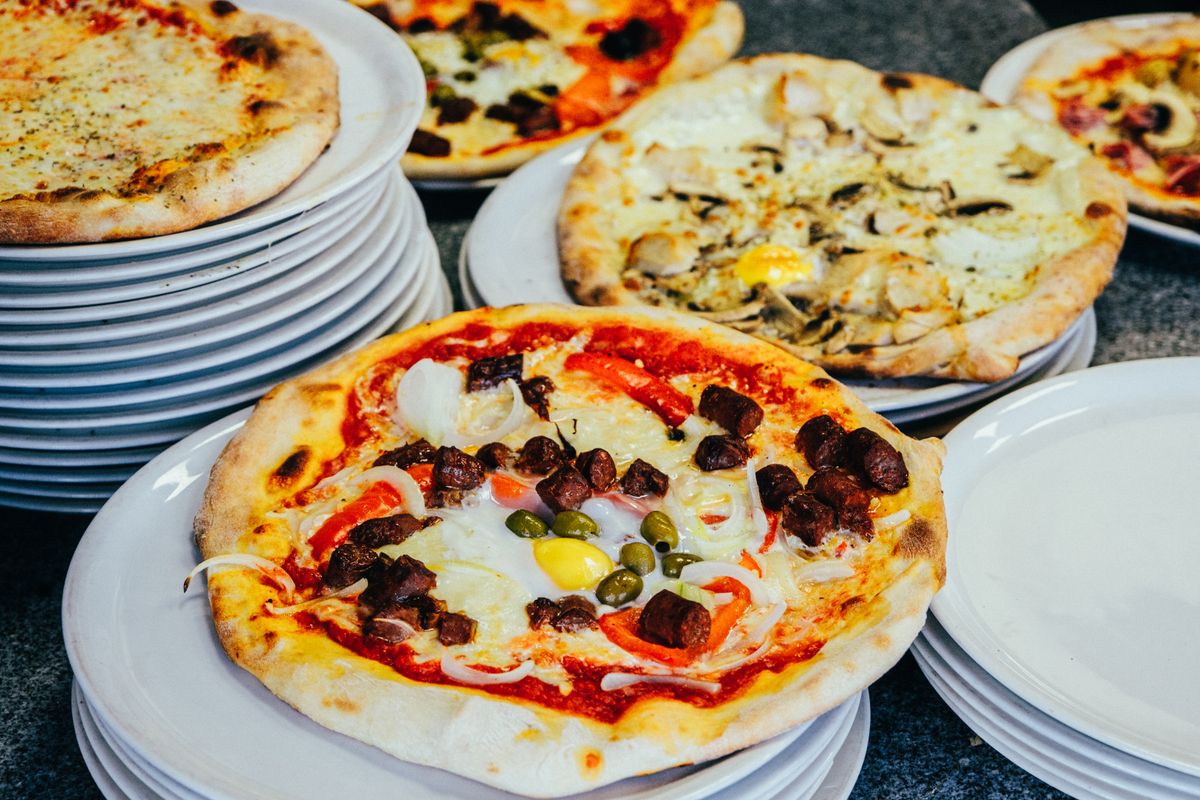
Imagine opening a snack box and finding little pinwheels designed to taste like pizza. That was the idea behind Pizza Spins, a General Mills packaged snack that was introduced nationally in July 1968. The company describes the product as a pinwheel shaped snack made with ingredients including parmesan cheese, tomatoes, pepper, and pizza spices.
Even the packaging was designed to make the connection obvious. The box used green, white, and red and featured images of both pizza and the snack itself. Inside, the product came with a reclosable foil lining. Pizza Spins did not disappear immediately. General Mills says the snack was discontinued around 1975, so that date should be treated as approximate rather than as an exact final production date. The company has not confirmed why it discontinued it, so claims about poor sales or changing consumer tastes are speculation. For a product that lasted only several years, Pizza Spins certainly left behind a memorable concept: take the flavor of pizza and turn it into a crunchy, portable snack.
Related Post:11 Grocery Store Items From the 1960s That Vanished From the Shelves. Can You Remember Even 5?
Whistles
In the 1960s, General Mills had another unusual idea: make a snack that actually looked like a whistle. Whistles were cheddar flavored corn snacks introduced as part of the company’s original snack trio alongside Bugles and Daisys. General Mills places the trio’s origins in 1964, while preserved advertising from 1966 provides additional period evidence. The flavor was marketed as similar to grilled cheese on toast, but in a crunchy snack form. The unusual whistle shape made the product instantly recognizable and helped distinguish it from ordinary corn snacks. One important detail to keep in mind, though. The evidence supports the snack’s whistle shape, but it does not show that every piece could actually whistle. That familiar bit of nostalgia should not be presented as fact without evidence.
Whistles also didn’t last long. General Mills says the product disappeared within a few years, although the company does not give a precise final-production year or a specific reason for its discontinuation. Today, Bugles are the recognizable survivor from that original trio. Whistles, meanwhile, became one of those short-lived grocery products that are far easier to find in old advertisements than on today’s shelves.
Daisy
If Whistles made snacks look like whistles, Daisy s took the shape idea in a completely different direction. Daisys was another General Mills product from the same 1960s snack experiment. It was flower shaped and was advertised with a puffed-popover flavor description. Preserved 1966 advertising places Daisys alongside Whistles and Bugles, providing a glimpse into the company’s approach to creating visually distinctive snacks. Like Whistles, Daisy*s disappeared within a few years. General Mills confirms that both products were eventually discontinued, but it does not provide an exact final year for either one.
That makes Daisy s interesting for another reason. The product was not simply an attempt to introduce another flavor. Its shape was part of its identity. The 1960s grocery aisle was increasingly filled with products competing for attention, and unusual shapes gave companies another way to make a package memorable. Pinwheels, whistles, and flowers were not just visual details. They were part of how these snacks were presented to shoppers. Daisys may have disappeared, but it remains a good example of how far food manufacturers were willing to go when experimenting with the look of a snack.
Pillsbury Space Food Sticks
Few grocery products had a name quite as futuristic as Space Food Sticks. Pillsbury marketed the product as individually wrapped chewy rods, bringing the excitement surrounding America’s space program into an ordinary consumer food. The Henry Ford holds a chocolate-flavor package dated 1969 to 1971, providing direct evidence that the consumer product was being sold around the end of the 1960s. The package contained 14 individually wrapped sticks and promoted them as something to take to school, work, or play. But an important distinction separates the consumer product from the food developed for astronauts.
The Pillsbury archives explain that the company marketed a consumer version while astronaut food was treated separately. The archives also document a 1971 decision to remove the word “Space” from the advertising and eventually the product’s name. The original line continued into the 1980s before being discontinued. That means the popular story that Space Food Sticks vanished after the moon landing does not tell the whole story. It is also incorrect to claim that Neil Armstrong or Buzz Aldrin ate the grocery-store version on the moon. The archival material does not establish that. A later revival also means the original product should not be described as having been completely unavailable ever since. Still, the product remains a fascinating snapshot of the era, when even a grocery-store snack could be marketed with the futuristic appeal of the space program.
Fruit Stripe Gum
Fruit Stripe gum is perhaps the most familiar name on this list, but its disappearance is also the most recently confirmed. The gum was originally associated with Beech Nut and later became part of Ferrara’s portfolio. Duke University’s advertising archive preserves a 1960s commercial featuring striped animals, five colors, and five flavors: cherry, lemon, orange, mixed fruit, and lime. The period advertising also promoted special Halloween packs. Its history illustrates why old packaging and advertisements matter when looking back at discontinued foods. Later versions of a product can change, so it is safer to use period evidence rather than assume every detail remained identical over the decades.
Fruit Stripe’s disappearance is particularly well documented. Ferrara told CBS MoneyWatch that it had stopped production in 2022, while the public confirmation of the discontinuation came in January 2024. The company cited consumer preferences, purchasing patterns, and broader brand trends. So January 2024 was the public confirmation date, not necessarily the date manufacturing ended. And if you remember seeing Fruit Stripe after that, remaining inventory doesn’t necessarily mean production was continuing.
What These Lost Grocery Products Tell Us
These five products were very different, but they share one thing: experimentation. Pizza Spins turned pizza flavor into a pinwheel snack. Whistles and Daisy*s used unusual shapes to distinguish themselves. Space Food Sticks borrowed the excitement of the space age for the grocery aisle. Fruit Stripe built an identity around colorful stripes, animated animals, and multiple flavors. The 1960s supermarket also became a place where convenience, novelty, and visual presentation mattered more than ever. The Smithsonian’s National Museum of American History notes that the market for frozen prepared foods was booming by the middle of the decade, alongside the expansion of supermarket freezer cabinets. That broader environment helps explain why food companies were continually experimenting with new products and formats.
Of course, it would be a mistake to assume any of these products was a national favorite or that Americans everywhere ate them. There is no comparable consumer-recognition study establishing that. Their nostalgia value comes from their distinctive packaging, advertising, and documented place in grocery history. And that may be what makes discontinued foods so interesting. A grocery shelf is more than a collection of things to eat. It records the ideas companies thought shoppers might love. Some ideas became permanent. Others lasted only a few years. Either way, once those products disappear, the old boxes and advertisements become small windows into what people could find on shelves in another era.