The Most Powerful Cities Are Not the Ones Americans Think. These Places Are Quietly Taking Over
For decades, America’s power map was easy to read. New York had the money. Los Angeles had the culture. Washington had the politics. San Francisco had the future. Chicago had the muscle. These cities did not just dominate skylines; they shaped how the country worked, spent, voted, dreamed, and moved.
But a quieter shift is now underway. The cities gaining power fastest are not always the biggest, loudest, or most famous. They are the places where people are still moving, companies are still expanding, housing is still being built, and younger workers are still betting their futures. They are not replacing New York or Los Angeles overnight. But they are pulling more weight than many Americans realize.
The new American power centers look more like Austin, Raleigh, Dallas-Fort Worth, Nashville, Charlotte, Phoenix, Salt Lake City, Orlando, and Columbus. They are less about old prestige and more about momentum.
The Old Power Cities Still Matter, But Momentum Has Moved
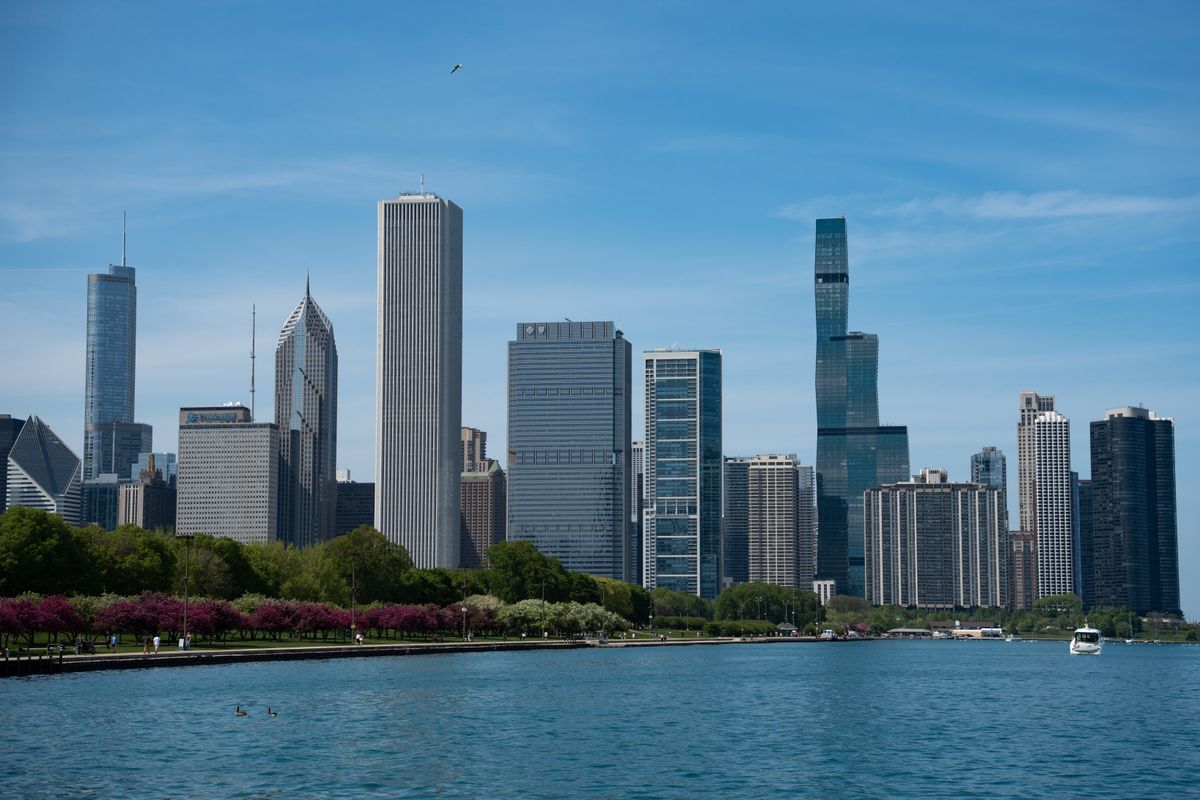
New York, Los Angeles, Chicago, Washington, and San Francisco remain enormous engines of finance, media, government, entertainment, and technology. No serious look at American power can pretend otherwise.
But power is no longer measured only by who has the tallest buildings or the deepest history. Increasingly, it is measured by who is attracting workers, building homes, landing corporate relocations, growing tech jobs, and creating enough economic gravity to pull people in.
That is where the Sun Belt and fast-growing interior metros are changing the story. Recent population estimates show the South continues to dominate the nation’s fastest-growing city lists, with Texas suburbs standing out in particular. Austin crossed the 1-million-resident mark, while Raleigh surpassed 500,000 residents, giving both cities symbolic milestones in America’s shifting urban hierarchy.
This is not just population trivia. People move where they believe the next chapter is possible. Employers notice. Developers notice. Politicians notice. Eventually, the whole country notices.
Austin Has Become More Than a Boomtown
Austin used to be framed as a quirky college town with music, barbecue, and a slogan about staying weird. That version still exists, but it is now layered beneath something much bigger: a city with national economic force.
Austin’s rise has been powered by technology, corporate migration, state politics, and a steady inflow of highly educated workers. It has become one of the country’s most visible examples of how a midsized capital city can turn into a national power player without becoming a traditional coastal giant.
Its challenge is also obvious. Growth has brought higher housing costs, congestion, and the uncomfortable question every boomtown eventually faces: can it sustain the energy that drew people in the first place?
Still, Austin’s rise is no accident. It is a signal. The next generation of American power does not always wear a Wall Street suit or sit beside the Pacific. Sometimes it looks like construction cranes over the Texas Hill Country.
Raleigh and Durham Are Building Quiet Influence
Raleigh does not always shout for national attention. That may be part of its advantage. Along with Durham and the wider Research Triangle, Raleigh has become one of the country’s most important knowledge-economy regions. Universities, health care, life sciences, technology, state government, and a steady stream of educated workers have turned the area into a quiet giant.
Its growth has not come with the same celebrity glow as Austin or Nashville, but it may be more durable. The Triangle’s strength is not built on a single industry or brand. It is built on institutions, talent, affordability relative to larger coastal markets, and a steady job base that keeps families and companies.
Raleigh’s crossing of the 500,000-population threshold matters because it reflects something larger: a city that is no longer emerging in theory. It has arrived in practice.
Dallas-Fort Worth Is Acting Like a Nation-State Economy
If Austin is the flashy breakout star, Dallas-Fort Worth is the machine. The metroplex has become one of the most powerful business magnets in the country, drawing corporate headquarters, logistics operations, finance jobs, and tech workers at a scale few regions can match. It is not one city so much as an economic system: Dallas, Fort Worth, Plano, Frisco, Irving, Arlington, and a constellation of fast-growing suburbs all feeding the same engine.
Between 2021 and 2024, Dallas-Fort Worth added one of the largest numbers of tech talent jobs in North America, nearly matching New York’s gain during that period. It also ranked among the markets with the strongest tech job growth rates.
That matters because Dallas-Fort Worth is not trying to become Silicon Valley. It is building something different: a broad, business-friendly, infrastructure-heavy metro economy that can absorb growth across multiple sectors at once.
Nashville Turned Culture Into Economic Gravity
Nashville’s power used to be understood through music. Now music is only part of the story. The city has become a magnet for health care, tourism, corporate offices, hospitality, and young professionals looking for a Southern city with national energy. Its brand is strong, but its economy is no longer just a brand. It is a growing commercial force.
The danger for Nashville is that success has created strain. Housing costs have climbed, traffic has worsened, and longtime residents increasingly question who the city’s boom is really serving. That tension is now part of the story in nearly every fast-growing American city.
Still, Nashville’s rise shows how cultural identity can become economic infrastructure. People want to visit. Then some want to move. Then companies follow the talent.
Charlotte Is Becoming the South’s Boardroom
Charlotte has quietly become one of America’s most important financial centers. It does not have New York’s global dominance, but it has something else: room to grow, a strong banking base, expanding corporate presence, and a location that connects much of the Southeast.
The city’s power is subtle. It is not built on spectacle. It is built on offices, airports, banks, real estate, sports, logistics, and steady migration. Charlotte also reflects a broader pattern: the Southeast is no longer just a lower-cost alternative to the Northeast. It is becoming a primary destination for ambition.
Phoenix, Salt Lake City, Orlando, and Columbus Are Part of the Same Shift
Phoenix represents scale. Its growth has made it one of the most important metros in the West, even as water, heat, and infrastructure pressures raise serious questions about its long-term limits.
Salt Lake City represents strategic positioning: tech, outdoor lifestyle, business growth, and a regional identity that gives it influence beyond its size. Orlando is often reduced to tourism, but that misses its broader growth in housing, migration, health care, and business services.
Columbus is perhaps the most overlooked of all. It is not coastal, flashy, or mythologized. But it sits at the center of education, logistics, insurance, government, manufacturing investment, and affordability in the Midwest. In a country where many families are priced out of older power centers, that combination matters.
The New Power Formula Is Simple
The cities gaining influence tend to have four things in common: jobs, housing, talent, and permission to grow. That last part may be the most important. Some legacy cities still have unmatched institutions, but they have made growth difficult through high costs, limited housing supply, political friction, or quality-of-life concerns. Meanwhile, many rising metros have made themselves easier places to enter.
Metro economies now account for the overwhelming share of U.S. economic output, employment, wages, and personal income, meaning shifts between metros are not side stories. They are the American economy moving beneath our feet.
The country’s future does not lie in leaving its old giants behind. But it is spreading out. Power is becoming less concentrated in a handful of famous places and more distributed across metros that can offer opportunity without demanding impossible tradeoffs.
That is why America’s next power map looks different. It is not only Wall Street, Hollywood, Capitol Hill, or Silicon Valley anymore. It is a startup founder in Austin, a biotech researcher in Raleigh, a finance executive in Charlotte, a logistics operator in Dallas-Fort Worth, a health care strategist in Nashville, a semiconductor worker in Phoenix, a software engineer in Salt Lake City, and a family in Columbus choosing space, stability, and a future they can still afford.
The most powerful cities in America are still powerful. But the cities quietly taking over are the ones making room for what comes next.