Trump Mail-In Voting Order Blocked by Appeals Court as Election Power Fight Intensifies Before 2026 Vote
A federal appeals court has blocked President Donald Trump’s mail-in voting order in 23 states, creating a major legal clash over election authority, state control, and the future of federal involvement in how Americans cast their ballots.
The ruling arrived at a critical moment. Election officials across the country are already preparing for the 2026 midterm elections, a process that requires months of planning, technology updates, voter communication, and coordination between local, state, and federal agencies.
The decision by the 1st U.S. Circuit Court of Appeals did not permanently end Trump’s mail-in voting order. Instead, it kept a lower court injunction in place, preventing key parts of the order from moving forward while the broader legal challenge continues.
The case has quickly become larger than a dispute over absentee ballots. It now represents a major test of presidential authority and raises a fundamental question about American elections: How far can a president go in changing election procedures without approval from Congress?
The Election Calendar Creates a Race Against Time

The legal fight surrounding Trump’s mail-in voting order is unfolding under intense pressure from the election calendar. Unlike many government policies that can be adjusted gradually, election procedures operate on strict deadlines.
State election offices must prepare ballots, test voting systems, train workers, coordinate mail delivery, and educate voters months before Election Day. A rule change introduced too late can create confusion even if officials are prepared to follow it.
The appeals court focused heavily on this timing issue. The judges rejected the administration’s argument that the states had challenged the order too early, finding that the executive order had already created practical challenges for election administrators.
The administration argued that federal agencies had not completed all steps required to implement the order. However, the court determined that states could not simply wait until the final stages of election preparation before seeking legal protection.
The judges noted that upcoming deadlines forced states to respond immediately. Election officials needed clarity because even temporary uncertainty could affect how ballots were designed, distributed, and processed.
This concern reflects a long-standing principle in election law. Courts often avoid major voting changes close to an election because sudden adjustments can create administrative problems and voter confusion.
A Presidential Order Pushes Into State-Controlled Election Systems
At the center of the dispute is Trump’s March executive order aimed at changing federal election procedures. The order focused on citizenship verification, mail ballot handling, and federal enforcement efforts related to election eligibility.
Supporters of the Trump mail-in voting order argued that stronger verification systems would protect election integrity and increase public confidence. They said federal agencies should have a greater role in ensuring that election laws are followed consistently.
Opponents argued that the order crossed constitutional boundaries by expanding presidential power into areas traditionally managed by states. They claimed election administration requires cooperation between state governments and Congress rather than unilateral action from the executive branch.
The disagreement reflects a historic tension in American elections. Since the founding of the country, states have played a central role in organizing elections. At the same time, federal authorities have gradually expanded oversight through legislation such as the Voting Rights Act and other election laws.
The current legal battle continues that debate. The question is not only about mail ballots but also about whether presidential power can reshape election systems through executive action.
Why the Court Refused to Restart the Mail Voting Restrictions
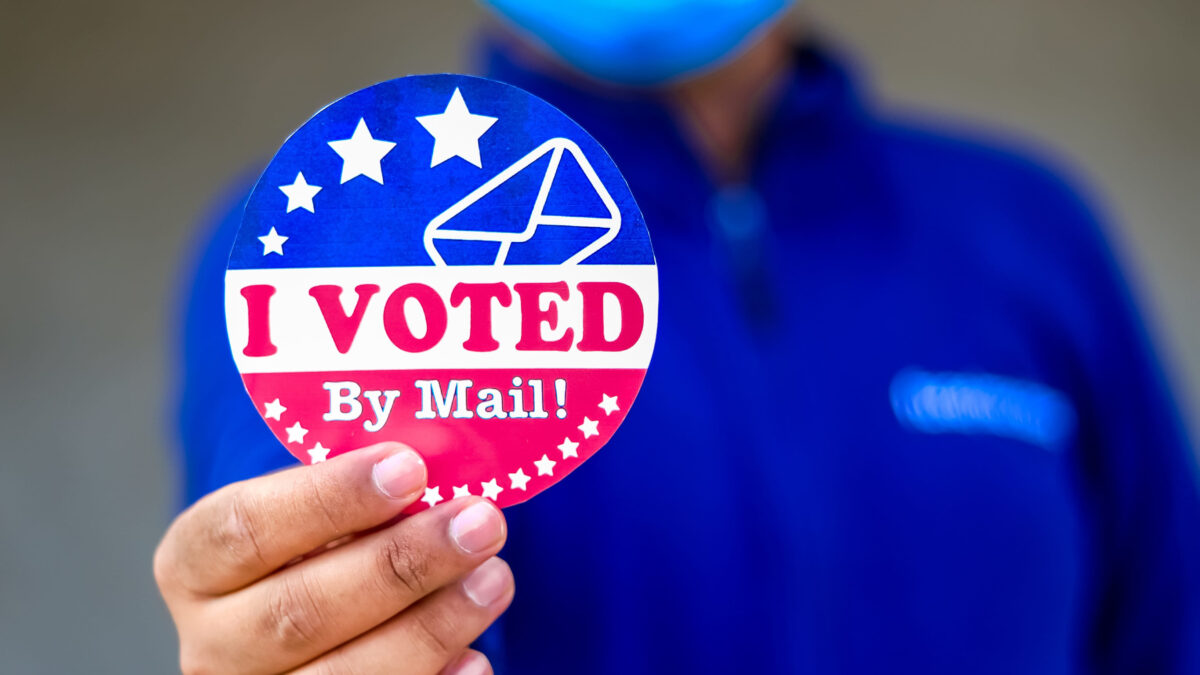
The Justice Department asked the appeals court to suspend the lower court’s injunction while the administration continued its appeal. Government lawyers argued that the lawsuit was premature because agencies had not finished creating final policies.
The appeals court disagreed with that reasoning. The judges concluded that the order contained specific deadlines and requirements that already affected state planning decisions.
The court found that states faced real consequences before final implementation. Election officials had to consider possible changes, allocate resources, and prepare for requirements that could later become legally enforceable.
The ruling focused on practical realities rather than waiting for a crisis to occur. The judges recognized that election administration cannot be treated like an ordinary regulatory process because deadlines cannot easily be extended.
For states preparing millions of ballots, uncertainty itself can become a serious challenge. Election offices need stable rules to ensure that voters receive accurate instructions and that ballots are counted according to established procedures.
The decision preserved the lower court’s injunction while allowing the larger constitutional debate to continue through the appeals process.
The Postal Service Becomes a New Front in the Election Debate
One of the most unusual elements of the Trump mail-in voting order involved the role of the U.S. Postal Service. The order directed USPS to develop new procedures connected to mail ballot delivery and voter lists.
The Postal Service has traditionally served as a transportation system for election materials. Its role has generally focused on delivering ballots rather than determining eligibility requirements.
The states challenging the order argued that the new requirements would give USPS an unprecedented role in election administration. They questioned whether the agency had legal authority to create rules affecting state-controlled voting systems.
The dispute highlights how election administration involves many connected systems. A change involving mail delivery can affect ballot design, voter communication, election technology, and legal procedures.
For voters, these technical decisions can have direct consequences. A small administrative change can influence whether a ballot reaches the correct location, whether instructions are clear, and whether election workers can process ballots efficiently.
The court’s decision keeps these proposed changes from taking effect in the states involved in the lawsuit while judges continue reviewing the broader legal questions.
Election Officials Face Pressure From Conflicting Rules

Behind the legal arguments are thousands of election workers responsible for carrying out the voting process. These officials often operate under detailed state laws while also responding to federal requirements.
The states involved in the lawsuit argued that Trump’s mail-in voting order created uncertainty for local administrators. They raised concerns that officials could face federal scrutiny while trying to follow state election procedures.
The lower court specifically questioned the use of federal citizenship lists as a possible resource for state election officials. The court expressed concern that incomplete federal records could create pressure on officials to make decisions affecting eligible voters.
Election administration depends heavily on accuracy and public trust. Local officials must balance security measures with the responsibility to ensure eligible citizens can participate.
This challenge has appeared throughout American history. Election reforms often create debates about whether new safeguards strengthen democracy or create unnecessary barriers.
The current dispute places election workers at the center of that national conversation.
The Larger Debate Over Security, Access, and Public Trust
The Trump mail-in voting order has revived one of the most persistent debates in modern American politics: how to balance election security with voter access.
Supporters of stronger verification measures argue that elections must include strict safeguards. They believe federal oversight can help prevent violations and reassure voters who question the reliability of election systems.
Critics respond that existing laws already prohibit noncitizens from voting in federal elections. They argue that additional federal requirements could create unintended problems if government databases contain missing or outdated information.
The debate reflects broader disagreements about the role of government in elections. One side emphasizes stronger national standards, while the other emphasizes state authority and flexibility.
Mail-in voting itself has become a significant part of American elections. Its use expanded dramatically during the COVID-19 pandemic, and many states have continued refining absentee ballot systems based on voter demand and administrative experience.
The court battle over Trump’s mail-in voting order is therefore connected to a much larger national discussion about how Americans vote and who should control the rules.
A Constitutional Battle Over the Future of Executive Power
The most important issue in the case may extend beyond mail ballots. The dispute raises questions about the separation of powers between the presidency, Congress, and state governments.
The Constitution gives states a major role in administering elections. Congress also has authority to establish certain national election requirements.
However, presidents generally depend on existing laws passed by Congress when directing federal agencies. The states challenging Trump’s mail-in voting order argued that the executive branch attempted to create new election rules without sufficient legal authority.
The lower court agreed with that argument, finding that parts of the order exceeded presidential power. The appeals court’s decision focused mainly on keeping the injunction in place rather than issuing a final ruling on the constitutional questions.
The case could eventually reach the Supreme Court. If that happens, the justices may have to address the boundaries of presidential authority in election administration.
The outcome could influence future presidents from both political parties. A decision expanding executive power could create new possibilities for future administrations, while a decision limiting that power could reinforce the traditional role of states and Congress.
The Supreme Court Question Looms Over the Next Election Fight

The Justice Department indicated that it may seek help from the Supreme Court if the appeals court refused to pause the injunction. That possibility adds another layer of uncertainty to the case.
Emergency election-related cases often move quickly because courts understand that voting deadlines cannot be reversed easily. A decision made after ballots are prepared or mailed may have limited practical value.
The timing creates a difficult challenge for all sides. The administration wants its policy reviewed before the election process advances too far, while states argue that stability is essential for voters and election workers.
The next legal steps could determine whether parts of the Trump mail-in voting order eventually return or remain blocked permanently.
Until then, the affected states will continue operating under existing mail voting rules.
The Battle Over Mail Voting Reflects a Changing American Election Landscape
The ruling against Trump’s mail-in voting order represents a significant moment in the ongoing debate over elections in the United States. It highlights the tension between federal authority, state responsibility, and the practical realities of running a nationwide election.
For millions of voters, the immediate impact is straightforward. The existing mail voting systems in the affected states remain in place while the courts continue examining the dispute.
But the larger questions remain unresolved. How should election security be balanced with voter access? How much authority should a president have over state-run election systems? And who ultimately decides the rules that shape American democracy?
As the legal battle continues, the answers could influence not only the 2026 elections but also the way future generations understand the balance of power in American elections.