7 Classic Dishes That Make You Work for Every Bite
Some dishes ask for more than a hot pan and a few ingredients. They involve dough that needs resting, fillings prepared separately, individual parcels folded by hand, or several components brought together at just the right moment.
That effort is part of their character, but it does not mean these classics have disappeared. Tamales remain part of documented family Christmas traditions, and cassoulet retains its regional identity in southern France. These seven dishes show the different kinds of work a recipe can demand, from repetitive assembly to careful pastry construction.
Beef Wellington
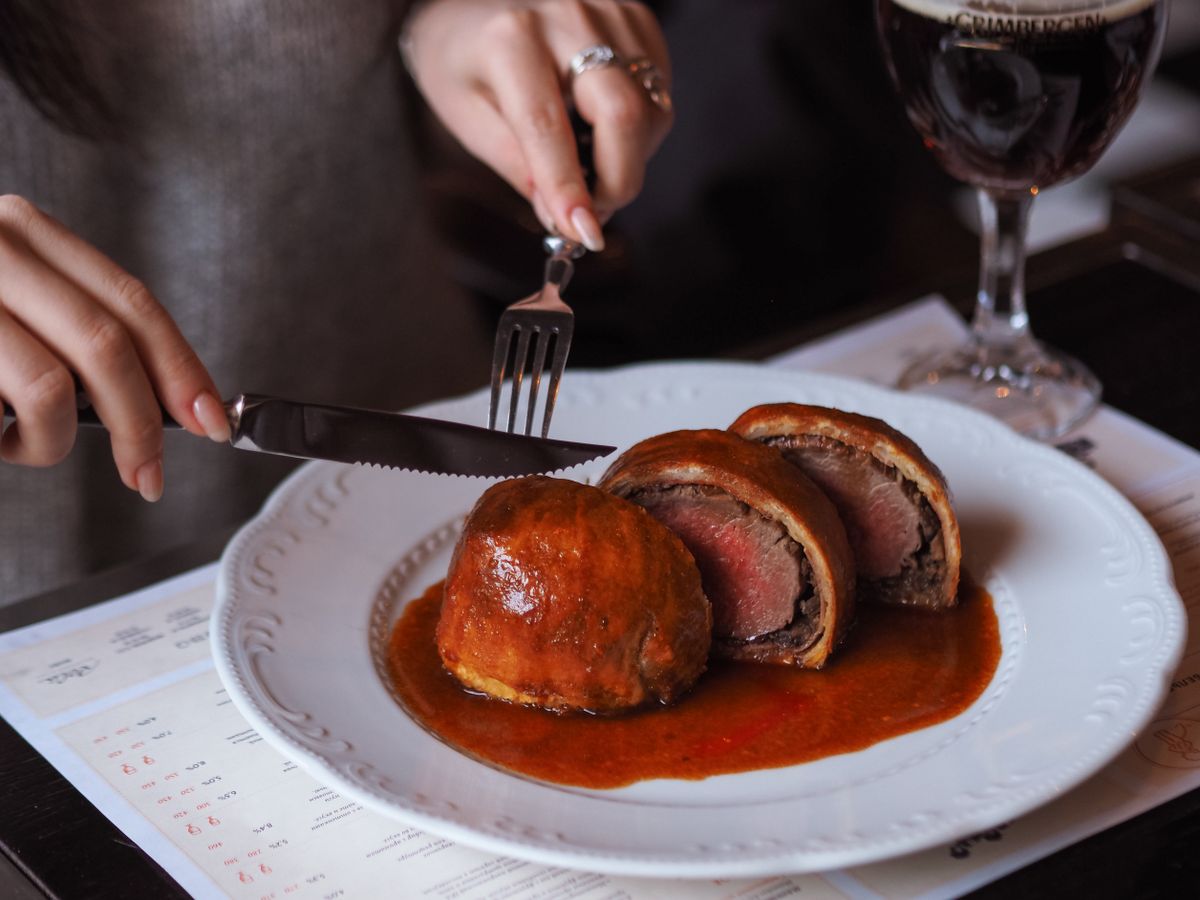
Beef Wellington brings together tenderloin, mushroom duxelles, and pastry, with additions that vary by recipe. In Gordon Ramsay’s version, Parma ham surrounds the mushroom-coated beef before the pastry wraps it, while a separate red-wine sauce adds another layer of preparation.
The challenge is coordinating the components: the mushrooms must cook down to a dry paste, the seared beef needs cooling, and the parcel goes through chilling stages before baking. Ramsay’s method includes overnight shaping, later chilling, and a sauce simmer, although some of that waiting can overlap.
Purchased pastry removes one task, but the filling, wrapping, and timing still require attention. Think of this as a coordinated cooking project rather than simply a roast with a decorative covering.
Related: 7 classic dishes every grandma made in the 1960s (and the wild history behind them)
Mexican Tamales
The work in tamales becomes clear when assembly begins. In the Serious Eats corn-husk version, each wrapper receives a layer of enriched masa, a portion of filling, and a series of folds before the tamales are arranged for steaming.
Preparing the dough and filling is only part of the process; repeating those movements across a batch creates much of the hands-on workload. The guide makes 25 tamales and includes a resting period after steaming.
Its developer also describes making hundreds with her family before Christmas, documenting a continuing tradition rather than a forgotten dish. Masa harina and a stand mixer reduce some preparation, but neither eliminates the individual wrapping that defines this version.
Cassoulet
Cassoulet demands planning more than constant technical precision. Associated with southern France’s Languedoc region, it combines white beans and meats, with variations linked to places including Castelnaudary, Carcassonne and Toulouse.
The Serious Eats preparation involves soaking dried beans, rendering pork, browning meats separately, and then combining the components for extended oven cooking. During that cooking, the surface crust and liquid level need attention.
Much of the elapsed time is waiting, so describing the entire process as continuous labor would exaggerate the burden. Fresh poultry and prepared stock reduce prep, but the beans, browning stages, and monitored cooking still make this a dish to schedule deliberately.
Handmade Ricotta Tortelloni
A short final cooking time can hide a substantial preparation process. VisitModena’s ricotta tortelloni begin with egg dough that is kneaded and rested, plus a filling of ricotta, spinach and cheese.
After rolling the dough, the cook cuts individual pieces, portions the filling, and folds each parcel. The approximately five-minute boil comes after all that work, followed by a butter-and-sage finish.
A pasta machine can help with rolling, but you still have to fill and shape each one. These larger filled parcels belong to a documented regional pasta tradition, and you shouldn’t use their name interchangeably with tortellini or ravioli.
Stuffed Cabbage Rolls
Before cabbage rolls reach the baking dish, the leaves need individual attention. Bon Appétit’s version calls for steaming successive layers, removing softened leaves without tearing them and trimming their thick ribs before filling and rolling.
The recipe also requires tomato sauce and a beef-and-rice filling, then an extended bake once the rolls are assembled. Its distinctive workload comes from handling every leaf, not merely leaving a covered dish in the oven.
Stuffed cabbage crosses culinary traditions; The Nosher reports that it is associated with Sukkot and Simchat Torah among Jews of Polish or Hungarian descent. Making the sauce ahead redistributes the work without removing the rolling stage.
Baked Alaska
Baked Alaska combines cake, ice cream, and meringue, but each component has different timing requirements. In Bon Appétit’s miniature version, the cake must bake and cool before you assemble it with jam and ice cream, then freeze until firm.
The final meringue coating and browning happen just before serving, leaving a finishing task even when the frozen portions are prepared ahead. Purchased ice cream reduces the workload, and the recipe calls for a carefully watched broiler instead of a torch.
Its history also deserves restraint: reporting connects it with Delmonico’s and Charles Ranhofer’s 1894 cookbook, while invention and naming details remain disputed.
Croquembouche
Croquembouche combines several pastry projects in one tower. Bon Appétit’s recipe makes 40 to 50 choux puffs, which must be baked, cooled, and filled with pastry cream before caramel binds them into narrowing layers.
That means managing dough consistency, piping, chilled filling, caramel assembly, and the decorative finish. Unlike a dish that mostly requires unattended cooking, this one combines repeated handwork with structural judgment.
Le Cordon Bleu identifies croquembouche as a classic French celebratory preparation. Making the puffs and cream ahead spreads the workload, but filling and constructing the tower still require a focused session.
Other Posts You May Like
. 6 Comforting Dishes from Around the World That Will Warm Your Soul
. 6 Classic Foods from the 1970s That Have Vanished from Modern Kitchens