Two Scoops of Rice, One Big Story: How Hawai‘i’s Plate Lunch Became an Island Favorite
A plate lunch does not need a dramatic entrance. Its familiar foundation- two scoops of rice, a scoop of macaroni salad, and a generous main dish- makes its appeal clear before the first bite. That main might be chicken katsu, teriyaki beef, Korean-style short ribs, or fish, depending on the restaurant and the appetite. Together, the components form a meal closely associated with Hawai‘i’s everyday food culture, from neighborhood takeout counters to drive-ins.
But this is more than a convenient combination of lunch favorites. The plate lunch grew from plantation-era food traditions, immigrant cooking and the businesses that brought those flavors to a wider public. Its history also contains unanswered questions, particularly about when macaroni salad joined the arrangement. Understanding that evolution means looking beyond the takeout container to the workers, families and communities whose meals helped shape a distinctive island tradition.
Before the Takeout Counter, There Were Plantation Lunches
The plate lunch’s roots lie in the late-19th-century plantation economy, when sugar production drew workers from China, Japan, Portugal and other countries to Hawai‘i. Korean, Filipino and other immigrant communities also contributed to the islands’ changing population and food traditions. These arrivals occurred within a larger history of colonial power and corporate expansion, not simply a cheerful exchange of recipes. Workers brought familiar foods into a demanding labor system, and those foods gradually encountered one another.
Historian Ronald Takaki described that exchange in Pau Hana: Plantation Life and Labor in Hawaii. “As laborers and their families mingled together on the plantations, they began to exchange and enjoy the different ethnic dishes of their friends and coworkers,” he wrote, as quoted in Discover Nikkei’s account of plate lunch history. That observation shows how the meal’s ancestry can draw on several culinary traditions without a single inventor. Shared lunches created opportunities for flavors to travel between households and communities.
Food writer Betty Shimabukuro, co-author of What Hawaii Likes to Eat, pointed specifically to Japanese workers’ packed lunches. “Everything I’ve read about [plate lunch] traces the roots to plantation times and the bentos that the Japanese workers took into the fields,” she told Discover Nikkei. She explained that sharing brought Filipino, Hawaiian, Chinese, and Korean dishes into the mix. The bento connection helps explain the meal’s portability, but it does not establish that today’s rice-and-macaroni-salad combination arrived fully formed in the plantation fields.
One documented early business story belongs to Moyo Iwamoto, a Japanese immigrant who began selling snacks from a Honolulu Harbor pushcart after her husband died in 1921. According to the Japanese American National Museum’s From Bento to Mixed Plate, cited by Discover Nikkei, she later leased a small commercial space. Customers could buy a 50-cent paper plate containing rice, kimchi, takuan, pickled daikon, a vegetable and a main dish. Choices included beef stew, pork chops, and chicken long rice, showing how a varied, ready-to-eat plate was already taking commercial shape before World War II.
How Rice, Mac Salad and a Main Became the Familiar Formula
Iwamoto’s menu offers an important clue, but also a limit: macaroni salad is missing. Discover Nikkei reported that a Honolulu Star-Bulletin inquiry involving 30 food experts, researchers, and proprietors couldn’t pinpoint when that side became part of the plate lunch. “I don’t think anyone knows for sure,” Shimabukuro said. The honest answer is therefore less tidy than a food legend: the meal has recognizable historical roots, while the arrival of one of its defining components remains unresolved.
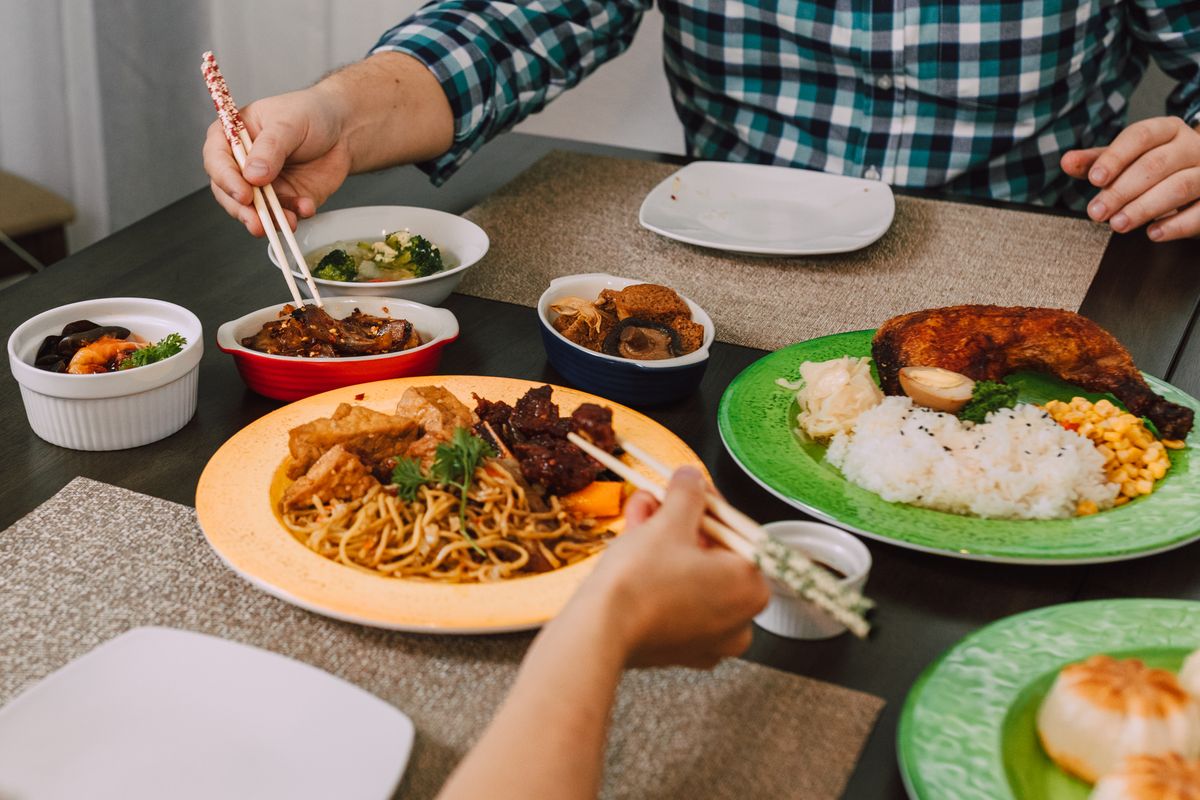
What became recognizable was a flexible format rather than one fixed recipe. Rice and macaroni salad provided a consistent base, while the main dish could reflect different cooking traditions or a restaurant’s specialty. A customer might choose Japanese-influenced chicken katsu or teriyaki, Korean-influenced meat jun or short ribs, or an entrée associated with Native Hawaiian cooking. The plate made room for those differences instead of insisting that every lunch taste the same.
The broader label matters, too. Food historian Rachel Laudan distinguishes Hawai‘i’s “Local Food,” its multicultural regional cuisine, from the older Native Hawaiian food tradition. In a 2018 essay, she explained that Local Food was “not biologically local, nor agriculturally local but culturally local.” In other words, its identity did not depend on growing every ingredient nearby; it reflected the communities that cooked, adapted, and shared it. A plate lunch is an especially clear example of that distinction.
Laudan also places the consolidation of Local Food within the social and political changes that followed statehood in 1959. In her account, potlucks, public lunches and lunch trucks helped create dishes that appealed across communities whose members had previously been marginalized. That later development does not erase the plate lunch’s plantation-era ancestry. It helps explain the next step: how foods with different origins became understood as part of a shared local identity rather than remaining separate immigrant meals.
Related:Everyday Purchases That May No Longer Be Worth Full Price in 2026
Why a Simple Lunch Became a Taste of Home
The meal’s staying power comes partly from its role in ordinary life. Writing for Saveur in 2018, Hawai‘i-born journalist Mitchell Kuga recalled picking up plate lunches while working construction with his father. His account connected those roadside lunch breaks to the earlier workers whose foods helped create the tradition. It captures something a restaurantdescription cannot: plate lunch is not only food to seek out on vacation, but food embedded in workdays, family routines and memories.
That emotional connection becomes especially clear when people leave the islands. Food columnist and pharmacist Ryan Tatsumoto told Discover Nikkei, “Plate lunches more than feed the body, they also feed the soul.” He linked that feeling to the desire for “that flavor that you grew up with.” Restaurateurs also carried the format beyond Hawai‘i, serving communities with island connections and introducing new customers to the meal without stripping away its recognizable rice-and-mac-salad foundation.
Still, a shared plate should not be mistaken for proof that Hawai‘i’s complicated history was free of conflict. Discover Nikkei’s account explicitly challenges the overly simple “melting pot” story while recognizing the value of cultural exchange. The plate lunch’s legacy is more specific and more compelling: people working and living alongside one another helped build a food tradition that became familiar across generations. Two scoops of rice and a scoop of mac salad are the shorthand; the history belongs to the people who made room for one another’s cooking.