Karoline Leavitt’s Press Secretary Performance Sparks Debate After Supporters Call Her ‘One of the Best Ever’
Karoline Leavitt has become one of the most talked-about figures behind the White House podium, with supporters praising her direct style, confidence under pressure, and ability to defend the administration’s message.
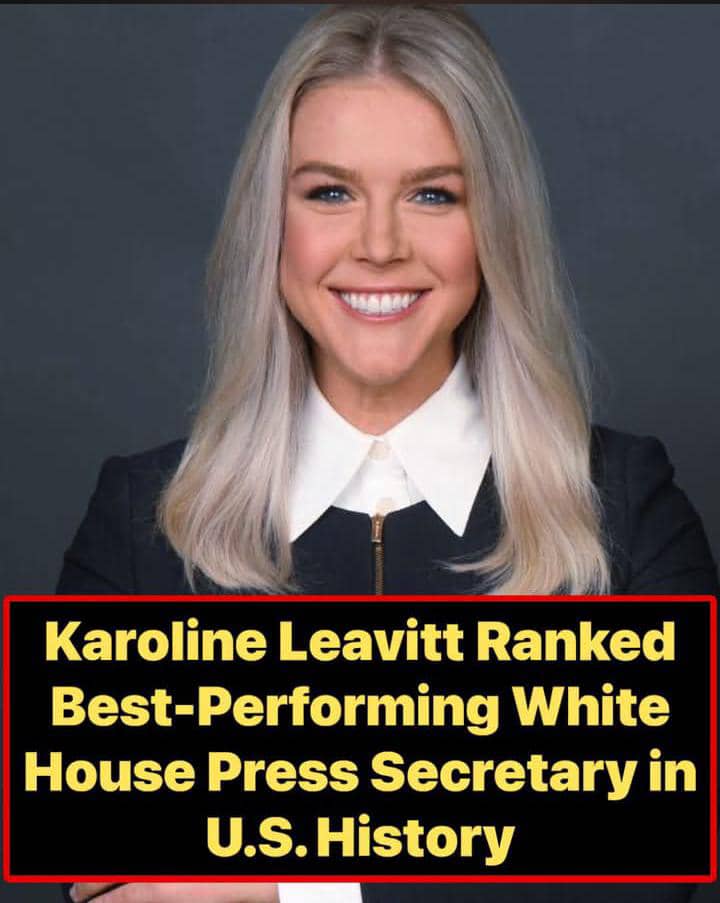
A recent claim circulating online has described Leavitt as the “best-performing press secretary in the history of the United States,” but that ranking has not been confirmed by a widely recognized independent polling organization. Still, the discussion highlights how quickly Leavitt has become a major figure in American political communication.
Since taking the role of White House press secretary, Leavitt has drawn both strong support and sharp criticism. Her supporters argue that she represents a new style of political messaging, while critics question her approach and some of her responses during briefings.
A historic rise to the White House podium

At 27 years old, Karoline Leavitt became the youngest person ever to serve as White House press secretary.
Before stepping behind the White House podium, Leavitt built experience inside Republican communications circles. She previously worked in the Trump administration’s communications office, later served as communications director for Rep. Elise Stefanik, and became a prominent spokesperson during Donald Trump’s 2024 presidential campaign.
When Trump announced her appointment, he praised her communication abilities and described her as someone who had performed strongly as his campaign press secretary.
“Karoline is smart, tough, and has proven to be a highly effective communicator,” Trump said when announcing her selection.
Leavitt’s supporters often point to her willingness to take difficult questions, challenge reporters, and consistently present the administration’s position. They argue that many previous press secretaries faced similar political battles but that Leavitt’s younger age and energetic approach have helped her stand out.
Her first briefing quickly showed the style that would define her time at the podium. She emphasized greater access for conservative media outlets, bloggers, and other newer forms of media while criticizing what she described as unfair treatment from parts of the traditional press.
Supporters praise her confidence, critics challenge her approach
Leavitt’s strongest supporters say her biggest strength is her willingness to answer tough questions without backing away.
In a political environment where press briefings often become heated exchanges, supporters say Leavitt has embraced confrontation rather than avoiding it. They credit her with staying focused on the administration’s talking points and communicating directly with the public.
That style has made her popular among many conservatives who believe previous White House press offices were too cautious or too focused on traditional media expectations.
However, her critics argue that being confident at the podium is not the only measure of a successful press secretary. They have questioned some of her statements and accused her of being overly combative with journalists.
The role of a White House press secretary has always involved balancing competing demands: defending the president, answering difficult questions, maintaining credibility, and managing a relationship with the press corps.
Every administration has had press secretaries who attracted both praise and controversy. Figures such as Sean Spicer, Sarah Huckabee Sanders, Jen Psaki, and Karine Jean-Pierre each developed supporters and critics during their time at the podium.
Because there is no official measurement system that ranks every White House press secretary in history, claims that Leavitt is the “best ever” remain a matter of opinion rather than a confirmed historical fact.
Why Leavitt’s style has become a political talking point
Whether praised or criticized, Leavitt has changed the conversation around what modern White House communication looks like.
Her approach reflects a broader shift in political messaging, where officials increasingly communicate directly through social media, interviews, and alternative media platforms rather than relying only on traditional press briefings.
During her debut briefing, Leavitt said the administration wanted to expand access beyond legacy media organizations. That message aligned with a larger argument from Trump and his allies that traditional news outlets have often been unfair toward the administration.
Supporters see Leavitt as a representative of a more aggressive communication strategy. They believe her ability to defend administration policies and remain visible during controversial moments explains why she has attracted such strong approval from her base.
Critics, meanwhile, argue that the effectiveness of a press secretary should also be judged by accuracy, transparency, and the ability to provide meaningful answers to journalists and the public.
For now, Leavitt’s place in history is still being written. What is clear is that she has already achieved a historic milestone by becoming the youngest person ever to hold the position, and her communication style has made her one of the most closely watched press secretaries in recent memory.
The debate over whether she is the “best ever” will likely continue, but the attention surrounding her performance shows how important the White House press secretary role remains in shaping how Americans understand their government.