The Cobb Salad Has a Hollywood Origin Story and a Plot Twist Over Who Invented It
The Cobb salad does not exactly believe in keeping things minimal. Chicken, bacon, avocado, eggs, tomatoes, and blue cheese all turn up, with lettuce somehow keeping the whole production organized. It is a salad that eats like a meal, looks ready for its close-up, and carries a name familiar far beyond California. Its backstory is equally substantial, beginning at Los Angeles’s Brown Derby restaurant and branching into competing accounts of one very successful kitchen creation.
The dependable part of that story is its connection to the Brown Derby and restaurateur Robert Howard “Bob” Cobb, for whom the dish is named. The less dependable part is the precise moment someone first assembled it. The often-repeated version involves a hungry Cobb, refrigerator leftovers, and a late-night snack around 1937. Another credits a chef years earlier. So yes, this restaurant classic comes with a Hollywood atmosphere, and a small dispute over the writing credits.
What followed is clearer: the salad became a Brown Derby signature and eventually a fixture on restaurant menus nationwide. Its appeal went beyond a memorable origin tale. The combination offered crisp greens, rich toppings, contrasting textures, and enough substance to stand on its own. Understanding how those elements came together helps explain why a dish associated with an old Hollywood institution outlived the restaurant that made it famous.
Before the Salad Became Famous, the Brown Derby Had Star Power
The first Brown Derby opened on Wilshire Boulevard in Los Angeles in 1926, attracting a movie-industry crowd that included actors Loretta Young and Mary Pickford, along with gossip columnist Louella O. Parsons. Other locations followed, including one in Hollywood. That distinction matters because the restaurant group’s history and the salad’s history are easily compressed into a single tidy anecdote. The Los Angeles Almanac identifies the Hollywood Brown Derby as the salad’s birthplace.
Celebrity customers supplied glamour, but the kitchens were not merely an accessory to the scene. Saveur’s history describes the Derby restaurants as buying high-quality produce and maintaining strong culinary standards for their time. Cobb himself was a protégé of founder Herbert K. Somborn and became president of the Brown Derby Corporation after Somborn’s death in 1934. The salad’s namesake was therefore closely involved in the business, not simply a famous diner whose name landed on a menu.
In the familiar origin account,Cobb searched the kitchen for something to eat and combined available ingredients with the restaurant’s French dressing. One version places theater impresario Sid Grauman beside him, enjoying the improvised dish and requesting it again the following day. It is an appealing restaurant legend: an after-hours bite earns a repeat order, then a permanent place on the menu. The important qualification is that this is one account, not a conclusively established sequence of events.
The Famous Refrigerator Raid Is Not the Only Version
The competing story dates the invention to 1929, when the Hollywood location opened. In that account, executive chef Robert Kreis created the salad and named it in Cobb’s honor. The Los Angeles Almanac records both versions, making clear that the restaurant connection is much firmer than the precise date or individual credit. Calling the salad a Brown Derby creation is well supported; presenting the 1937 refrigerator raid as settled fact would tidy up history a little too enthusiastically.
Saveur offered another valuable perspective through Richard Morgan, whom its account identifies as the Derby’s executive chef at the time. Describing Cobb’s improvisation, Morgan said, “he chopped up whatever was around, some lettuce, an avocado from the icebox, some bacon left over from the breakfast service, and stirred it all up in a bowl.” His recollection supports the idea of a casually assembled starting point rather than a dish that arrived fully developed in one dramatic moment.
Morgan also described what happened next: “He liked what he came up with and, by adding a few new ingredients, developed a recipe.” That detail clearly distinguishes inspiration from a finished restaurant dish. A bowl of available ingredients may have supplied the beginning, but a repeatable recipe made it something customers could order. The uncertainty concerns the first assembly; in Morgan’s telling, a more deliberate process produced the recognizable salad.
Related: The Salad That Gets Better Overnight and It’s the Smartest Thing You Can Make This Week
What Turned a Loaded Salad Into a Restaurant Classic
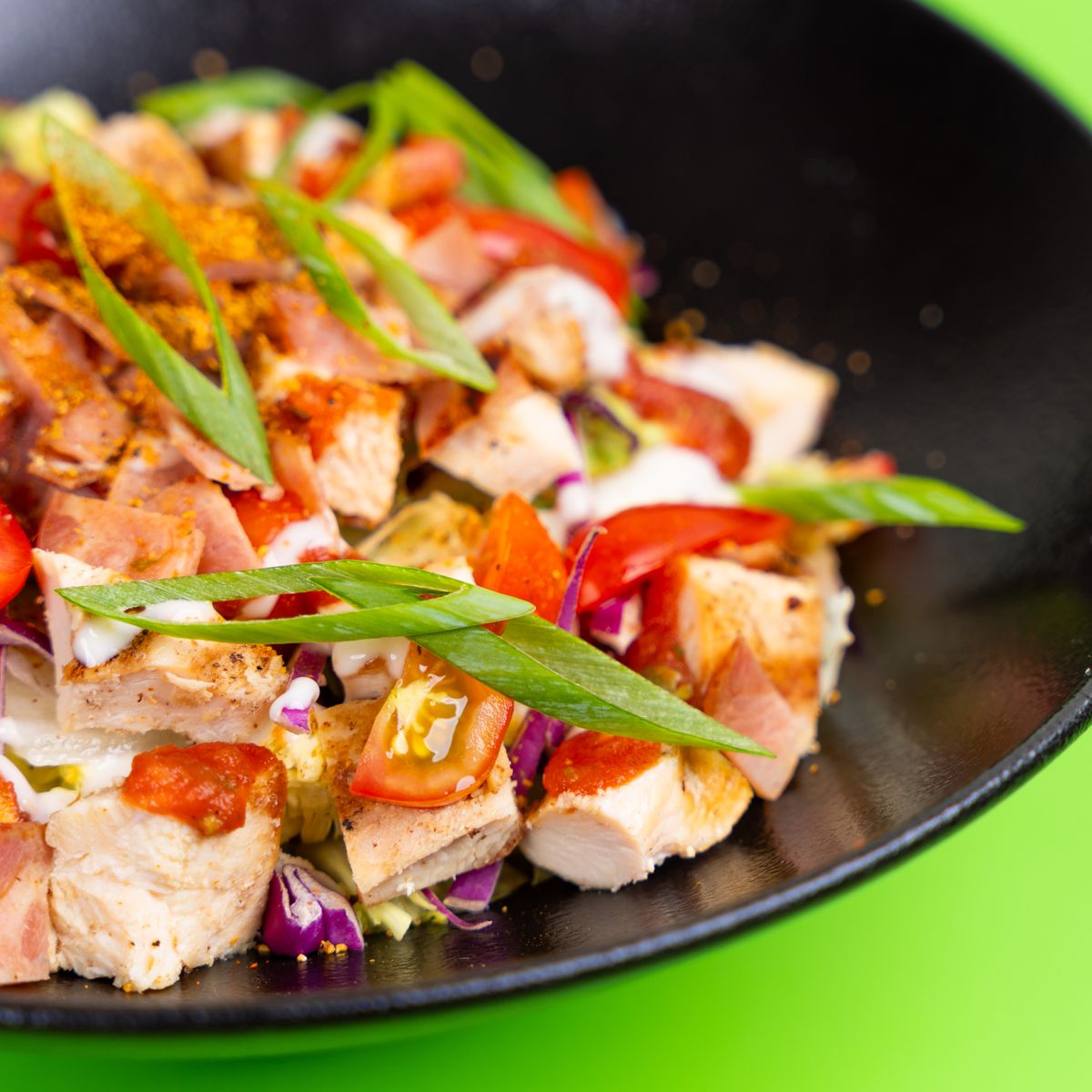
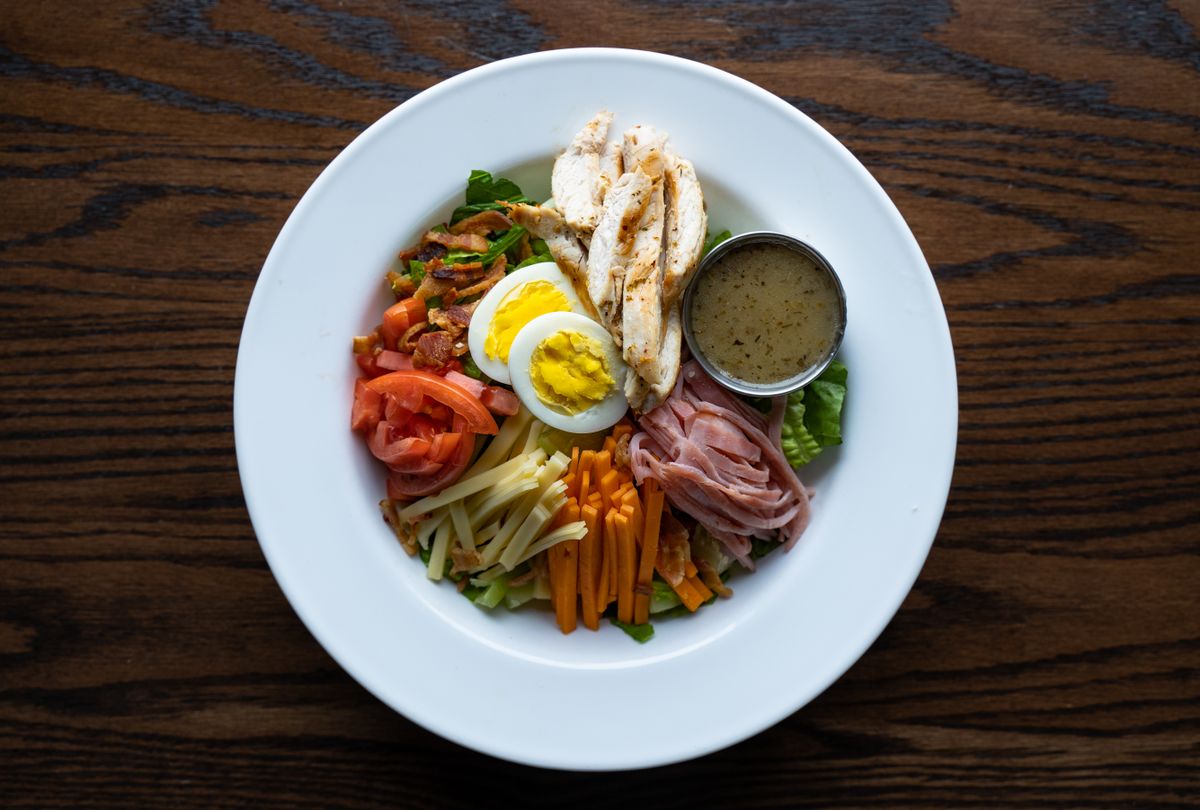
The Cobb has a recognizable supporting cast: greens, chicken, crisp bacon, tomatoes, avocado, hard-boiled eggs, and blue cheese. The Institute of Culinary Education describes the balance behind that combination: lettuce adds freshness, avocado and cheese add creaminess, and chicken and bacon provide substance. It is not simply a long ingredient list. The components bring different textures and flavors, giving the dish the heft of a main course without abandoning its salad identity.
Presentation also set it apart from an ordinary bowl of chopped ingredients. Morgan remembered the finished dish topped with colorful stripes, including tomatoes, blue cheese, and chicken, “so that it resembled a flag.” Service supplied a little extra theater: “The waitress would arrive with it at the table, dribble the dressing over it, and toss it there.” Those neat bands were the opening scene, not necessarily how the salad remained throughout the meal.
Over time, cooks adapted the formula with different dressings and seasonal vegetables, a flexibility the Institute of Culinary Education identifies as part of its continuing appeal. Yet variation raises the question of how far a dish can change before its name means little. Morgan expressed that concern sharply: “Today people will chop up everything but the kitchen sink, throw it all together, and call it a cobb.” His objection underscores how distinctive the original combination had become.
The Hollywood Brown Derby closed in 1985, but its signature salad continued on menus elsewhere. That survival best measures its reach: diners no longer needed a table at the Derby to encounter its best-known creation. The exact invention story may remain contested, but the restaurant’s legacy is readily recognizable, a substantial, colorful salad whose carefully balanced abundance proved more durable than the dining room that introduced it.