Oxtail Lovers Know: The Secret Is What Happens After the Long Simmer
Oxtail is the kind of dish that makes patience taste delicious, turning a tough, bony cut into tender meat surrounded by rich, deeply flavored gravy.
Oxtail has a loyal following for a reason. The tail is a heavily used muscle, so it starts firm and full of connective tissue, but that same structure becomes an advantage during slow cooking. Given enough time, the connective tissue breaks down, and the meat becomes remarkably tender, while the bones and marrow help create a rich cooking liquid. The Smithsonian’s look at slow-cooked oxtail notes that collagen released during cooking helps give the resulting stock its thick, luxurious texture.
Why Oxtail Takes So Long
The best oxtail is not made by turning up the heat—it is made by giving the pot time to work.
Oxtail is traditionally braised or stewed slowly, often for several hours. A recipe featured by PBS sears the pieces first, then cooks them gently until the meat pulls away from the bone, before reducing the cooking liquid into a thicker sauce. That long cooking process completely changes the texture.
It is also why oxtail fits so naturally into simple kitchen routines where dinner can quietly cook while you prepare rice, vegetables, or something else for the table. You do not need to stand over the pot every minute; once the simmer is steady, time does much of the work.
Jamaican Oxtail Is a Comfort-Food Classic
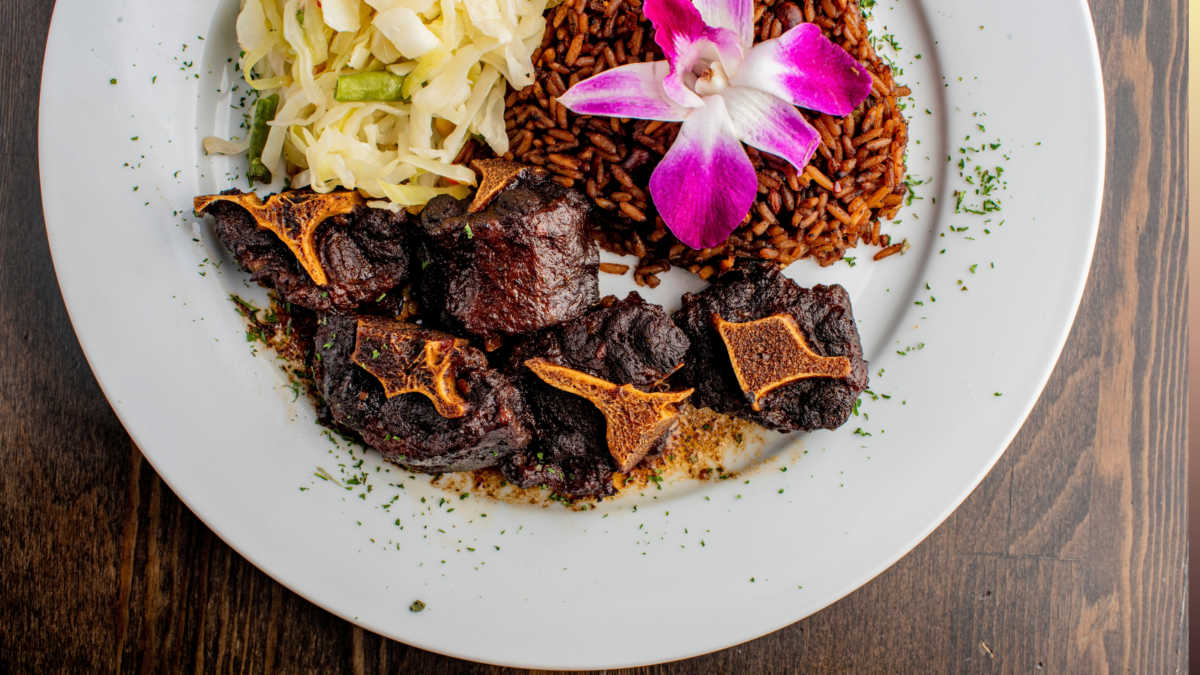
Few versions capture the richness of oxtail quite like a Jamaican-style pot of tender meat, butter beans, Scotch bonnet, and dark gravy.
A Jamaican preparation can start with a flavorful marinade containing scallions, thyme, onion, garlic, allspice, vinegar, Worcestershire sauce, soy sauce, and pepper. Recipe developer Jillian Atkinson’s grandmother inspired the PBS Cook’s Country Jamaican oxtail recipe and uses a particularly interesting browning technique involving caramelized sugar.
The oxtails are browned, then covered and simmered for hours. Butter beans go in toward the end, while Scotch bonnet pepper brings both heat and fruity flavor. The finished gravy is thick, dark, savory, and perfect for soaking into rice and peas.
The Browning Step Changes Everything
Before the long simmer begins, the pot needs a little drama.
Browning the oxtails creates caramelized flavors on the outside of the meat and leaves flavorful browned bits on the bottom of the pot. Those bits eventually become part of the gravy, adding depth that you cannot get by dropping raw meat straight into liquid.
The Jamaican method takes this even further by caramelizing sugar before adding the oxtails. It sounds unusual if you have never tried it, but the finished dish does not taste like dessert. Instead, the caramelized sugar contributes color and complexity to the sauce.
Another useful trick: trim away unusually large pockets of excess fat before cooking. Oxtail needs its natural richness, but removing some excess helps keep the final gravy from becoming overwhelmingly greasy.
Oxtail Has a Global Story
Jamaica may have one of the world’s most recognizable oxtail preparations, but the cut has traveled through kitchens everywhere.
Oxtail appears in Caribbean, Asian, European, African, and Latin American cooking, with each tradition giving it a different personality. PBS’s exploration of oxtail dishes points to Jamaican oxtail, Guyanese pepperpot, Filipino kare-kare, Hungarian stew, Spanish preparations, and Korean versions served with rice and other accompaniments.
Guyanese pepperpot is particularly distinctive because it uses cassareep, a concentrated cassava sauce, alongside spices and peppers. The Associated Press’s Guyanese oxtail pepperpot recipe from Marcus Samuelsson also includes cinnamon, ginger, thyme, allspice, hot chiles, and brown sugar, showing how dramatically the flavor can change. In contrast, the slow-cooked oxtail remains the star.
What Goes Best With Oxtail?
The right side dish does not compete with oxtail, it gives that incredible gravy somewhere to go.
Rice and peas are an obvious choice for Jamaican-style oxtail, but plain steamed rice works beautifully too. Mashed potatoes, greens, fried plantains, roasted vegetables, or crusty bread can all play the same important role: soaking up the sauce.
This is also where making familiar foods more interesting becomes less about complicated recipes and more about changing the way you prepare something you already know. A simple bowl of rice can become extraordinary when covered with a spoonful of properly cooked oxtail gravy.
The Real Secret Is Patience
If oxtail is still chewy after hours of cooking, that doesn’t necessarily mean something went wrong, it may just need more time.
The exact cooking time depends on the size of the pieces and the cooking method, but several hours is completely normal. Smithsonian’s oxtail preparation takes around four hours, while the PBS Jamaican version cooks the meat for roughly four hours before the final finishing steps. When it is ready, the meat should be tender enough to pull away from the bone with very little effort.
That is what makes oxtail so satisfying. It starts as a cut that demands patience and ends as something rich, tender, and deeply comforting. The best part may be that the transformation is not complicated: season it well, brown it properly, keep the heat gentle, and let time do its work.
If you had a pot of oxtail simmering tonight, would you go for Jamaican-style rice and peas, Guyanese pepperpot, or your own family-style version?