The Truth About Where Costco’s Kirkland Signature Beef Comes From
That package of Kirkland Signature beef in your Costco cart has a story that goes far beyond the meat department. One major supplier is California-based Harris Ranch Beef Company, which handles more than 200 million pounds of beef annually. But there’s a catch: Costco doesn’t publicly identify the supplier behind every package carrying its famous Kirkland label.
And with the U.S. Department of Agriculture forecasting a 9.4% increase in beef and veal prices for 2026, shoppers have another reason to pay attention. Where the beef comes from, how it reaches the warehouse, and what you’re actually paying for all deserve a closer look.
Harris Ranch Is One of Costco’s Major Beef Suppliers
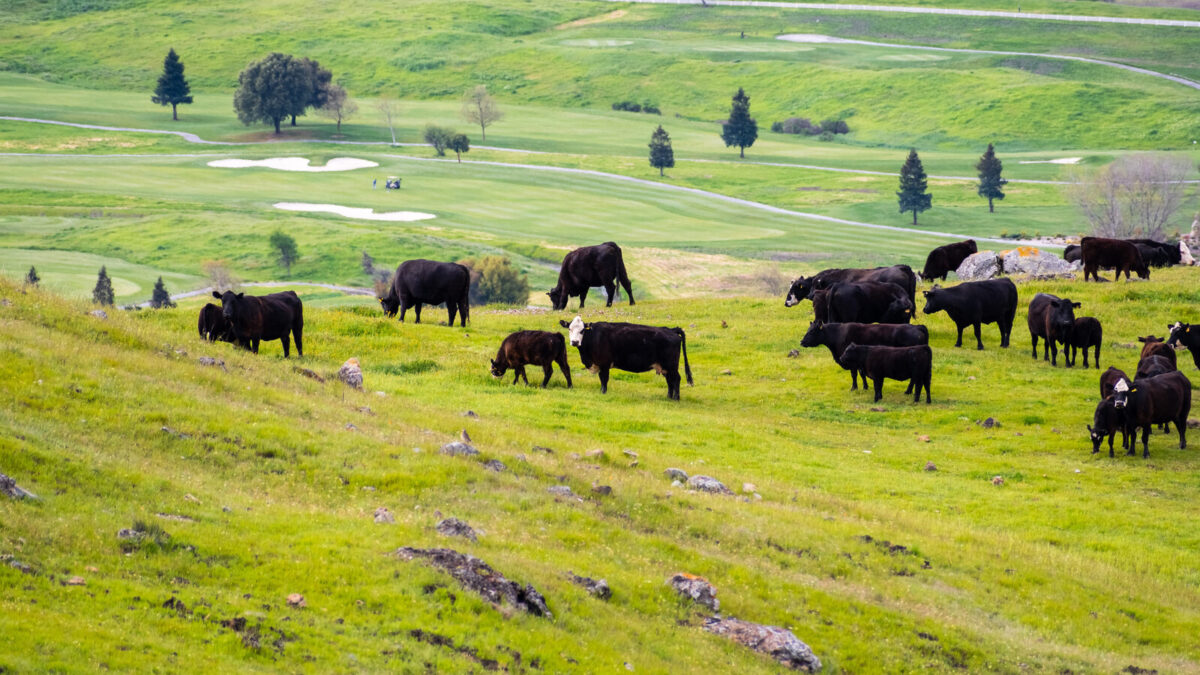
Harris Ranch Beef Company has an established connection to Costco’s beef supply chain, although it isn’t the retailer’s only supplier.
A 2021 study published in the Journal of Cleaner Production identified Harris Ranch as one of Costco’s primary beef suppliers. Researchers from the University of Michigan examined the company’s supply chain in California, tracing operations connected to the San Joaquin Valley.
Harris Ranch dates back to the 1930s and operates in California’s Central Valley. The company is now owned by the Coelho family through Central Valley Meat Holding Company. Still, there’s an important distinction between knowing a major supplier and knowing where your particular steak originated.
Costco has not released a complete breakdown showing how much Kirkland Signature beef comes from Harris Ranch or which individual products it supplies.
How Harris Ranch Produces So Much Beef
A large-scale beef operation helps explain how Harris Ranch can meet Costco’s substantial purchasing needs. According to the producer, its beef business generates more than $600 million in annual sales. It works with ranching families across the western United States and handles cattle feeding, beef processing, and marketing.
Its cattle-finishing operation covers nearly 800 acres and can accommodate about 120,000 cattle at one time.
The company describes a production process in which cattle typically spend 16 to 24 months grazing before spending an additional three to four months at a feedlot. That coordinated approach gives Harris Ranch control over several important stages of beef production.
For shoppers, however, its production capacity doesn’t prove that a particular Kirkland Signature roast, steak, or package of ground beef came from the company.
Related: 7 Nostalgic Ground Beef Recipes That Deserve a Comeback
Not Every Kirkland Beef Product Has the Same Origin
Costco uses multiple beef suppliers, and the Kirkland Signature name doesn’t represent a single ranch. Costco’s own customer service information makes that limitation clear.
In its published country-of-origin guidance, the retailer states, “We’re unable to provide an all-inclusive list of items and their country of origin.”
Costco does publish broader information about its sourcing policies. Its fiscal 2025 sustainability report states that 100% of Kirkland Signature beef was not sourced from Argentina, Brazil, Colombia, or Paraguay. That figure covers its global Kirkland Signature business and relies on supplier-provided information, including projections.
It’s an important disclosure, but it doesn’t identify every farm, ranch, or processing facility supplying the meat. The practical takeaway? Costco has provided some sourcing information, but shoppers shouldn’t assume every Kirkland beef product comes from the same place.
Related: The 7 Shocking Truth Behind Beef
What USDA Choice and Prime Labels Actually Mean
USDA beef grades describe the meat’s characteristics, not the country where the animal was raised. Costco sells Kirkland Signature beef labeled USDA Choice and USDA Prime, including cuts such as ribeye and New York strip.
According to the USDA, Prime beef has more marbling, while Choice has less marbling but still meets high-quality grading standards. These grades are assigned through a voluntary grading system that evaluates characteristics associated with tenderness, juiciness, and flavor.
There’s another detail worth knowing. Since 2016, federal country-of-origin labeling requirements have not applied to retail beef cuts and ground beef. That means shoppers cannot necessarily expect every package to identify the animal’s country of origin.
However, updated USDA rules that took effect January 1, 2026, specify that voluntary “Product of USA” and “Made in the USA” claims on covered meat products must meet domestic-origin requirements, including the animal being born, raised, slaughtered, and processed in the United States.
In other words, read the actual origin statement rather than assuming USDA grading establishes where the beef came from.
Costco’s Beef Supply Chain Has Also Faced Scrutiny
Supplier transparency involves more than identifying the ranch or processing plant.
University of Michigan researchers examined the environmental effects associated with Costco’s California beef supply chain. Their 2021 study found that feedlots contributed approximately 95% of the fine-particle emissions modeled across that beef supply chain. The findings raised questions about the environmental burdens associated with large-scale livestock operations.
The researchers also emphasized how complicated supplier networks make tracing products difficult. They wrote that “distance, multiple transacting companies and supplier fluidity keep most supply chains opaque.”
Harris Ranch has separately faced public criticism over animal welfare practices. The company maintains that it follows humane slaughter requirements and says its livestock-handling facilities were developed with input from animal welfare specialist Dr. Temple Grandin.
Costco, meanwhile, states that its animal-product suppliers follow recognized animal welfare auditing standards and programs.
Rising Beef Prices Make Package Sizes Worth Checking
Beef prices and shrinkflation are two issues shoppers shouldn’t confuse. Shrinkflation happens when a product contains less than before without a corresponding price reduction. A higher price for the same amount of beef, however, is a price increase, not shrinkflation.
The USDA reported that beef and veal prices were 5.9% higher in August 2026 than in August 2025, even though prices slipped slightly between July and August. Lower beef production contributed to the broader pricing outlook.
Costco’s ground beef listings show why checking package sizes matters. One Kirkland Signature product contains three packages of approximately 1.33 pounds each, totaling about four pounds. Another listing contains five individual one-pound packages, totaling five pounds.
These are different products, not evidence that Costco reduced the contents of an existing package. For shoppers watching their grocery spending, comparing the price per pound, total package weight, and specific cut gives a clearer picture of value.
What Costco Shoppers Can Do Before Buying
Checking the package remains one of the most useful steps when purchasing Kirkland Signature beef. Look for a country-of-origin statement, check the listed USDA grade, and compare the weight to the total package price.
For ground beef, check the number of individual packs and their combined weight. For steaks and roasts sold by weight, focus on the actual price per pound. If the source isn’t clear, Costco provides another option. Its customer service guidance says members can contact the retailer to request additional research on a specific item’s origin.
That doesn’t guarantee the company will disclose every ranch involved, but it offers a direct way to seek information about a product you’re considering. Ultimately, Harris Ranch is a documented part of Costco’s beef supply chain, but the Kirkland Signature label alone cannot establish exactly where every package came from.
The bottom line: When buying Costco beef, the best value comes from understanding both what you’re paying and what the package actually tells you.