Ice Cream Meets Heat in Baked Alaska, and This Retro Dessert Knows How to Make an Entrance
Baked Alaska sounds like a dessert that should come with a small warning: Yes, someone is about to apply heat to ice cream. Yet beneath those golden meringue peaks, the frozen center should stay cold. The classic combination is straightforward: sponge cake, ice cream, and a covering of sweetened whipped egg whites, but the result is anything but ordinary. It is a dessert built around contrasts, with a toasted exterior hiding a chilly surprise.
That theatrical finish has a practical explanation, not a secret ingredient or a pastry-chef loophole. Cake and meringue help insulate the ice cream while the outside browns quickly, creating the dessert’s signature warm-and-cold combination. Some versions go into a very hot oven, while others get their golden finish from a culinary torch. Either way, the goal is the same: Toast the covering without sacrificing the frozen layers underneath.
The Meringue Is Doing More Than Looking Fabulous
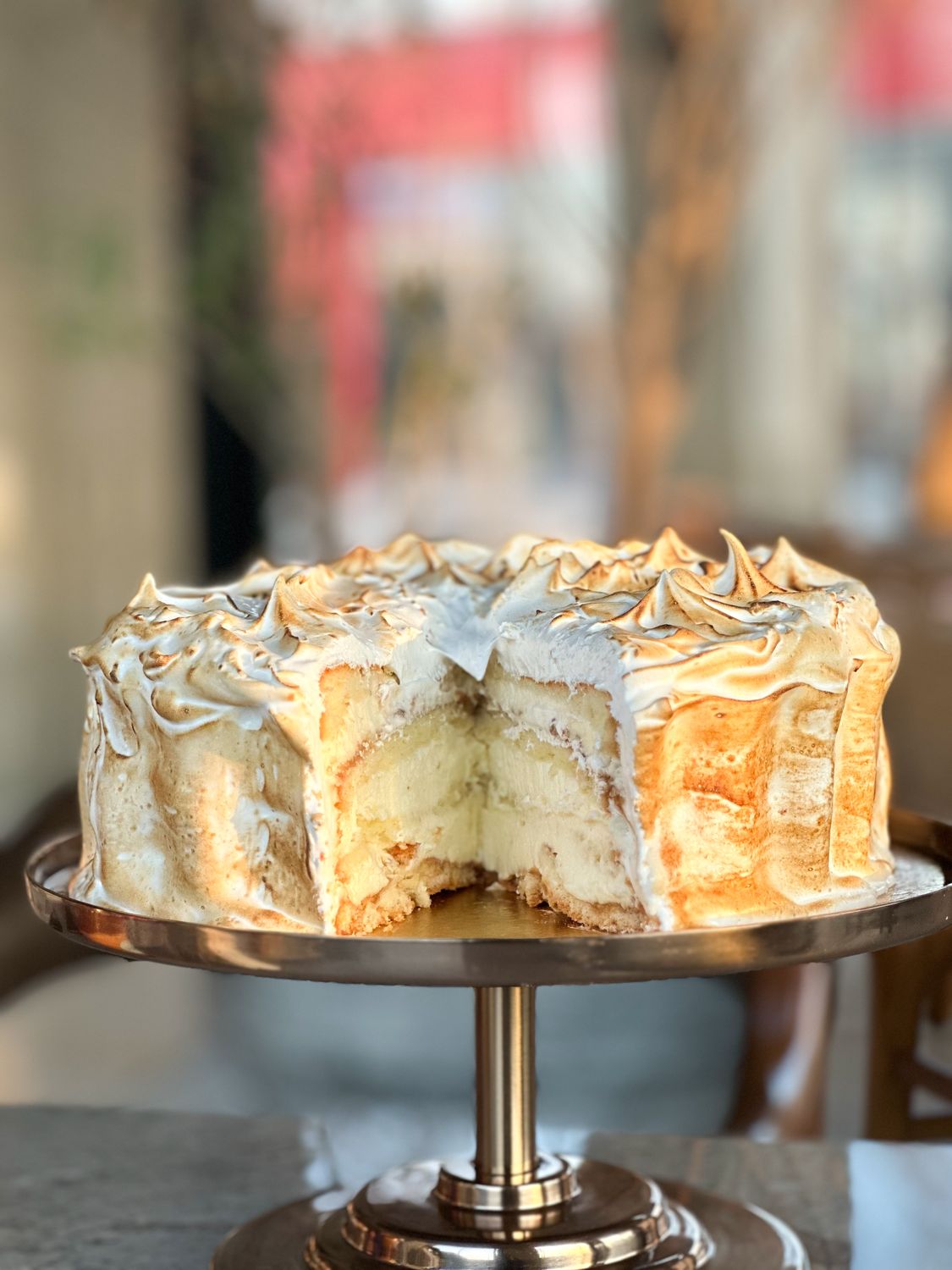
The most important part of baked Alaska’s performance is its insulation. Meringue contains air bubbles that help protect the ice cream from heat during the brief browning process. In a history published by Worldchefs, historian Libby O’Connell sums up the principle: “The meringue insulates the ice cream from heat.” That cloudlike covering is therefore more than decoration, it is an essential part of how the dessert works.
The cake underneath also contributes to that protection. Britannica describes the traditional construction as ice cream sitting between a slice of sponge cake and a meringue covering, with both outer layers helping insulate the well-chilled filling. Its overview describes a 500°F oven and a brief two- or three-minute bake. Those figures explain the classic technique, but they aren’t universal instructions for every recipe, since modern versions use different constructions and finishing methods.
Complete coverage matters just as much as the attractive swirls. In King Arthur Baking’s recipe by Ryan Salerno, the instructions call for spreading Swiss meringue over both the ice cream and brownie base, extending it all the way to the serving platter. The decorative peaks are part of that coating, not a replacement. Think of the meringue as the dessert’s protective outfit: Pretty is welcome, but leaving pieces uncovered is not the assignment.
The filling also needs to be thoroughly frozen before the final flourish. Salerno’s version freezes the assembled homemade ice cream and brownie base for at least eight hours, or up to a week before finishing. That schedule makes baked Alaska a preparation-ahead project rather than a dessert to start when dinner plates are being cleared. The dramatic part happens quickly; the freezer has already done the lengthy work.
Its Name Has an Alaska Connection, but Its Origin Story Is Complicated
Despite the name, baked Alaska is not simply a regional specialty that originated in Alaska. Britannica connects its name to the United States’ acquisition of the territory from Russia in 1867, while noting disagreement over who invented the dessert. Its account identifies Charles Ranhofer, the chef at New York’s Delmonico’s restaurant, as the better-supported candidate among competing origin theories. The useful distinction is that a strong historical association is not the same thing as an uncontested invention story.
Ranhofer called his dessert “Alaska, Florida,” a name that made the hot-and-cold contrast part of the joke. However, food historian Michael Krondl challenges how confidently the creation can be assigned to him in the Worldchefs account, which describes the evidence for Ranhofer’s debut as too slim to establish sole credit. Related cake, ice cream and meringue desserts also appear in the discussion of its history. The safest version of the story preserves Delmonico’s connection without pretending the historical debate is settled.
More enduring than the disputed origin is the dessert’s recognizable structure. Cake provides the foundation, ice cream supplies the frozen center, and toasted meringue delivers the finish. The flavors can change without erasing that identity, which helps explain why contemporary recipes can look different from the traditional sponge-cake version. Baked Alaska is a particular combination and technique, not a rule that every slice must contain the same ice cream flavor.
Related: 12 Things That Screamed “Dad Life” in the 1980s
You Can Make the Showstopper Without Making Every Component From Scratch
A homemade baked Alaska does not require homemade ice cream. King Arthur’s recipe explicitly allows approximately three pints of store-bought or homemade ice cream, softened in the refrigerator until spreadable, then packed into a plastic-wrap-lined bowl. Its own variation pairs a dark chocolate brownie base with raspberry and mango no-churn ice creams. That gives home bakers a choice: make the filling themselves or focus on assembly and the meringue finish.
The topping deserves careful attention even when the filling comes from the freezer aisle. Salerno’s Swiss meringue method heats egg whites, sugar, cream of tartar, and salt over simmering water, whisking until the mixture reaches 161°F, as measured with a digital thermometer. Then whip the mixture off the heat until stiff peaks form, which the recipe estimates will take four to six minutes. This is a defined preparation step, not simply spreading raw egg whites over ice cream and hoping the surface browning handles everything.
For the final toast, the recipe recommends keeping a baker’s torch moving in small circles to prevent individual spots from becoming too dark. A broiler is an alternative, but King Arthur warns that browning can happen quickly and that the ice cream will soften slightly with that method. Its advice is direct: “Keep a constant watch on the meringue until it begins to take on color.” Serve immediately after toasting, using a knife dipped in hot water and wiped dry between cuts, and the big reveal is ready: toasted meringue outside, frozen dessert within.