7 Foods That Bring Back Memories of ’60s Home Cooking
The 1960s were an interesting time in American kitchens. Some dishes required little more than opening a package and mixing a few ingredients, while others encouraged home cooks to try something more elaborate. From creamy casseroles to beautifully shaped desserts, the decade offered plenty of memorable food ideas.
Television cooking shows, packaged ingredients, recipe contests, and changing entertaining styles all helped shape what appeared on American tables. Some recipes had been around for years before gaining attention, while others became closely associated with the decade itself.
Here are seven foods that offer a delicious look at the cooking traditions, creative experiments, and entertaining trends of the 1960s, a little culinary nostalgia with history behind it.
Green Bean Casserole
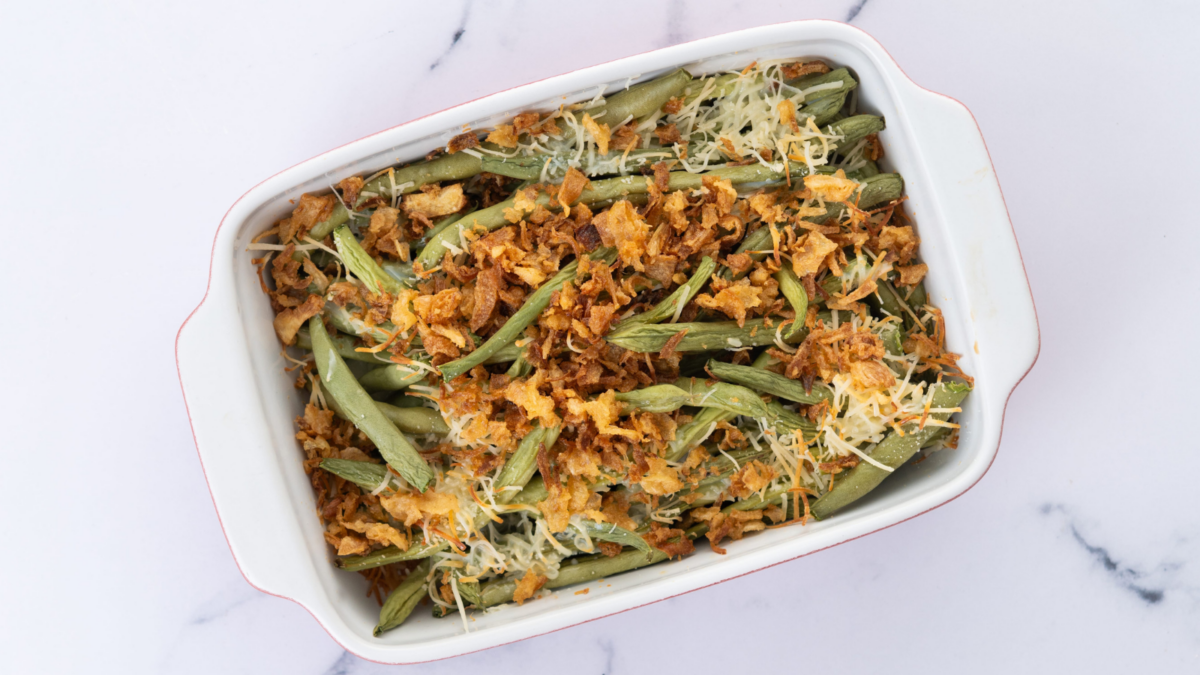
Few casseroles have a combination quite like green bean casserole. Tender green beans coated in creamy mushroom sauce and topped with crispy fried onions create a dish that’s as much about contrasting textures as it is about flavor.
Although closely associated with 1960s cooking, the recipe actually dates to 1955. Campbell’s employee Dorcas Reilly developed the original dish, then called Green Bean Bake, at the company’s headquarters in Camden, New Jersey.
According to Campbell’s company history, the casserole became a Thanksgiving favorite during the 1960s after the recipe appeared on its Cream of Mushroom soup label.
What makes this dish interesting is its simplicity. A recipe originally developed as an everyday side dish eventually became a recognizable part of American holiday cooking.
California Dip With Potato Chips
Sometimes, the most appealing party food is also the easiest to prepare. California Dip is a good example, combining sour cream and dry onion soup mix to create a creamy, savory dip traditionally served with potato chips.
The thick sour cream carries the onion flavor, while crunchy potato chips provide a satisfying contrast. It is the kind of snack that allows guests to help themselves without needing plates of carefully arranged appetizers.
The recipe’s connection to mid-century entertaining is documented in a Lipton promotional booklet dated approximately 1958 to 1960, preserved by the Hoboken Historical Museum.
Although Lipton helped promote the combination, the identity of its original creator remains unknown. Its appeal illustrates how packaged ingredients could turn a simple mixture into a convenient party offering.
Molded Jell-O Salads
Picture a brightly colored gelatin mold being turned upside down onto a serving plate. Once released, the finished dish stands in a carefully formed shape, sometimes revealing pieces of fruit or vegetables suspended inside.
Molded gelatin salads were among the more visually distinctive foods associated with mid-century American cooking. Some versions featured sweet fruit combinations, while others incorporated savory ingredients, including vegetables or tuna.
The tradition is documented in period cookbooks, including the 1960 Knox on Camera Recipes and the 1964 edition of The Joy of Cooking.
As a historical overview from Serious Eats explains, gelatin salads reflected changing approaches to food presentation and domestic cooking.
Today’s readers might find certain combinations unusual, but these recipes reveal how much attention cooks could give to color, shape, and presentation.
Related: 15 Foods From the ’60s Most Boomers Loved With a Passion
Cheese Fondue
Cheese fondue offered something different from a conventional dinner. Instead of receiving individual plates of food, guests could gather around a shared pot of melted cheese and dip pieces of bread into the warm mixture.
The experience was part of the attraction. Everyone participated in serving themselves, turning a simple combination of bread and cheese into an interactive dining occasion.
According to the Smithsonian National Museum of American History, fondue sets became a prominent entertaining trend during the 1960s. Special equipment and party kits helped bring the communal dining experience into American homes.
Fondue was not invented during the decade, but its popularity as an entertaining trend fits the period’s interest in experimenting with different ways of serving food.
It also offered hosts something beyond a traditional seated meal: an opportunity to make the food itself part of the evening’s entertainment.
Beef Bourguignon
Not every memorable food from the 1960s emphasized convenience. Beef bourguignon represented a more involved approach to cooking, one that rewarded patience and attention to preparation.
This French beef stew became part of an important moment in American television cooking history when Julia Child prepared it on the first episode of The French Chef. The program aired on WGBH in Boston on February 11, 1963.
The dish offered viewers a look at French cooking techniques through an accessible television presentation. Unlike a quickly mixed party dip, beef bourguignon required a more deliberate cooking process.
The Smithsonian’s account of Julia Child’s recipe highlights its connection to that early television milestone.
Its place on this list demonstrates another side of the decade’s food culture: curiosity about cooking techniques and the growing role of television in introducing unfamiliar dishes to American audiences.
Tunnel of Fudge Cake
There is something especially satisfying about slicing into a chocolate cake and discovering a rich, fudgy center. That distinctive surprise is exactly what makes Tunnel of Fudge Cake memorable.
The cake gained attention when Ella Helfrich of Houston, Texas, entered it in the 1966 Pillsbury Bake-Off Contest. She earned second prize, but the dessert went on to develop a reputation beyond its contest placement.
Its success helped increase interest in Bundt cakes and the distinctive ring-shaped pans produced by Nordic Ware. The Minnesota Historical Society’s history of the Pillsbury Bake-Off documents the competition’s role in American baking culture.
One important detail is that the original Tunnel of Fudge recipe used a frosting mix that was later discontinued. Consequently, modern adaptations are not necessarily identical to Helfrich’s contest entry.
The cake remains an interesting example of how one creative baking-contest recipe could influence interest in kitchen equipment and homemade desserts.
Related: 15 Foods to Never Buy at Walmart
Oatmeal Carmelitas
Oatmeal Carmelitas bring together several ingredients that work beautifully in a layered dessert. A crumbly oat mixture surrounds a filling of caramel, chocolate chips, and nuts, creating a combination of chewy, soft, and slightly crunchy textures.
Unlike a carefully decorated cake, these bars offer a more straightforward presentation. Their appeal comes from the contrast between the oat layers and the rich filling tucked between them.
According to Pillsbury’s recipe record, Oatmeal Carmelitas are associated with Erlyce Larson of Kennedy, Minnesota, and the 1967 Pillsbury Bake-Off Contest.
That connection gives the dessert a documented place in the decade’s baking history.
For anyone interested in vintage desserts, Oatmeal Carmelitas demonstrate how familiar baking ingredients could be combined into something memorable without requiring an elaborate presentation.
The history of 1960s American cooking is much broader than any single recipe or trend. These seven foods show how convenience ingredients, communal dining, television programs, and baking competitions all contributed to the decade’s culinary identity.
Whether it’s the crunch of fried onions on a casserole or the fudgy center of a chocolate cake, these dishes offer a flavorful way to revisit a fascinating chapter in American home cooking.