Forget Perfect Pie Crust, This Rustic Plum Galette Makes Messy Look Delicious
A plum galette is the dessert equivalent of showing up slightly undone and somehow looking fabulous. Its pastry folds casually around an open center of sliced fruit, leaving the plums on display instead of hiding them beneath a top crust. No pie plate to line and no lattice to weave. As chef and Once Upon a Chef author Jennifer Segal explains, it is “essentially a free-form pie baked on a sheet pan.”
That relaxed shape is exactly what makes it appealing on a dessert table. Ragged pastry edges become part of the design, overlapping slices create their own pattern, and an optional brush of jam gives the fruit a glossy finish. Segal’s version pairs sweet-tart plums with an all-butter crust, almonds and a crunchy sugar topping. The result looks considered without demanding that every fold, or every piece of fruit, match its neighbor.
The important distinction is that rustic does not mean anything goes. A galette welcomes an uneven outline, but the fruit still needs to be suitable for baking, and the dough benefits from careful handling. Segal recommends ripe but firm plums that will hold their shape, rather than turn mushy. Think of this as a dessert that forgives imperfect presentation, not one that asks you to ignore the condition of its ingredients.
Why Plums and Free-Form Pastry Make Such a Good Match
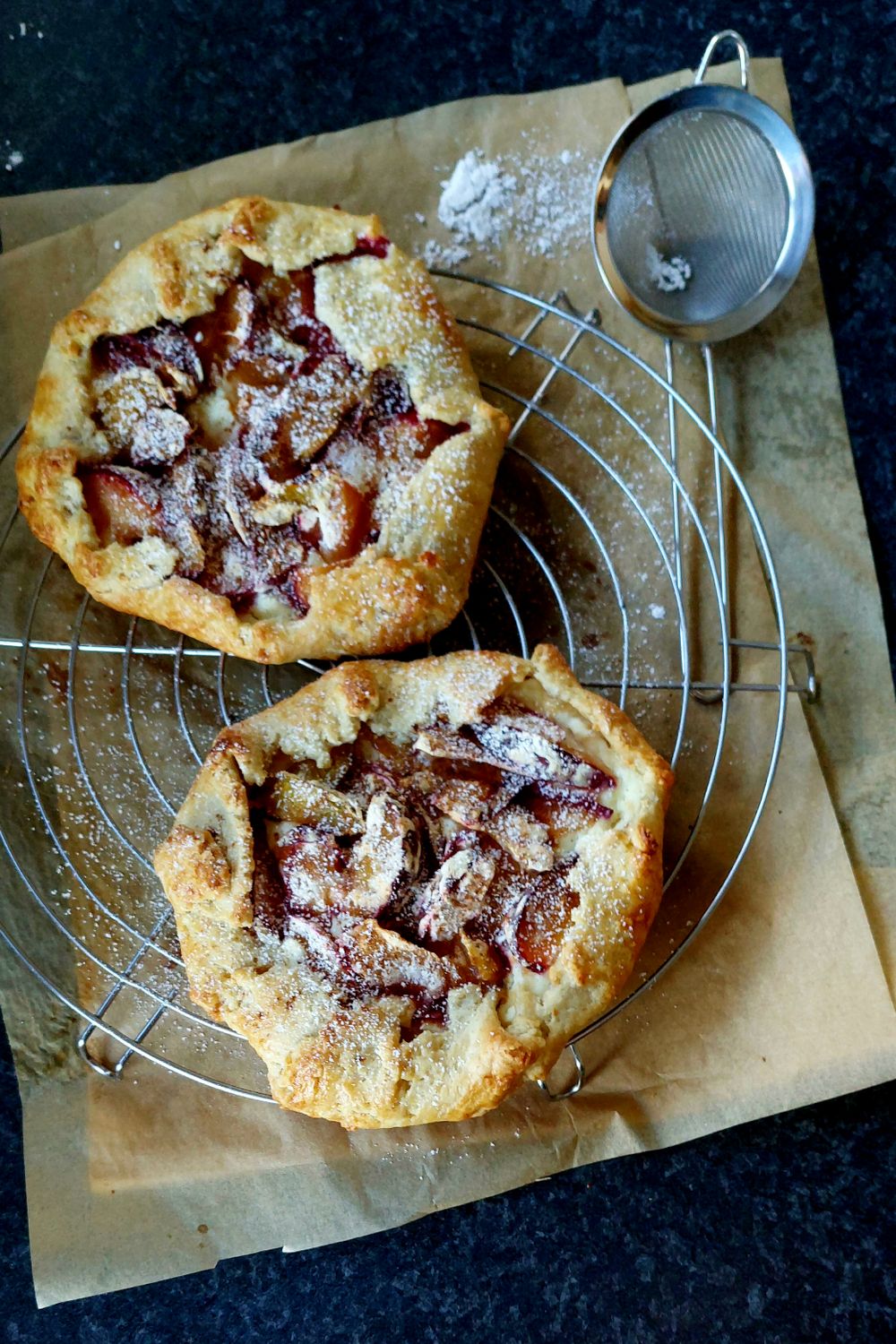
Plums add flavor and visual drama without needing elaborate decoration. Their sweet-tart character contrasts with buttery pastry, while slices arranged across the open center give the galette its defining look. Either red or black plums work in Segal’s recipe, which calls for one pound of fruit. Susan Reid’s plum-and-ginger galette forKing Arthur Baking uses a similar amount and highlights “the beautifully rich color and flavor of baked plums.”
The format also makes room for a generous border of crust. In Segal’s version, the dough rolls into a 13-inch circle, with the fruit arranged inside a roughly 2½-inch border. That margin folds inward over the filling, creating pleats around the exposed center. For anyone who considers the pastry the best part of a fruit dessert, this is a persuasive arrangement: the crust frames the fruit instead of disappearing underneath it.
Nor does the outline need to resemble a geometry assignment. “Don’t worry if the edges are a little ragged, that’s part of the galette’s charm,” Segal writes. Her instructions also allow for patching tears with small pieces of dough pinched from the edge. That flexibility gives home bakers something a highly decorative pie sometimes does not: permission to fix a problem and keep going without redesigning the entire dessert.
The freedom applies to appearance, however, not to spoiled fruit. USDA guidance says to discard moldy fruit and any pieces directly touching it. Its produce-washing guidance also recommends washing plums under running water and drying them with a paper towel. A rustic tart is an opportunity to stop worrying about showroom looks; it is not a reason to bake fruit that should be thrown away.
Related: Pieces of Halley’s Comet Will Streak Across the Sky This October — When to Watch
The Tricks That Keep “Rustic” From Becoming Soggy
The biggest practical challenge is the plum juice. Segal specifically warns against adding extra fruit because stone fruits release considerable liquid, which can leak and affect the crust. Her recipe places flour, finely chopped almonds and some sugar beneath the slices; the almonds contribute flavor and help absorb moisture.That measured layer is more useful than an optimistic extra handful of plums, tempting as it may be to squeeze them in.
Cold pastry is the other essential. Segal starts with very cold butter and water, processing the dough briefly before bringing it together by hand. The butter should remain in small pieces rather than disappear into a smooth paste. Food & Wine’s test kitchen makes the same point in its notes on Jacques Pépin’s plum galette: “Keeping the dough cold is key here.” If the butter warms during preparation, the publication recommends chilling it again.
Assembly can stay pleasantly unfussy.Following Segal’s method, slice the plums a quarter-inch thick, arrange them in overlapping circles over the prepared dough, sprinkle on the remaining sugar and fold the border inward. Brush the pastry with beaten egg, add coarse sugar and refrigerate the assembled galette for 15 to 20 minutes. That final pause firms the dough before baking, giving a practical purpose to the wait rather than adding ceremony.
Keep the oven instructions attached to the recipe you choose. Segal bakes hers at 350°F for 55 to 65 minutes, until the fruit is tender and the crust golden brown. Pépin’s larger galette uses 400°F for about an hour, while Reid’s cream-cheese-and-butter version bakes at 425°F for 30 to 35 minutes. Those are different formulations, not interchangeable shortcuts, so borrowing one recipe’s temperature for another recipe’s dough is not the same as following either method.
A Little Glaze Makes It Dessert-Table Ready
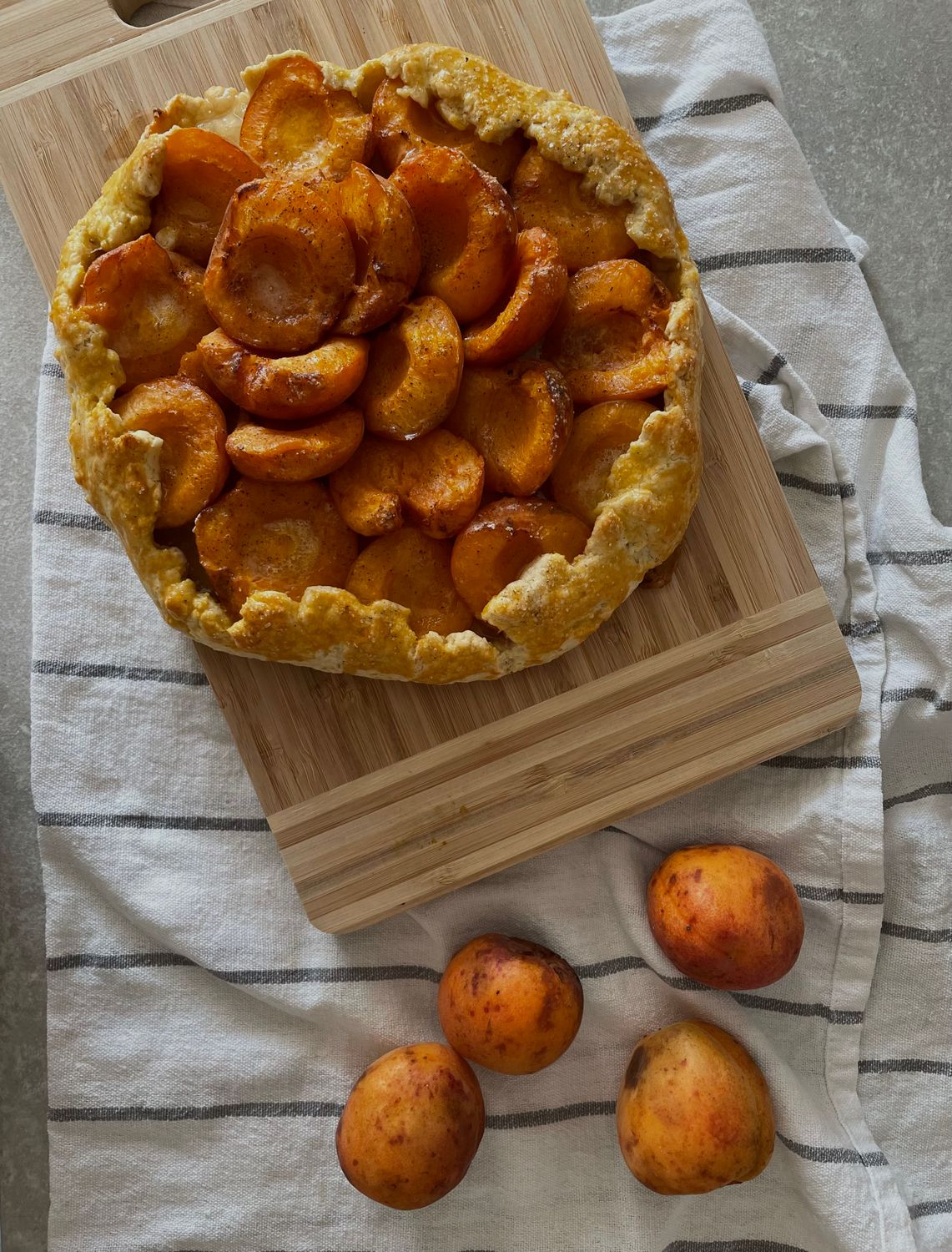
Once baked, a galette needs surprisingly little dressing up. Segal suggests warming two tablespoons of apricot jam and brushing it over the plums while the tart is still slightly warm. Pépin’s recipe also finishes with preserves, offering plum, apricot or raspberry as options. That sheen brings the fruit into focus without covering its arrangement beneath frosting or another layer of pastry. The folds remain visible, which is rather the point.
Let the galette cool before attempting its big move to the serving plate. Segal recommends using two large spatulas to transfer it, then serving it warm or at room temperature. Pépin’s recipe calls for cooling to room temperature and suggests ice cream alongside it. Either presentation leaves the same appealing contrast at the center of the dessert: tender baked fruit against browned pastry, with the pleated edges providing their own decoration.
There is room to plan ahead, too. Segal says her dough can be refrigerated for up to three days, while the assembled, unbaked galette can chill for up to 24 hours. She recommends serving it on baking day, when the crust is crispiest. That makes the galette a useful compromise for entertaining: prepare the components ahead, save the baking for the day of serving, and leave the ruler in the drawer. Those uneven folds already have a job to do.