Those Little Dishes Aren’t Just Extras: What Makes a Korean Table So Special
A Korean table can make dinner look like a delicious puzzle: a bowl of rice, several small dishes, perhaps a bubbling stew, and no obvious instruction about which bite comes first. But the arrangement has a clear purpose. Rice, banchan, and soup or stew complement one another, while shared dishes make eating a collective experience. The appeal is not simply having more things to taste. It is how those different components work together as a meal.
The Korean word bapsang offers a useful starting point. It combines bap, meaning cooked rice, and sang, meaning table. As Korean Bapsang creator Hyosun Ro explains, rice is so central to Korean food culture that bap can also mean a meal. That helps shift the focus away from the idea that dinner must revolve around one large meat entrée. At this table, rice and its accompaniments establish the structure.
“Food is best enjoyed when shared, and this is certainly the case for the Korean bapsang,” Ro writes in her introduction to traditional home-style meals. That sharing extends beyond passing a plate. It connects everyday side dishes, family kimchi recipes, and stews placed within everyone’s reach. Understanding those relationships makes the table less mysterious, and reveals why the smallest dish can be just as important to the experience as the largest pot.
Rice Is the Starting Point, and Banchan Belong Beside It
Plain rice might not appear to be the most dramatic item on the table, but it provides the foundation. Ro explains that Koreans typically cook unseasoned short-grain rice, with white rice the most common choice. Other grains and beans can be mixed in, including barley, millet, sorghum, and brown or black rice. That mixture is called japgok bap, or multigrain rice. The staple changes, but its central place in the meal remains.
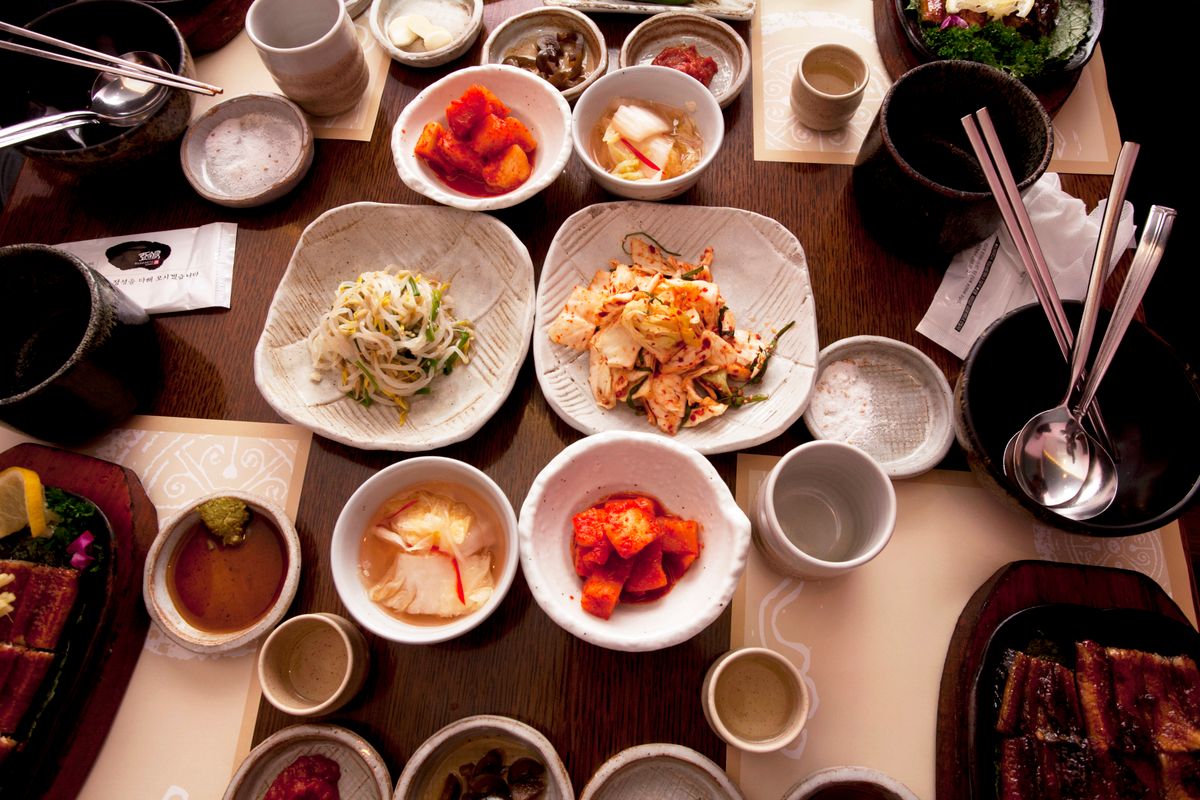
Banchan are often introduced to American diners as the little dishes surrounding a Korean restaurant meal. That description is useful, but incomplete. “In a broader sense, banchan is what accompanies the rice, big or small, elaborate or simple,” Ro explains. The term describes a role within the meal, not a requirement that every dish fit into a tiny bowl. Pickled vegetables, savory pancakes, meat, and seafood can all be part of the spread.
That variety is why a Korean table need not look identical from one meal to the next. Ro’s collection includes seasoned spinach, braised potatoes, spicy cucumber salad, and steamed eggs among its side dishes. These examples also challenge the assumption that Korean cooking is uniformly fiery. A meal can bring together different ingredients, textures, and levels of spice rather than asking every dish to deliver the same flavor or intensity.
Nor is there a mandatory mountain of banchan waiting behind every home-cooked dinner. “The number of banchan you put out on the table is really up to you,” Ro writes. Simple meals such as noodles or gimbap may come with only a couple of accompaniments, or kimchi alone. Holidays and special occasions can call for much larger selections. The generous restaurant spread is one expression of the tradition, not the minimum admission requirement.
Related: 8 Foods You Should Never Cook In Glass Dishes
Kimchi Brings More Than a Spicy Crunch
Kimchi holds a particularly important place in this arrangement. Ro notes that a Korean table almost always includes it, sometimes in more than one variety. It is also a broader category than the familiar red napa cabbage preparation might suggest. Her recipes include cucumber kimchi, green cabbage kimchi, and kkakdugi, made with cubed radish. Recognizing that range helps explain why kimchi can remain a constant presence without necessarily being the same dish every day.
Its cultural significance reaches well beyond the dinner bowl. In 2013, UNESCO inscribed “Kimjang, making and sharing kimchi in the Republic of Korea” on its Representative List of the Intangible Cultural Heritage of Humanity. The recognition concerns the collective practice of preparing and sharing kimchi, not simply a recipe or a particular brand. UNESCO describes it as an activity that strengthens family cooperation and reinforces cultural identity across regional and social differences.
Traditionally, that work follows the seasons. UNESCO’s account describes procuring seafood for salting and fermenting in spring, obtaining sea salt in summer, and drying and grinding red chili peppers in late summer. In late autumn, communities gather to prepare and share substantial quantities of kimchi for winter. The familiar side dish therefore carries a much larger story: planning, preservation, labor, and ensuring that households have enough food for the colder months.
Family differences are part of that story rather than a deviation from it. UNESCO notes that kimjang ingredients and methods vary regionally and are treated as important family heritage. Exchanging kimchi also allows people to exchange techniques and ideas. This is why describing one preparation as the single definitive version misses something essential. The tradition preserves shared knowledge while making room for the particular ways families and communities prepare their food.
A Shared Stew Gives the Table Another Gathering Point
Alongside rice and banchan, a traditional bapsang may include guk, or soup, and jjigae, or stew. They serve related but distinct purposes. Ro describes soups as lighter, with more liquid, and generally served in individual bowls. Jjigae tends to be heartier and can function as a main entrée. In the traditional arrangement she outlines, the stew is shared, like the banchan, rather than belonging exclusively to one diner.
There is plenty of variety inside that distinction. Ro lists kimchi jjigae, soybean paste stew, and soft tofu stew among her recipes, while her soups include soybean sprout soup and radish soup. Another category, jeongol, is a hot pot that typically contains more ingredients and is commonly cooked at the table. Soup, stew, and hot pot are therefore not interchangeable labels; each describes a different way of bringing broth and substantial ingredients into the meal.
The resulting table balances individual servings with communal food: rice anchors the meal, soup may arrive in its own bowl, and banchan and stew invite sharing. As Ro puts it, “Each component, the rice, banchan, stew/soup, nicely complements each other.” A Korean meal does not need an enormous number of dishes to express that idea. What matters is their relationship: familiar staples, contrasting accompaniments, and food enjoyed together rather than treated as a collection of unrelated extras.