Why America Is Building Fewer Brick Houses and What Homeowners May Be Losing
There was a time when a brick house represented something many American families valued: permanence. Its solid walls, familiar appearance, and reputation for durability made it a popular choice in communities where generations hoped to live in the same home.
Today, however, the traditional brick house is becoming less common in new American construction. Some newly built homes still have brick on the outside, but that does not necessarily mean the building is made of brick. In many cases, the actual structure is wood-framed, with brick attached as an exterior finish.
The difference is more important than it might appear. It raises questions about construction costs, skilled labor, durability, and whether the American housing industry still values building homes that can serve several generations.
According to a July 2026 analysis by the National Association of Home Builders (NAHB), brick or brick veneer accounted for just 16.8% of new single-family homes started in 2025. That was down from almost one-quarter in 2012. The figures come from U.S. Census Bureau housing data.
The Brick House Has Not Completely Disappeared
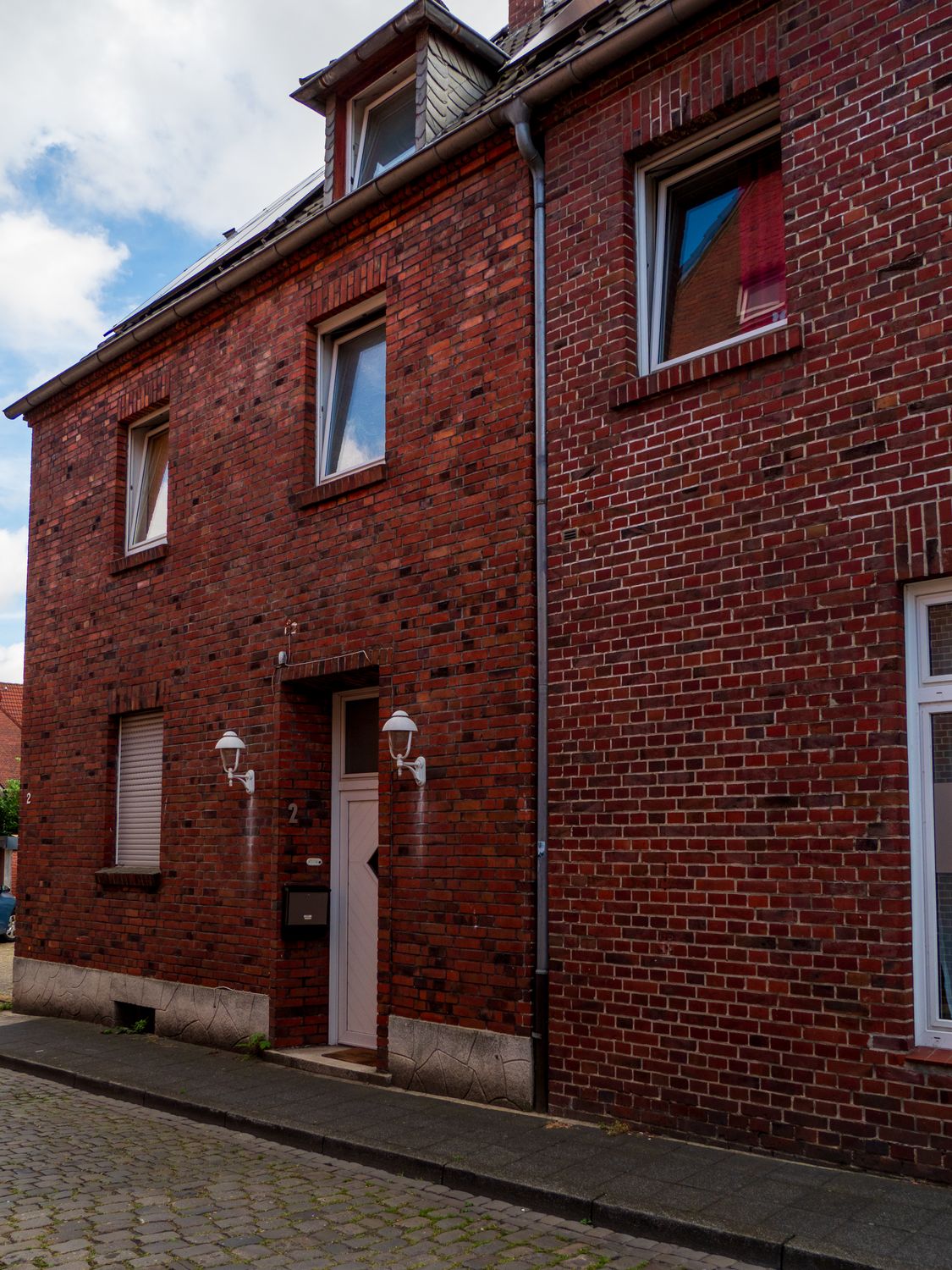
First, a brick-looking house and a structurally brick house are not necessarily the same thing.
In traditional structural masonry construction, brick or other masonry materials form part of the building’s load-bearing structure. The walls help support the building rather than simply covering it.
Brick veneer works differently. It is an exterior layer attached to a separate structural wall, commonly a wood frame. It can give a home the familiar appearance of traditional brick construction without the brick carrying the main structural loads.
Both systems use real brick, but they perform different jobs.
This distinction helps explain why someone can drive through a modern American neighborhood and see plenty of brick exteriors while the number of homes using brick as their main structural material remains limited.
The NAHB’s 2025 figures measure the principal exterior wall material, not how many houses have load-bearing brick walls. Therefore, the decline in brick’s share should not be mistaken for a precise count of traditional masonry homes.
Related: 15 Accent Wall Ideas for Every Space in Your Home
Speed and Construction Costs Changed What Builders Prefer
One major reason behind the shift is the economics of building a house.
Traditional brick masonry requires workers to lay bricks individually, apply mortar, maintain consistent alignment, and complete detailed work around windows, doors, and corners. It takes time and skilled labor.
By comparison, wood framing can be standardized and assembled relatively quickly. That makes it attractive to developers building multiple homes on a tight schedule.
The shift accelerated after World War II, when returning service members and growing families needed affordable housing. Large-scale developments such as Levittown demonstrated how standardized construction could produce homes quickly.
That period helped establish a building approach that still influences American residential construction.
Brick veneer offered a compromise. Builders could retain the familiar brick appearance without using masonry as the primary structural system.
For developers managing budgets, deadlines, and labor availability, that distinction matters.
Finding Experienced Bricklayers Is Another Challenge
Bricklaying is a specialized trade. Producing a strong, attractive masonry wall requires experience, practical knowledge, and attention to detail.
As construction methods changed, demand for traditional masonry skills also changed. Builders increasingly relied on materials and systems that could be installed by larger, more readily available workforces.
This creates a practical challenge: even a builder who prefers traditional masonry may struggle to find enough qualified workers in a particular area.
Architects and masonry professionals interviewed by Fortune in November 2026 identified the availability of experienced bricklayers as one factor influencing the decline of traditional masonry construction.
The issue is not simply whether brick is a good building material. It is also whether the construction industry has enough people with the skills to use it efficiently.
Regional Preferences Still Matter
Brick has not declined at the same rate across the entire United States.
The NAHB’s analysis found that brick or brick veneer remained the most common primary exterior material in the West South Central census division in 2025, accounting for 54% of new homes started there.
That region includes Arkansas, Louisiana, Oklahoma, and Texas.
By contrast, vinyl siding was used on 73% of new homes in the Mid-Atlantic and 72% in New England.
These differences show that American homebuilding is strongly influenced by geography. Local building traditions, climate, material availability, architectural preferences, and construction practices all help shape what builders choose.
A brick exterior that feels familiar in one part of the country may be much less common in another.
Consequently, saying America has stopped building brick houses overlooks substantial regional differences in the housing market.
Related: 17 States Where It’s Not Worth Buying a Home
Does a Brick Exterior Automatically Mean a More Durable House?
This is where the discussion becomes particularly interesting for homeowners.
Traditional masonry offers certain advantages. Brick is noncombustible, and properly designed masonry walls can provide substantial fire resistance. Brick can also remain in service for many decades when the materials, artistry, and maintenance are appropriate.
However, that does not mean every brick house will automatically outlast every wood-framed house.
A building’s durability depends on much more than its exterior appearance. Foundation quality, roof construction, moisture management, drainage, artistry, maintenance, and the materials behind the walls all matter.
Brick veneer can also be durable when correctly installed. Proper drainage and moisture-management details are especially important because water must not become trapped behind the exterior layer.
A poorly maintained masonry house can develop serious problems, just as a poorly constructed wood-framed house can.
The more useful distinction is between a home’s visible exterior and the quality of its complete construction.
The Fire-Resistance Debate Is More Complicated Than It Looks
Brick’s noncombustible nature is one reason some homeowners continue to value masonry.
A properly designed masonry wall does not burn like a wood-framed wall. However, a house with brick veneer is not automatically protected from fire the same way a building with structural masonry walls is.
That is because the veneer does not replace the wood framing behind it.
If fire reaches the structural components, the fact that the exterior is covered in brick does not make the entire building fireproof.
This distinction matters most in areas where wildfires are a concern. Homeowners should consider the complete building system, including roofing, windows, vents, decks, and surrounding vegetation, rather than judging fire resistance by the exterior material alone.
Brick can be part of a fire-conscious design, but it does not guarantee protection.
Related: 13 Safety Rules Everyone Follows but Should Ignore
Are We Building Homes for the Next Generation?
Perhaps the most interesting question is not whether brick looks better than vinyl or fiber cement. It is whether modern construction places enough emphasis on how long a house should remain useful.
Some architects and building professionals interviewed by Fortune have questioned whether the industry’s focus on construction speed and immediate costs has reduced attention to long-term durability.
That concern deserves consideration, but it should not become an assumption that every new house is built to last only as long as its mortgage.
Modern wood-framed construction can produce durable, efficient homes when designed and built properly. Likewise, traditional masonry requires sound engineering and maintenance to deliver its expected benefits.
Still, the question of long-term value is worth asking. A house is often one of the largest purchases a family makes. Buyers naturally want to know whether the roof, walls, windows, plumbing, and other major components will continue serving them long after the purchase.
The materials hidden behind the exterior may matter just as much as the features that make a house attractive at first glance.
Related: 13 Mantel Mistakes Designers Warn You to Avoid
Could Traditional Brick Construction Become Popular Again?
Brick could remain attractive to some builders and homeowners for several reasons.
Its appearance still appeals to people who prefer traditional architecture. Its noncombustible properties may also make masonry an option worth considering in certain fire-conscious building designs.
Construction technology could help, too. Prefabricated systems and other methods that simplify installation may reduce some of the labor challenges associated with masonry.
However, a widespread return to traditional structural brick construction is not guaranteed. Cost, construction time, regional preferences, building requirements, and the availability of skilled workers will continue to influence decisions.
For now, brick remains part of American homebuilding, but its role is different from what many people associate with older masonry houses.