7 Foods Kids Found in Their Christmas Stockings in the 1950s
Ask anyone who grew up in the 1950s what they found in their Christmas stocking, and the answer usually comes with a smile. There were toys, of course, and maybe a new pair of mittens or a yo-yo. But down in the toe and tucked between the presents was food, and for many children those little treats were the best part of the morning.
Stockings back then were often real socks or simple knit stockings hung on a mantel, a bedpost or a nail by the window. Parents didn’t have big budgets, and many of them had grown up during the Great Depression, when an orange or a handful of nuts was a genuine luxury. They carried those traditions straight into the postwar years, even as times got better.
The stocking stuffers kids get today are a lot flashier. But the simple foods of the 1950s left a deep impression, and plenty of grandparents still slip a few of them into stockings for their grandchildren. Here are the foods kids found in their Christmas stockings in the 1950s.
1. An Orange in the Toe
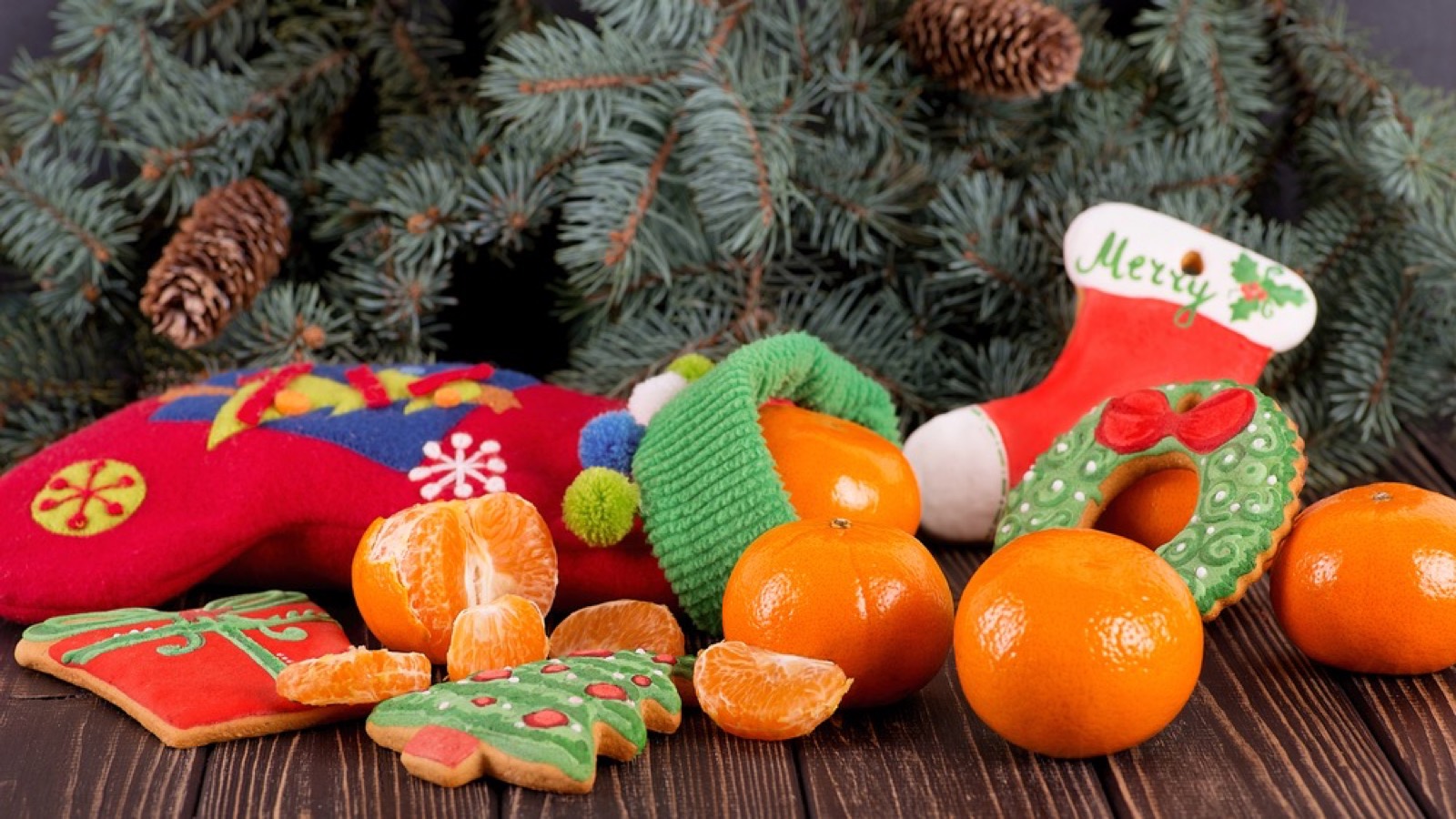
The orange in the toe is the most famous stocking tradition of all. Nearly every child of the era remembers reaching all the way down and finding a bright orange or tangerine waiting at the bottom. For many families, it was the only fresh citrus they’d see all winter.
The tradition is older than the 1950s. Historians who study the Christmas stocking tie it to the legend of St. Nicholas leaving gold for poor girls, with the round orange standing in for a ball of gold. Parents who had grown up when an orange was a rare treat kept the custom going for their own kids.
By the 1950s, oranges from Florida and California were easier to find, but they still felt special in December. Many baby boomers say they kept up the tradition for their children and grandchildren, even if the kids today don’t quite understand why a piece of fruit got such an honored spot.
2. Walnuts, Pecans and Brazil Nuts in the Shell
Mixed nuts still in their shells were another stocking staple. Walnuts, pecans, hazelnuts, almonds and big, hard Brazil nuts filled out the stocking and made it feel full. Families often kept a bowl of them out all season, along with a metal nutcracker that sat on the coffee table.
Cracking nuts was an activity in itself. Kids sat on the living room floor working away at a stubborn walnut while the grown-ups talked. Brazil nuts were famously the hardest, and more than one child gave up and handed them to Dad.
Nuts were affordable, kept for weeks and added a little protein to a morning full of sweets. Many people who grew up with them say Christmas still doesn’t smell right without a bowl of nuts in the shell nearby.
3. Ribbon Candy
Ribbon candy was the fancy candy of the season. The thin, glossy strips of hard candy were folded back and forth into wavy ribbons and came in bright stripes of red, green, yellow and white. Grandma often set it out in a glass dish, but it also found its way into stockings.
Ribbon candy was beautiful but fragile. Pieces often broke in the box or in the stocking, and they got sticky fast if the house was warm. Kids who remember it say it was almost too pretty to eat, though they managed anyway.
Ribbon candy is still made by a few companies, and you can find it in some stores at Christmas. For many older Americans, one look at it is enough to bring back memories of Christmas morning at their grandparents’ house.
4. Candy Canes
Candy canes were as much decoration as candy in the 1950s. Kids found them hanging from the tree, tucked into stockings and handed out by Santa at the department store. The red-and-white peppermint canes were a sure sign the holidays had arrived.
The candy cane got a big boost in the 1950s, when a machine was invented that could bend the canes automatically. Before that, they had to be bent by hand, which made them more expensive and harder to mass produce. Once the process sped up, candy canes became even more common in American homes.
Kids loved sucking a candy cane down to a sharp point or hooking one over the edge of a mug of hot chocolate. Many families still hang them on the tree, just as they did in 1955.
5. Foil-Wrapped Chocolate Coins
Chocolate coins wrapped in gold or silver foil felt like real treasure to a child. They came in little mesh bags or loose, and they clinked together at the bottom of the stocking. Unwrapping the foil carefully without tearing it was part of the fun.
The coins tied in neatly with the St. Nicholas story of gifts of gold. Some families also gave them at Hanukkah, where chocolate gelt is a long-standing tradition. For Christmas kids, they were simply a fun, shiny treat that looked like money.
Many people who grew up in the 1950s remember the chocolate being a little waxy and not especially good. It didn’t matter. The coins were about the fun of discovery, and kids happily traded them with brothers and sisters later in the day.
6. A Life Savers Storybook
One of the most beloved stocking stuffers of the era was the Life Savers “storybook,” a box shaped like a book that opened to reveal several rolls of Life Savers in different flavors. Kids could read the “pages” by flavor, from Wild Cherry to Butter Rum.
The candy book was a gift that felt grown-up and a little bit luxurious. Siblings often compared which flavors they got and traded the ones they didn’t like. Pep-O-Mint and Wint-O-Green were frequent trade bait.
The storybook was so popular that it became a holiday tradition for generations. Many baby boomers say they still buy one for their grandchildren every Christmas, just to keep the memory going.
7. Hershey’s Kisses and Hard Candies
Loose candies filled whatever space was left in the stocking. Hershey’s Kisses wrapped in foil, peppermint drops, butterscotch discs and old-fashioned hard candies with filled centers were all common. Some families bought a big bag of mixed Christmas candy and divided it among the stockings.
Hard candy was cheap, lasted a long time and came in festive colors. Some of it, like the clear “barley toys” shaped like animals and sleighs, was meant to look as much as to taste. Kids often ended up with a sticky handful of candies at the bottom of the stocking by afternoon.
For parents on a budget, these little candies were a way to make a modest stocking look generous. For kids, they were a reason to keep reaching in long after the toys were gone.
Why These Simple Treats Still Matter
The foods in a 1950s Christmas stocking weren’t expensive or fancy. An orange, a few nuts and a handful of candy cost very little, even then. But they carried the traditions of parents and grandparents who remembered when those small things meant a lot.
Many baby boomers say the stockings they remember most weren’t the fullest ones, but the ones that came with a story. Grandparents who still hang an aluminum tree or bring out their old decorations often fill stockings the same way their own parents did.
If you grew up with an orange in the toe, you probably still think of it every December. And if you have grandchildren, slipping one into their stockings this year might start a new chapter of an old tradition.