Before You Use Dawn Beyond the Sink, Avoid These 6 Cleaning Mistakes
Dawn dish soap has earned a permanent place in many kitchens. It cuts through greasy plates, helps clean stubborn messes, and has become a familiar household product for jobs that go beyond washing dishes. So, when another cleaning challenge appears, reaching for that familiar blue bottle can feel like the easiest solution.
But not every surface, appliance, or household item responds well to the same cleaning approach.
Sometimes the problem isn’t using Dawn itself. It’s leaving soap behind, choosing the wrong formula, or combining it with another cleaning product. Even a product known for its versatility has limitations.
Leaving Dawn in the Carpet After the Stain Disappears
A drink spills on the carpet, and you quickly reach for a cloth and some dish soap. You blot the stain, watch the mark fade, and feel pleased with the results. But there is one important step you might be tempted to skip: rinsing away the soap.
According to Shaw Floors, diluted dishwashing detergent can be used for certain carpet spot-cleaning procedures. However, the company emphasizes removing the detergent with clean water.
Why does that matter? Leftover detergent can create a sticky patch that attracts dirt from everyday foot traffic. Before long, the spot you worked so hard to clean may start looking dirty again.
The better approach is to follow your carpet manufacturer’s instructions. Shaw recommends blotting rather than scrubbing, using an appropriate diluted solution, and carefully removing the remaining detergent with clean water. Don’t assume the same method works for every carpet or rug.
Spraying Dawn Powerwash on Marble Countertops
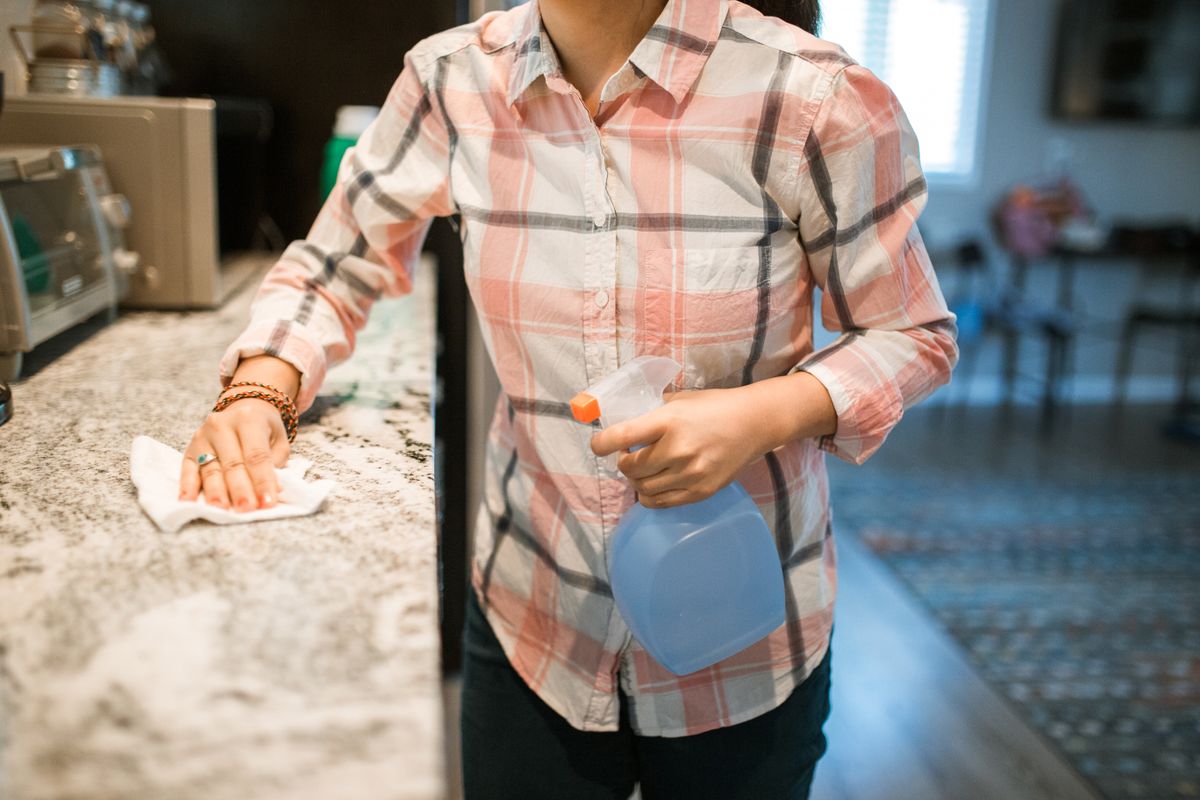
It’s easy to understand the temptation. You’ve finished cleaning greasy dishes, noticed a stubborn mark on your marble countertop, and the Dawn Powerwash bottle is already in your hand. However, this is one cleaning shortcut worth reconsidering.
Dawn specifically lists marble countertops, sink basins, and backsplashes among the surfaces to avoid when using its Platinum Powerwash spray.
That distinction matters because traditional Dawn dishwashing liquid and Dawn Powerwash are not identical products. Powerwash contains three cleaning boosters that traditional dish soaps do not.
The manufacturer doesn’t establish that one accidental application will permanently damage marble, so there’s no reason to panic over a small mistake. Still, using a product on a surface that its manufacturer excludes isn’t a good cleaning habit.
Instead, check your marble supplier’s care instructions and choose a compatible stone cleaner. Some marble-care guidance recommends mild dish soap diluted in water, followed by rinsing and drying. That doesn’t mean Powerwash is suitable for the same job.
Turning Dawn Into a Homemade Plant-Pest Spray
Homemade cleaning and gardening solutions can sound appealing, especially when they involve something already sitting in your kitchen.
One popular idea is mixing Dawn with water and spraying the solution onto plants to deal with aphids and other unwanted insects.
The problem is that ordinary dish detergent isn’t the same thing as insecticidal soap.
Iowa State University Extension specifically warns against treating products such as Dawn and Palmolive as replacements for insecticidal soap. Their effectiveness can be limited and inconsistent, and they may injure plants.
The University of Florida explains that detergents can disrupt the protective waxy layer on leaves, potentially leaving foliage dry and damaged.
Instead of experimenting with a homemade mixture, identify the pest first. Then select a treatment labeled for the particular plant and pest, following its directions carefully. Even products designed for insect control aren’t automatically suitable for every plant.
Your favorite houseplant deserves a little more consideration than an experiment with dish soap.
Leaving a Cast-Iron Skillet in a Sink Full of Dawn
Cast-iron cookware comes with plenty of cleaning advice, and some of it can make owners nervous about using ordinary dish soap.
But here’s something worth knowing: mild dish soap isn’t automatically forbidden when cleaning seasoned cast iron.
According to Lodge, the bigger mistake is leaving seasoned cast iron soaking in water.
Extended moisture exposure can cause rust, particularly when a skillet is left sitting in a sink overnight. Depending on the amount of rust, you may need to scrub the cookware and restore its seasoning. Fortunately, a rusty cast-iron pan isn’t necessarily ruined.
Lodge recommends allowing the cookware to cool before washing it with warm, soapy water. You can use a suitable brush or pan scraper to remove stuck food. After washing, dry the skillet completely and apply a thin layer of cooking oil.
So, you don’t have to treat every drop of dish soap like an enemy. Just don’t leave your skillet taking an overnight bath.
Putting Dawn in the Dishwasher or Leaving It on Dishes
Running out of dishwasher detergent can be frustrating, particularly when there’s a pile of dirty plates waiting beside the sink.
It might seem reasonable to use a little Dawn instead. After all, both products are designed to clean dishes.
But automatic dishwashers require specially formulated detergent. Ordinary hand-washing dish soap produces excessive suds inside the machine.
According to Whirlpool, too much foam can cause suds to overflow from the appliance.
There’s another detail worth remembering: concentrated dish soap left on dishes after pretreatment can also contribute to excessive sudsing when those dishes go into the dishwasher.
The better option is to use automatic dishwasher detergent according to your appliance’s instructions. If you’ve already treated dishes with hand-washing soap, remove the residue before loading them.
A little extra attention beforehand is much easier than cleaning up soap bubbles around your kitchen.
Mixing Dawn With Chlorine Bleach to Make It Stronger
This is the cleaning mistake that deserves the clearest warning.
When dealing with a particularly stubborn mess, combining two cleaning products might seem like a way to get better results. Someone might reason that Dawn will handle grease while chlorine bleach provides additional cleaning power.
But combining household cleaning products isn’t a shortcut worth taking. Clorox explicitly advises against mixing bleach with other cleaners, including dish soap.
The concern is that mixing bleach with household cleaning chemicals can produce hazardous fumes. The exact reaction can depend on the products and their formulations, so it’s important not to assume every mixture behaves identically.
If you need to wash and sanitize dishes, keep the processes separate. Wash with dish soap first, rinse thoroughly, and then follow the instructions for an appropriate sanitizing product.
Never improvise a cleaning mixture by adding bleach to Dawn in a sink or spray bottle.
A Familiar Cleaner Still Has Its Limits
Dawn can be useful for many everyday cleaning jobs, but being versatile doesn’t make it suitable for every surface or situation. Sometimes the solution is rinsing more carefully, while other times it means choosing a completely different product.
Before reaching for that familiar bottle, check the directions for both the cleaner and the item you’re cleaning. A little extra attention can save you from creating a bigger mess than the one you started with.