AAPI Adults Say America Is Losing Its Reputation as a Great Country for Immigrants, New Poll Reveals
A new national poll is revealing a shift that goes beyond statistics; it is reshaping how many Asian American, Native Hawaiian, and Pacific Islander adults emotionally interpret life in the United States.
For a community deeply shaped by immigration, education pathways, and multi-generational settlement, the findings reflect something more complex than approval or disapproval. We are seeing a country where belonging feels less automatic, more conditional, and increasingly dependent on the political climate rather than permanence.
The result is not rejection of America, but a quiet recalibration of what it means to belong here.
The Rise of “Conditional Belonging” in Immigrant America
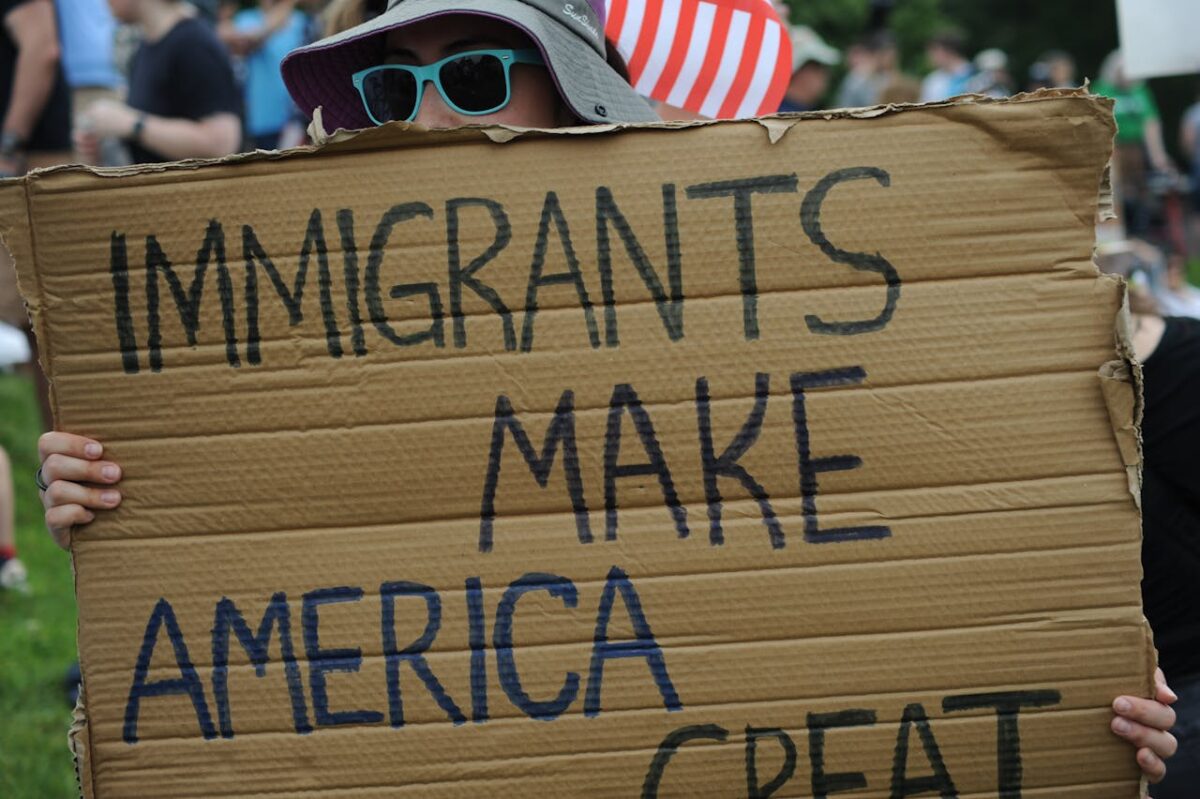
One of the most striking themes emerging from the poll is the growing sense that belonging in the United States is no longer fully stable.
For many AAPI adults, legal status alone does not eliminate uncertainty. Citizenship may provide protection on paper, but social and emotional security feels increasingly tied to shifting public attitudes and the visibility of immigration enforcement.
We are now witnessing what can be described as a conditional belonging economy, where:
- Safety feels tied to documentation rather than trust
- Acceptance feels influenced by political cycles.
- Immigration identity feels constantly under review.
This marks a subtle but important transformation. America is no longer simply experienced as a destination; it is experienced as a system where belonging must be continuously validated.
The Invisible American Paradox: Highly Integrated, Still Questioned
The poll highlights a contradiction that defines modern AAPI identity in the United States.
AAPI communities are among the most integrated groups in the country, with strong representation across:
- healthcare systems
- technology and engineering sectors
- higher education
- small business ownership
- public service and academia
Yet despite this visibility in contribution, many still report moments of social invisibility or perceived foreignness.
This creates what we can call the Invisible American Paradox:
Deeply embedded in American systems, yet still not fully perceived as fully belonging in moments of national tension.
The paradox does not erase success. Instead, it complicates it, turning achievement into something that does not always translate into perceived acceptance.
Fear Infrastructure: How Immigration Anxiety Shapes Daily Behavior
Beyond opinions, the poll reveals behavioral shifts that signal deeper emotional adaptation.
About half of AAPI adults report either experiencing or knowing someone who has changed their everyday behavior due to immigration concerns.
These changes include:
- carrying proof of citizenship or legal status
- adjusting travel or family visit plans
- avoiding certain interactions or locations
- increased attention to enforcement-related news
This is not abstract fear; it is a fear infrastructure, built into daily life decisions.
We are not only seeing concern about immigration policy. We are seeing how perceptions of policy shape movement, planning, and even spontaneity in everyday American life.
The American Dream Split Screen: Hope and Hesitation Coexisting
Despite rising concern, the American Dream remains deeply embedded in AAPI identity.
The poll shows that a strong majority of AAPI adults still value the American Dream, reflecting an enduring belief in:
- education as mobility
- hard work as advancement
- family progress across generations
- opportunity through persistence
But that belief now exists alongside hesitation.
We are witnessing a split-screen American Dream, where:
On one side:
- Opportunity remains real
- Diversity remains valuable
- Upward mobility is still possible.
On the other:
- Immigration pathways feel uncertain.
- Belonging feels conditional
- Political discourse feels increasingly tense.
The result is not abandonment of the dream, but emotional duality within it.
Inherited Anxiety: When Immigration Experience Becomes Generational Memory
For many AAPI families, immigration is not just a personal experience; it is an inherited memory.
Parents and grandparents often lived through:
- long visa queues
- sponsorship uncertainty
- refugee or displacement histories
- early financial instability after migration
Even when younger generations are fully naturalized or U.S.-born, these histories shape how safety is understood.
This creates what can be called inherited anxiety, a cultural memory where stability is never assumed, even when legally secured.
The result is a community that often plans for continuity, but emotionally prepares for disruption.
Cultural Centrality vs Political Uncertainty
One of the strongest findings in the poll is the value placed on cultural diversity.
A large share of AAPI adults say cultural mixing is central to what makes the United States meaningful.
This reflects a vision of America where identity is not fixed but layered:
- language diversity
- food traditions
- religious plurality
- cross-cultural family structures
Yet this cultural confidence exists alongside political uncertainty.
We are seeing a widening gap between:
- cultural acceptance of diversity
- and political debates over immigration control
This tension shapes how AAPI adults interpret their place in the country, not culturally excluded, but politically unsettled.
Soft Departure: Emotional Detachment Without Physical Exit
Not all responses to uncertainty involve relocation or legal change.
A quieter shift is also emerging: soft departure.
This does not mean leaving the country physically. Instead, it reflects:
- reduced emotional investment in national narratives
- more cautious identification with political identity
- a shift from pride-based belonging to practicality-based belonging
People who remain in the United States contribute to its systems and participate in its economy, but with a more measured emotional connection to national identity itself.
It is a subtle transformation, but a meaningful one.
America’s 250th Anniversary Viewed Through a Split Identity Lens.

As the United States approaches its 250th anniversary, the poll reveals a complicated emotional landscape among AAPI adults.
For some, it is a moment of pride in contribution and progress. For others, it is a moment of reflection about whether the original promise of opportunity still feels equally accessible.
This is not a rejection of American identity. It is a recalibration of expectations.
We are seeing a population that:
- values the idea of America deeply
- contributes significantly to its present
- but increasingly evaluates whether its future feels equally inclusive
Key Poll Dynamics at a Glance
| Theme | What It Reveals |
| Conditional Belonging | Immigration status tied to perceived security |
| Invisible American Paradox | High contribution, inconsistent recognition |
| Fear Infrastructure | Daily life adjustments based on immigration concerns |
| Split Screen Dream | Hope and hesitation coexisting |
| Inherited Anxiety | Immigration memory passed across generations |
| Soft Departure | Emotional detachment without physical exit |
The Bigger Picture: A Shift in How America Is Emotionally Experienced
The most important insight from the poll is not simply that opinions are changing, but that the emotional structure of belonging is changing.
AAPI adults are not disengaging from America. They are recalibrating how they relate to it:
- from certainty to conditionality
- from singular identity to layered identity
- from unquestioned belonging to negotiated belonging
This shift does not signal distance from the American story. It signals a more complex chapter of it, one where identity, immigration, and national meaning are no longer assumed but actively examined.