Americans Are Changing Their Minds on School Cellphone Bans as Support Reaches New High
A growing number of Americans believe classrooms may need fewer screens and fewer distractions, with new polling showing strong support for limiting cellphone use in schools.
The debate over student cellphone use is becoming one of the biggest education issues across the country. A new Pew Research Center survey shows that nearly eight in 10 U.S. adults support banning cellphone use during middle and high school classes, signaling a major shift in how Americans view phones in the classroom.
The survey found that 77% of adults support classroom cellphone bans, while 18% oppose them and 6% remain unsure. The results come as dozens of states move toward stricter rules designed to reduce distractions and improve the learning environment.
The conversation is no longer just about whether students should have phones at school. It is about when those phones should be available and whether constant access is affecting learning, behavior, and social development.
Support for keeping phones out of classrooms continues to grow.

The latest Pew survey, conducted from May 26 through June 1 among 9,750 U.S. adults, shows that support for classroom restrictions has increased for the second year in a row.
While most Americans agree that phones should be limited during lessons, the debate becomes more complicated when schools consider stricter “bell-to-bell” policies. These rules require students to keep phones away from the beginning of the school day until dismissal.
Nearly half of Americans, 48%, now support all-day cellphone bans. That number has increased significantly from 36% in 2024, showing growing acceptance of stricter school policies.
However, 43% of adults still oppose keeping phones away for the entire school day, while 8% are undecided.
The difference reflects a larger debate among parents, educators, and students. Supporters argue that phones create distractions and make it harder for students to focus. Opponents often point to concerns about communication, emergencies, and student independence.
The issue has gained more attention as schools across the country experiment with different approaches, from phone lockers and storage pouches to complete restrictions during school hours.
Age and political differences shape opinions on cellphone bans.

Not everyone views school cellphone restrictions the same way.
The survey found that younger adults are less supportive of classroom bans compared with older generations, although support among younger Americans has increased. Among adults under 30, 57% support banning cellphone use during class, up from 45% in 2024.
Older adults showed stronger support for restrictions, suggesting that concerns about classroom distractions may be especially significant among parents and older generations.
Political views also influenced opinions. According to the survey, 81% of Republicans and Republican-leaning independents support classroom cellphone bans, compared with 74% of Democrats and Democratic-leaning independents.
Republicans were also more likely to support full-day restrictions, with 55% backing bell-to-bell bans compared with 44% of Democrats.
Despite these differences, the overall numbers show broad agreement across political groups that classroom cellphone use has become a challenge schools need to address.
The concern is not new. A previous Pew Research survey found that about one-third of teachers considered student cellphone distraction a major problem. Among high school teachers, that figure rose dramatically, with 72% saying phones were a major classroom issue.
More states are restricting student phone use, but results remain debated.
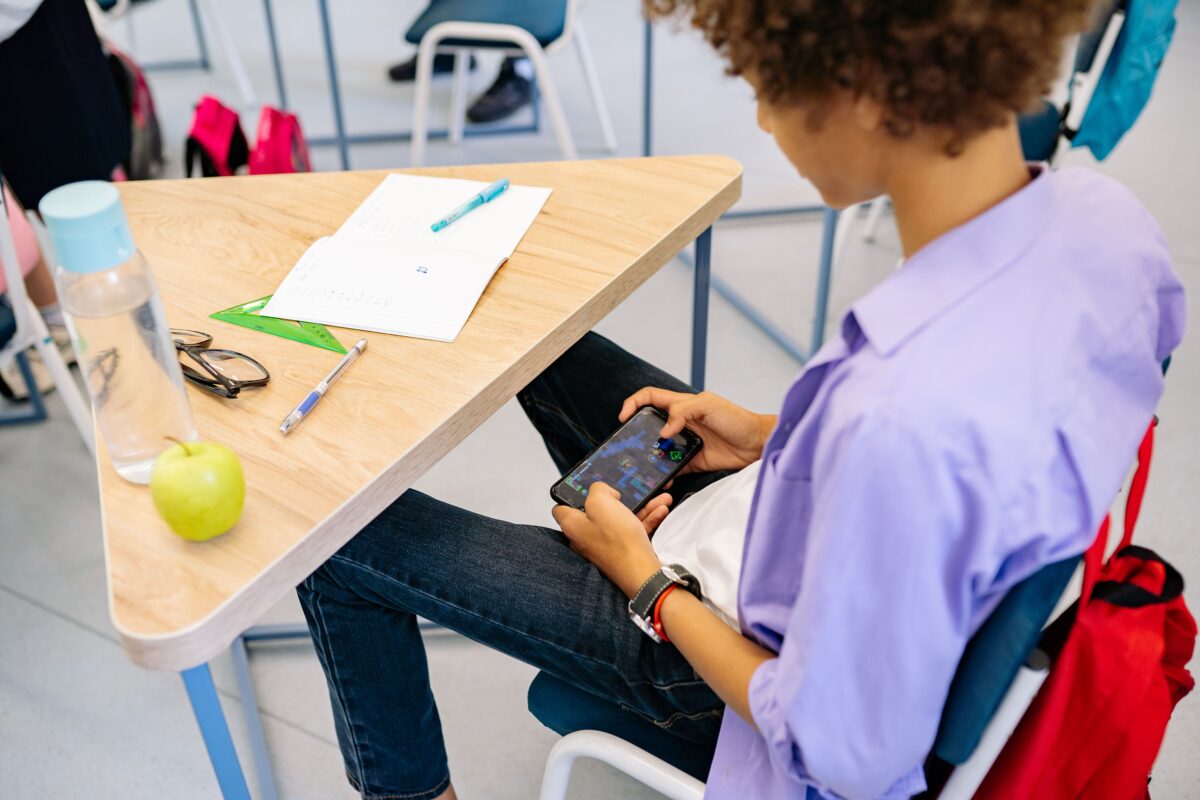
The push for cellphone limits is spreading nationwide.
As of the spring of 2026, at least 37 states and Washington, D.C., had policies requiring school districts to restrict or ban student cellphone use during school hours.
Many educators and parents support the changes, arguing that removing phones can help students pay attention, participate more, and interact with classmates.
A separate Pew survey from 2025 found that many Americans believed all-day cellphone bans could improve academic performance, classroom behavior, and students’ social skills. However, fewer people believed these policies would improve physical safety.
Still, research on the impact of phone bans has produced mixed results.
Some teachers report that students are less distracted when phones are removed from classrooms. However, studies have not consistently shown immediate improvements in grades or behavior.
That has left schools trying to find the right balance. Many administrators are attempting to reduce distractions without ignoring the reality that smartphones are now a major part of students’ daily lives.
The issue has also entered the political conversation. During a campaign event, Ohio gubernatorial candidate Vivek Ramaswamy suggested banning phones in schools, arguing that restrictions could help address concerns such as anxiety and depression among young people.
As more states consider new rules, the debate over school cellphone policies is likely to continue. For many Americans, the question is no longer whether phones affect classrooms, but how schools should respond to a technology that has become nearly impossible to separate from modern life.