America’s 250th Birthday Turns into a Heat, Storms, and Politics Marathon
America’s 250th Independence Day was meant to be a clean, historic celebration—fireworks, flags, and national pride on full display. Instead, it unfolded like a pressure cooker moment for the country: extreme heat, sudden storms, large-scale evacuations, and a politically charged stage in Washington, D.C. What should have been a straightforward birthday party for the nation turned into a day that tested both public safety systems and national unity.
Across multiple cities, celebrations still went ahead, but the tone was uneven. Some events felt festive and traditional, while others were disrupted, delayed, or reshaped by weather warnings and emergency responses. In Washington especially, the contrast between patriotic spectacle and real-time chaos defined the night.
Heat, Storms, and an Evacuation That Stopped the Celebration Midway

The National Mall in Washington, D.C., was the centerpiece of the 250th anniversary celebration, but it also became the most dramatic example of how quickly things can shift during large public events.
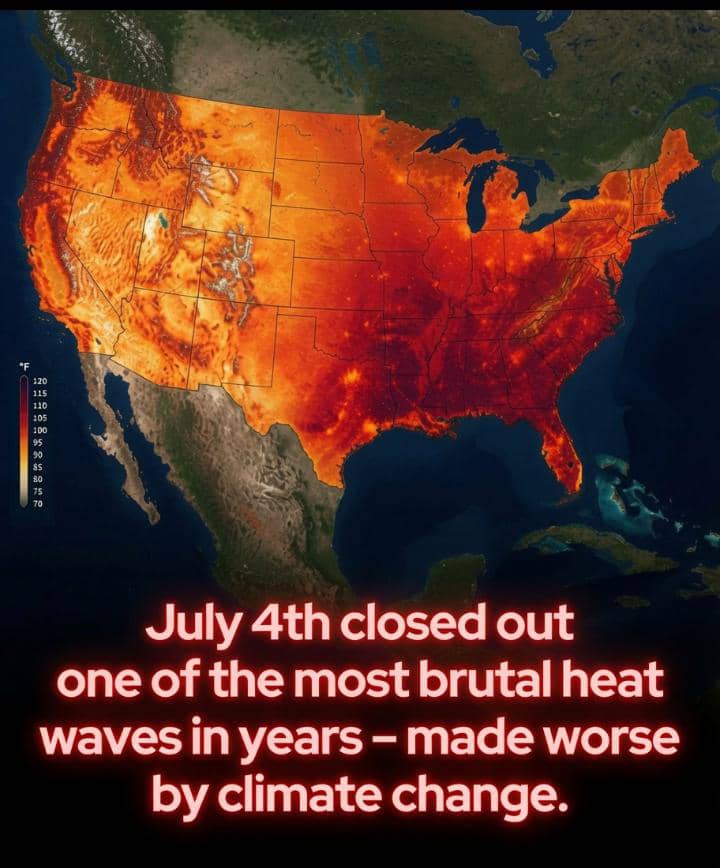
Before the fireworks even had a chance to take over the sky, extreme heat already pushed crowds to their limits. Reports indicated dozens of heat-related medical incidents, with emergency teams treating attendees for exhaustion, dehydration, and related conditions as temperatures climbed through the day.
Then came the storm.
As evening approached, severe weather moved into the capital region, forcing authorities to evacuate parts of the National Mall. Crowds that had gathered for the main program were directed to nearby shelters, museums, and covered public spaces. The evacuation wasn’t brief either—people were kept away long enough that the planned schedule had to be paused and later restarted once conditions improved.
For many attendees, the shift from celebration to emergency response was abrupt. One moment, the atmosphere was filled with music and anticipation, and the next, it was about safety instructions, security lines, and waiting out the weather.
Even after the storm passed, the disruption left its mark on the night. The restart of the program meant tighter timing, renewed security screening, and a noticeably changed energy in the crowd.
Trump’s Speech, National Pride, and a Political Edge to the Celebration
When the program eventually resumed in Washington, the focus shifted back to ceremony—but not without politics shaping the tone.
President Donald Trump used the milestone anniversary to frame the moment as both a celebration of American strength and a reflection of national direction. He praised the country’s history and resilience, but also used the stage to highlight familiar political themes, including national security, military strength, and domestic policy priorities.
The address leaned heavily into patriotism, with references to American pride and historical achievement. But it also carried a sharper undertone than a typical Independence Day speech, reflecting the broader political environment surrounding the event.
Trump described the anniversary as a major national milestone and emphasized unity around American identity, while also reinforcing policy positions tied to his political agenda.
The timing added weight to the speech. Delivering remarks after a weather evacuation and delays pushed the event into late-night hours, making the moment feel less like a routine holiday address and more like a high-stakes national broadcast layered onto a chaotic evening.
Outside Washington, reactions were mixed but engaged. Supporters highlighted the scale and symbolism of the celebration, while critics pointed to the political framing of what is traditionally a nonpartisan national holiday.
Fireworks, Citywide Disruptions, and a Celebration That Felt Uneven Nationwide
Even with disruptions in Washington, the 250th anniversary was still marked across the country, with fireworks displays, concerts, and public gatherings in major cities. But the day wasn’t consistent from place to place.
Some cities managed full celebrations without interruption, while others faced cancellations or delays due to the same weather system that affected the capital. In parts of the Northeast, storms forced organizers to pause or reschedule fireworks displays, while emergency alerts impacted outdoor events in multiple locations.
New York City, however, leaned into a more traditional patriotic spectacle. Tall ships sailed around the harbor, and aerial displays added a historic tone to the celebration, echoing earlier national milestones. The city’s waterfront events remained one of the most visually striking parts of the anniversary.
Elsewhere, officials had to balance celebration with safety. In several regions, fireworks shows were delayed or adjusted as weather systems moved through. Even where events continued, organizers kept a close watch on conditions, prepared to pause programming if necessary.
Despite the uneven rollout, attendance remained strong in many areas. Families, tourists, and local residents still turned out in large numbers, drawn by the symbolic weight of the 250-year milestone.
At its core, the day highlighted something simple but difficult to ignore: even a major national anniversary is not immune to the realities of weather, logistics, and public safety planning.
A Celebration That Reflected the Country as Much as It Honored It
By the end of the night, America’s 250th Independence Day didn’t feel like a single unified event. It felt like multiple overlapping stories happening at once—celebration, disruption, politics, and endurance.
Washington delivered the most dramatic version of that mix: extreme heat, emergency evacuation, a delayed restart, and a politically charged address all layered into one evening. Other cities experienced their own forms of uncertainty, from storm delays to schedule adjustments.
And yet, the celebration still happened.
Fireworks lit the sky. Crowds returned after evacuations. Cities continued their traditions. People still showed up to mark a milestone that carries significant historical weight.
The result wasn’t a perfect national birthday celebration. It was something more complicated and arguably more reflective of the country itself—resilient, divided in tone, shaped by circumstance, but still committed to showing up for the moment.
America’s 250th didn’t just commemorate history. It also revealed how the present continues to reshape how that history is celebrated.