Big, Foil-Wrapped, and Fiercely Debated: How the Mission Burrito Became a California Icon
A Mission-style burrito does not arrive quietly. Wrapped in foil and packed with meat, beans, rice, salsa, and sometimes a whole cast of creamy extras, it makes its ambitions clear before the first bite. But the oversized reputation is only part of the story. This San Francisco specialty grew out of the Mission District’s taqueria culture, inspired a national restaurant phenomenon, and still sparks debates over who rolled the first one. Its history is almost as generously filled as its tortilla.
First, a clarification before anyone orders lunch: a Mission burrito comes from California, but it is not the same as the “California burrito” associated with San Diego. That version gets much of its heft from french fries. The Mission version typically centers on rice, beans, meat, and salsa wrapped in a large flour tortilla. Both can be substantial, but their names point to different regional traditions, not two interchangeable labels for any particularly large burrito made in the state.
The Mission burrito’s influence also reaches people who have never visited San Francisco. Chipotle founder Steve Ells encountered the style while working as a cook in the city and later brought a version of it to his first Denver restaurant in 1993. That helped turn a local specialty into a familiar national format. The chain didn’t invent the Mission burrito; it introduced its generously filled, individually assembled approach to a much wider audience.
What Makes a Mission Burrito So Big?
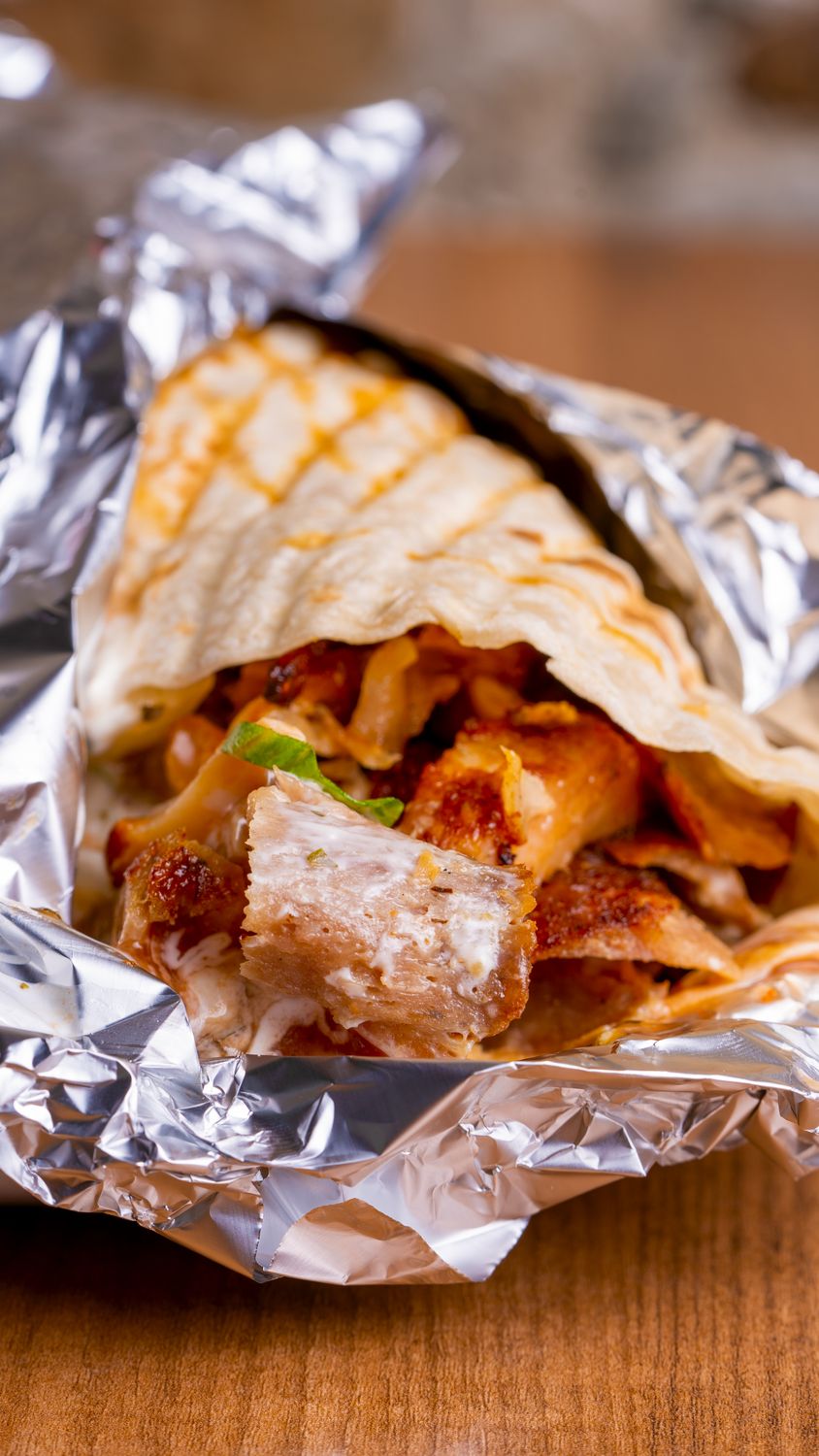
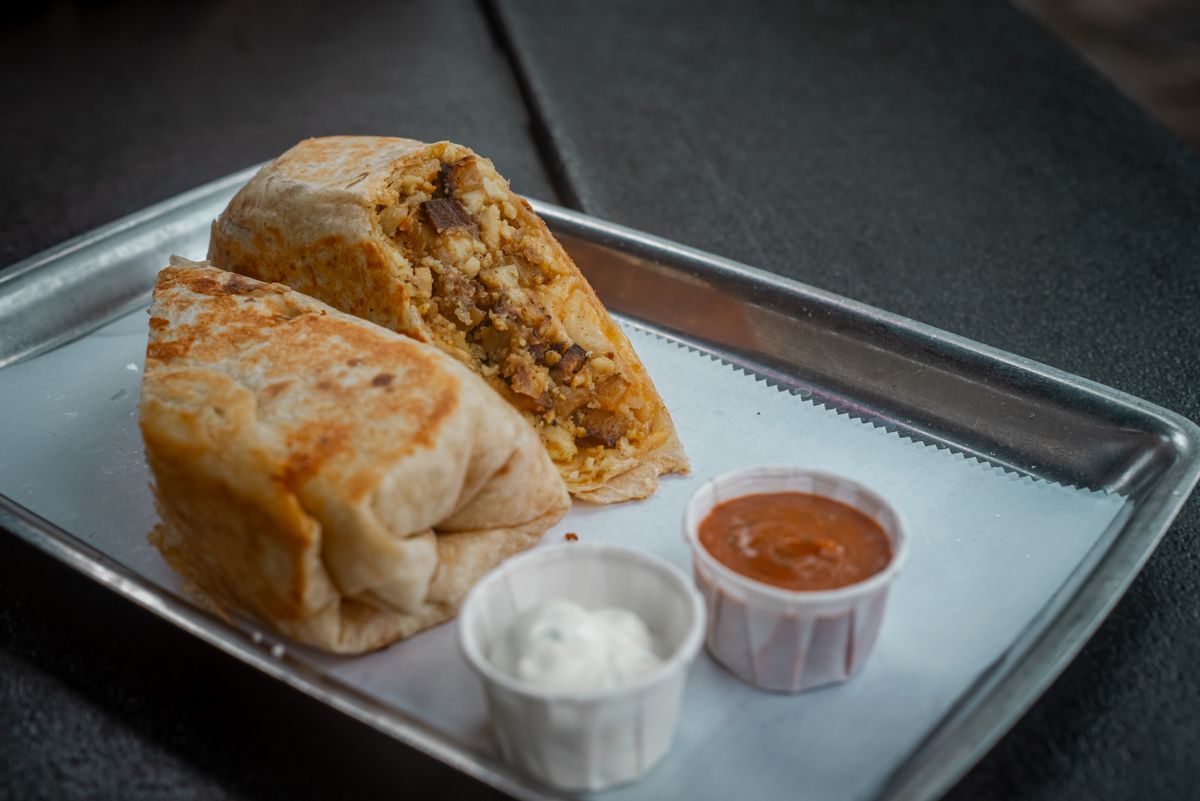
The basic architecture starts with a large flour tortilla, typically steamed to make it pliable. A burrito maker adds Mexican rice, beans, salsa, and meat, then folds in the ends and rolls everything into a compact cylinder. Beans can be black, pinto, or refried, and meat options include carnitas, carne asada, chicken, and other preparations. Foil finishes the package, turning a substantial mix of ingredients into something you can hold and eat rather than serve as a plated dinner.
Order a “super,” and the supporting ingredients stand out more. Cheese, sour cream or crema, and guacamole or sliced avocado commonly join the filling; some versions also include shredded lettuce. No single universal formula governs every taqueria’s burrito, which is part of the appeal. The category gives customers a recognizable structure, while individual restaurants distinguish themselves through their meats, beans, salsas, proportions, and the skill of the person doing the rolling.
That size has never impressed everyone equally. The late Los Angeles Times restaurant criticJonathan Gold once described San Francisco burritos as “monstrous things wrapped in tinfoil,” a judgment quoted in John Birdsall’s 2016 Bon Appétit feature. Yet Birdsall argued that a good one depends on proportion, balance, and ingredient quality. The disagreement gets to the heart of its reputation: critics see it as excessive; admirers see the achievement as making all that food work together.
Related: 10 Ways Grandma Made Every Dollar Do Double Duty
Two Taquerias Claim the Origin Story
The Mission burrito’s beginnings are usually traced to the 1960s, but pinning down one undisputed inventor is harder. El Faro claims Sept. 26, 1961, while Taqueria La Cumbre identifies Sept. 29, 1969, as its own starting point. Those exact dates make the competing accounts unusually specific, but specificity doesn’t settle the historical verdict. The responsible version of the story keeps both claims visible rather than presenting one restaurant’s account as an uncontested fact.
El Faro’s story centers on founder Febronio Ontiveros and a group of hungry firefighters. According to the San Francisco Legacy Business Registry and reports in the San Francisco Chronicle, Ontiveros assembled an oversized burrito shortly after opening his grocery store and deli. The story describes overlapping small tortillas because the large tortillas familiar today were not available to him. Retellings differ on details, so the broader account is best understood as the restaurant’s documented origin claim, not a fully verified reconstruction of that lunch.
La Cumbre’s claim centers on Raul and Micaela Duran, who sold burritos from their meat market before converting it into a taqueria in 1972. They date their version to 1969. Whatever the answer to the invention question, both accounts place the burrito’s development in neighborhood businesses serving substantial meals, not in a national chain’s test kitchen. Its defining identity emerged through San Francisco’s Mexican and Mexican American food culture, with the Mission District giving the style its name and enduring home.
How a Neighborhood Meal Went National
Ells encountered Mission burritos while working at Stars, chef Jeremiah Tower’s San Francisco restaurant. The format impressed him because it differed from what he knew growing up in Colorado. “A burrito looks totally different in Colorado, or did,” he told Bon Appétit in 2016. Birdsall reported that Ells was particularly struck by the burrito’s self-contained form. When Chipotle opened in Denver in 1993, that local influence became the basis for a business that would carry the format far beyond the Bay Area.
Still, a national chain cannot stand in for the whole neighborhood tradition. Birdsall’s reporting emphasized how individual taquerias develop their own identities, whether through roasted tomato salsa, al pastor, carnitas, or an especially tight roll. Food writer and historian Gustavo Arellano highlighted that distinction when discussing El Castillito, a personal favorite that had received less attention than some celebrated competitors. “There’s ones that become Instagram and Yelp sensations, and then ones that are better,” he told Bon Appétit, a reminder that publicity and local affection do not always follow the same map.
The Mission burrito’s size made it memorable, but its staying power comes from more than sheer volume. It combines a portable meal, distinctive taqueria cooking, and a neighborhood history that cannot be reduced to a chain-menu description. The disputed invention dates remain part of that history, while the national influence is unmistakable. Beneath the foil is not simply an overstuffed tortilla, but a San Francisco specialty whose defining challenge is making abundance taste balanced, deliberate, and worth another bite.