Body Found in Car Trunk Near World Cup’s Training Base Sparks Safety Concerns
A disturbing discovery near one of Tijuana’s most high-profile sports venues has triggered renewed concerns about safety and security during the buildup to the 2026 FIFA World Cup. Mexican authorities are investigating after a decomposing body was found inside the trunk of a vehicle parked close to Estadio Caliente, the stadium currently used as a training base by Iran’s national football team.
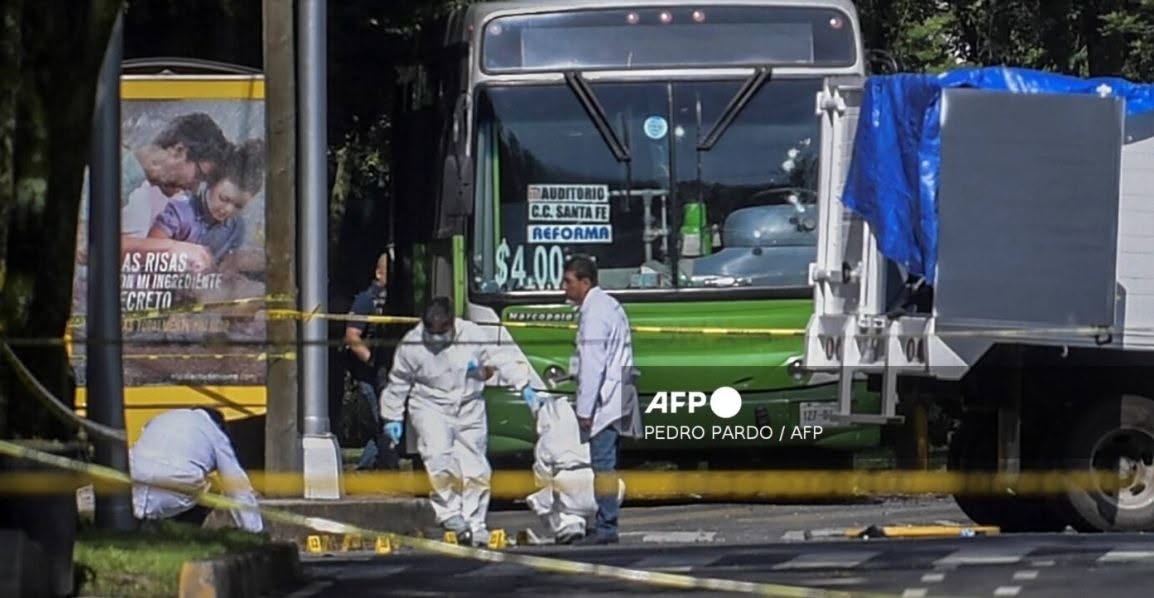
The incident unfolded when local reports of a foul smell coming from a parked vehicle prompted an inspection by authorities. Upon opening the trunk of the car, investigators reportedly discovered a wrapped human body in an advanced stage of decomposition, with early indications suggesting signs of violence.
The location of the discovery has amplified attention. Estadio Caliente is not an ordinary stadium in this context. It is now part of the global World Cup ecosystem, temporarily hosting international athletes preparing for one of the world’s most-watched sporting events. The proximity of a violent death to such a site has created immediate headlines and raised questions about security conditions in the surrounding area.
At this stage, authorities have not confirmed the identity of the victim, the motive behind the killing, or any suspects connected to the case. Officials have also not indicated any verified link between the crime and the Iranian team training nearby. Despite that, the timing and location have placed the investigation under international scrutiny.
Tijuana’s Border Reality and the Weight of Violence
Tijuana is a city shaped by its geography. Sitting directly on the border with the United States, it serves as one of the world’s busiest crossings, linking Baja California with California. This position brings economic activity, cultural exchange, and constant movement of people and goods.
However, it also places the city at the center of complex security challenges. Organized crime, trafficking routes, and territorial disputes have long contributed to a persistent level of violence in the region. Local authorities regularly respond to incidents involving homicide investigations, missing persons cases, and vehicle-related crime scenes.
The discovery of a body in a trunk near a stadium is not an isolated type of crime in such environments, but its proximity to an international sports facility changes the level of attention dramatically. What might otherwise be a local police case becomes a global news event once it is associated with a World Cup training base.
For residents, the incident is another reminder of the contrast that defines life in border cities. On one hand, there is the excitement of international events, tourism, and economic opportunity. On the other hand, there is the persistent challenge of maintaining public safety in areas where criminal networks operate.
Iran’s Training Base Under Unexpected Spotlight
Iran’s national football team is using Estadio Caliente as its training base during the World Cup. The stadium, home to Club Tijuana, provides professional facilities suitable for international training sessions and is located only a short distance from the United States border.
The arrangement itself is unusual in global tournament logistics. The team is training in Mexico while preparing to play official World Cup matches in the United States. This cross-border setup introduces additional travel complexities, security coordination challenges, and logistical pressures for both team officials and tournament organizers.
While the investigation near the stadium has not been linked to the team, the visibility of Iran’s presence has naturally drawn attention to any incident in the area. Security agencies now face the dual task of maintaining a safe environment for both the ongoing investigation and the uninterrupted training schedule of a national squad preparing for high-stakes international competition.
So far, there is no indication that Iran’s training activities have been disrupted. Reports suggest that normal sessions have continued, and no public security advisories have been issued specifically regarding the team.
However, the symbolic weight of the location cannot be ignored. Any crime scene near a World Cup training facility instantly becomes part of a broader narrative about safety, preparedness, and the ability of host regions to manage global sporting events.
Investigation Focused on Identification and Timeline
Mexican authorities are now focused on standard but critical forensic steps. The priority is identifying the victim, establishing the cause of death, and reconstructing a timeline of events leading up to the discovery of the body.
The vehicle itself is a key piece of evidence. Investigators are examining its registration details, ownership history, and possible movement patterns before it was abandoned. Surveillance cameras in nearby commercial areas and roads leading to the stadium are also expected to play a major role in the investigation.
Early descriptions indicate the body was found wrapped and concealed inside the trunk of a gray SUV. Reports suggest the vehicle had been parked in the area long enough for decomposition to advance, which may help forensic teams estimate the time of death.
Authorities have not publicly confirmed whether the vehicle was intentionally placed near the stadium or simply abandoned near a busy commercial zone. That distinction will be important in determining whether the location was coincidental or deliberately chosen.
Security Pressure Ahead of a High-Stakes World Cup
The 2026 FIFA World Cup will be the largest in history, jointly hosted by the United States, Mexico, and Canada. With matches spread across multiple countries, the security operation is already one of the most complex ever undertaken for a sporting event.
Tijuana’s role in this system is unique. While it is not a host city for matches, it functions as a training and transit hub for teams operating near the U.S.–Mexico border. This creates an environment where international athletes, local residents, and law enforcement agencies intersect in a highly active urban space.
The discovery near Estadio Caliente highlights a central challenge for organizers: maintaining security not only inside stadiums but also in surrounding urban areas where teams train, stay, and travel. These “soft zones” are often more difficult to control than match venues, yet they are essential to the overall safety of the tournament.
For Mexico, the incident also places renewed focus on how host regions are preparing for the global spotlight. Cities involved in World Cup logistics are expected to meet heightened security standards, including coordination between local police, federal agencies, and international partners.
No Confirmed Threat, But Rising Public Attention
Despite the disturbing nature of the discovery, authorities have not issued any statement suggesting a threat to the Iranian team or to World Cup operations. At present, the investigation remains classified as a criminal homicide case with no publicly established connection to international sports activity.
However, public perception often moves faster than official confirmation. The combination of a violent crime, a high-profile stadium, and a World Cup context has already fueled speculation online and in international media coverage.
Officials now face the challenge of balancing transparency with investigative caution. Releasing too little information risks fueling speculation, while releasing too much could compromise the investigation.
For now, law enforcement agencies are focusing on evidence collection, witness identification, and forensic analysis rather than public commentary on possible motives.
Broader Implications for Border City Security
This case reflects a broader reality for border cities like Tijuana, where international visibility and local security challenges often intersect. Major infrastructure, such as stadiums, highways, and commercial zones, exists alongside neighborhoods affected by long-standing crime issues.
Events like the World Cup temporarily shift global attention onto these environments, but they do not change underlying conditions. Instead, they highlight the importance of sustained investment in policing, surveillance infrastructure, and cross-border cooperation.
For residents, the incident is another example of how quickly local crime can become international news when it occurs near a globally recognized venue. For authorities, it reinforces the importance of rapid response and clear communication to prevent misinformation from spreading.
For tournament organizers, it serves as a reminder that the success of a World Cup depends not only on stadium security but on the safety of entire urban ecosystems.
A Crime Scene Overshadowing a Sporting Stage
The discovery of a body inside a vehicle trunk near Estadio Caliente has cast a shadow over an otherwise routine training environment for the Iranian national team. While no connection to the team or the World Cup has been confirmed, the location alone has ensured that the incident receives global attention.
At its core, this remains a homicide investigation in a city already grappling with complex security challenges. Authorities continue to work on identifying the victim and determining what led to the crime.
As the World Cup approaches, the incident stands as a stark reminder that global sporting events unfold within real cities, where real-world problems persist beyond the stadium gates. The investigation continues, and many key answers remain unknown.