Brown University AI cheating scandal reveals a breakdown in academic trust amid pressure from generative AI.
A tragedy, a classroom decision, and an unexpected academic shockwave
The controversy at Brown University did not begin as a story about technology or misconduct. It began in the aftermath of a campus shooting that left students dead and others wounded, forcing faculty and students to confront grief inside an institution built on routine and predictability.
In response to the trauma, economics professor Roberto Serrano made a compassionate decision. He altered the format of a midterm exam in ECON 1170, an advanced mathematical economics course, shifting it to a take-home closed-book format. The intention was simple. Reduce pressure. Give students space to work outside the campus environment, which has become emotionally difficult to navigate.
What followed, according to reporting by Fortune and El País, was not a quiet adjustment to a difficult semester. It became one of the most striking alleged AI-assisted cheating episodes reported in an Ivy League classroom.
The exam results did not behave like an exam.
The midterm results immediately stood out for one reason. They did not resemble normal academic performance in a demanding economics course.
Out of 86 students, 40 reportedly received perfect scores. The class average reached 96, far above the historical range of roughly 65 to 80 in previous years. This occurred even though the exam was described as more difficult than usual.
In any advanced mathematical economics course, this kind of distribution is highly unusual. In traditional grading patterns, difficulty reduces clustering at the top end. Instead, what emerged was the opposite: a concentration of maximum scores that defied expected variance.
For Serrano, a scholar deeply familiar with strategic behavior and incentives, the pattern itself became the first signal that something was wrong.

The reasoning pattern that triggered suspicion
The concern did not come from grades alone. It came from the structure of the answers.
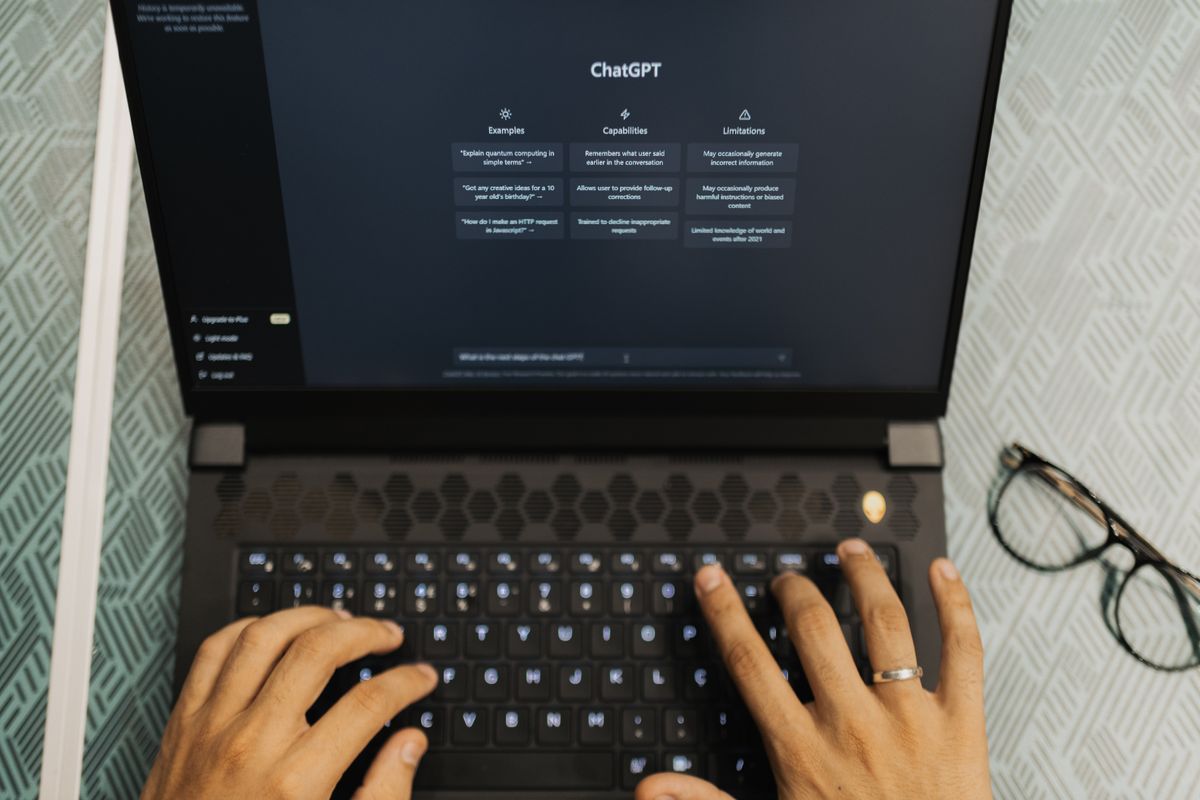
According to Serrano, multiple submissions contained unusually complex reasoning paths that closely resembled outputs generated by ChatGPT when the same problems were tested against the system. In other words, the issue was not simply correctness. It was a convergence in explanation style.
In proof-based economics, multiple valid solutions can exist, but they rarely share identical or similarly convoluted logical structures unless they come from a shared external source.
When graders input the exam questions into ChatGPT, they reportedly found that the system produced a similarly circuitous line of reasoning, despite simpler mathematical proofs being available. That overlap raised concerns about pattern replication rather than independent thought.
At that point, the issue shifted from suspicion to statistical inconsistency.
The game theory irony at the center of the scandal
The case carries an unusual intellectual irony. Serrano is not just an economics professor. He is a leading figure in game theory, the study of strategic decision-making under incentives.
In simplified terms, game theory examines how rational individuals respond when their outcomes depend on others’ actions. Cheating in academic environments is a classic real-world application.
The irony is structural. A scholar who studies strategic behavior found himself confronting a real environment in which incentives had shifted as theory predicted, but institutions were unprepared to manage the shifts.
Generative AI lowers the cost of producing high-quality answers. It increases the potential payoff of dishonest behavior in unsupervised settings. When that happens, game theory predicts a shift in equilibrium. In simple terms, behavior changes not because people become different, but because the environment changes what is rewarded.
The experiment is hidden inside the final exam.
After grading the midterm, Serrano made a decision that unintentionally created a controlled comparison.
He announced that the final exam would be conducted in person. It would be supervised, timed, and directly observed. If the final exam distribution resembled the midterm, both assessments would count. If not, the final would determine performance.
This created an accidental but powerful comparison between unsupervised and supervised performance within the same cohort.
The difference was dramatic.
Only 59 students took the in-person final. Nineteen failed. The class average dropped to 48, a steep decline from the earlier 96 average on the take-home midterm.
In measurement terms, this is not a small deviation. It is a collapse in consistency between two assessment environments testing the same group of students in the same subject area.

Course withdrawals and the silent signal in student behavior
After Serrano addressed the class about the irregularities, reactions were minimal. He later described the response in one word: silence.
That silence became more significant when student behavior changed immediately afterward.
Twenty-seven students dropped the course. Twenty-two of those had achieved perfect scores on the take-home exam.
While course withdrawals can occur for many reasons, the clustering of drops among top scorers added another layer to the pattern already emerging in the data.
In behavioral terms, this introduced a second signal beyond performance. It suggested discomfort with continued evaluation under conditions that no longer allowed external assistance.
Institutional response and delayed escalation
Serrano reported the evidence to Brown’s academic leadership, including the dean of the college and the provost. Initial responses were limited, and according to reporting, there was no immediate substantive follow-up.
The matter was later escalated to the Academic Code Committee, which described the situation as a wake-up call. However, Serrano has stated that broader administrative engagement remained limited.
This created a second layer to the controversy, not just about student behavior but also about the speed of institutional response to AI-driven disruption.
The broader context across elite universities
The Brown case does not exist in isolation. It reflects a wider shift across higher education, in which generative AI is forcing universities to reconsider how knowledge is assessed.
Studies across U.S. campuses show that AI use among students is now widespread, with many reporting weekly engagement with generative tools. At the same time, universities are increasingly reporting difficulty distinguishing between legitimate assistance and full substitution of student work.
Other institutions have already begun structural changes. Princeton faculty recently voted to require proctored in-person exams for all courses, ending more than a century of unproctored testing traditions. The decision reflects growing concern that unsupervised environments are no longer reliable measures of student ability in the age of AI tools.

The measurement problem universities now face
At the core of the Brown case is not just misconduct. It is a measurement problem.
Academic assessments rely on a simple assumption. The submitted work reflects the student’s cognitive effort under defined constraints. Generative AI weakens that assumption by introducing an external reasoning system that, in many cases, is indistinguishable from student output.
This creates a structural challenge. Universities can no longer assume that polished reasoning equals human reasoning. As a result, traditional grading signals become less reliable indicators of learning.
The consequence is not only disciplinary. It is epistemic. It affects how institutions define knowledge, skill, and competence.
Why are take-home exams under pressure?
Take-home exams were once considered a higher form of assessment. They allowed deeper thinking, more complex problems, and reduced time pressure.
However, in the presence of generative AI, they now carry a different risk profile.
Without supervision, they rely heavily on honesty as the controlling mechanism. When that mechanism weakens, the assessment no longer reliably measures independent reasoning.
This does not make take-home exams obsolete in all contexts. But it does force a redesign of how they are structured, verified, and weighted.

The institutional dilemma between trust and verification
Universities now face a difficult tradeoff.
If they rely entirely on trust, they risk undermining academic credibility when AI assistance is misused at scale.
If they rely entirely on surveillance and proctoring, they risk transforming education into a controlled testing environment that may reduce creativity and intellectual freedom.
The Brown case sits directly in the middle of that tension.
The deeper shift in academic culture
Beyond cheating allegations, the broader shift is cultural. Students are entering an environment where generative AI is normalized, widely accessible, and often indistinguishable from independent work in output quality.
In that environment, the definition of learning itself is being renegotiated.
Is learning the ability to produce correct answers, or the ability to construct reasoning without assistance?
Universities are increasingly being forced to answer that question not in theory, but in policy.

What the Brown case ultimately signals
The Brown University AI cheating case is not only about one exam or one class. It reflects a structural transition in education in which traditional assessment tools are colliding with systems capable of generating fluent, convincing, and mathematically structured responses on demand.
The result is a breakdown in the old relationship between effort and evaluation.
The professor at the center of the case, a scholar of strategic behavior, framed the issue in moral terms. But beneath that framing lies a technical reality. When the cost of producing answers drops close to zero and supervision is absent, the signal that grades are meant to capture becomes unstable.
The challenge ahead for universities is not simply enforcement. It is redesigning assessment systems that can survive in an environment where intelligence is no longer exclusively human in its expression.