Burlington Murder Suspect’s Court Delay Puts Alleged Pattern of Abuse Back in Focus
A Connecticut murder case that began with a woman found dead inside a Burlington home is now widening into something larger, darker, and harder to ignore.
Cole Werhan, 28, returned to Torrington Superior Court this week as the murder case against him and three separate domestic violence cases were continued to late July.
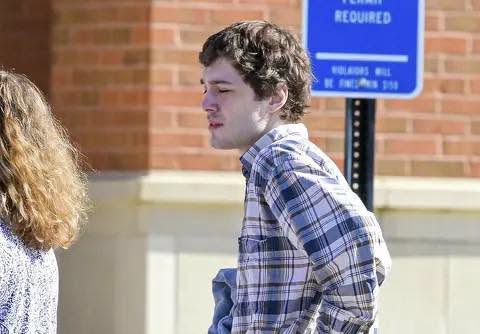
The delay may sound procedural, but the allegations surrounding the case have turned a courtroom scheduling decision into another chapter in a troubling story about warning signs, prior complaints, and the women who say they saw danger before Janina Brooke Murphy was found dead.
Murphy, a 26-year-old Massachusetts woman, was found inside Werhan’s Claire Hill Road home on March 29. Her death was later ruled a homicide. Werhan was arrested on a murder charge on June 23 after the Office of the Chief Medical Examiner determined Murphy died from blunt force injury to the head, according to reports on the case.
He remains held on a $5 million bond as the prosecution moves forward. The newest court development does not answer the biggest questions. It delays them. Judge Theodore Doolittle continued the cases until July 28 after Werhan’s attorney, Noah Kores, requested more time.
Kores told the court his client needed additional time to decide whether to waive a probable cause hearing. In a murder case, that hearing can become an early test of the state’s evidence, forcing prosecutors to show a judge there is sufficient reason to proceed.
Outside the courtroom, Kores declined to discuss the allegations in detail. He also said it was too early to describe what defense strategy could emerge.
For Murphy’s family, for the women connected to the other cases, and for a community now watching closely, the delay keeps everything suspended. The case is moving, but slowly. The facts are being tested, but not yet publicly unpacked. And behind the murder charge sits a stack of earlier allegations that now feel impossible to separate from Murphy’s death.
A Death First Reported as a Fall
The case began late on March 29, when police were called to Werhan’s home after a report that someone had fallen down the stairs and needed medical attention. When officers arrived, they found Murphy on the living room floor under a blanket. She had visible signs of trauma, according to warrant details reported by local outlets.
Werhan allegedly told investigators that Murphy had become upset after finding messages involving other women on his phone. He claimed she began hitting her head against a wall and later threw herself down the stairs.
Investigators, however, found evidence they believed pointed to something more violent. Court documents cited by NBC Connecticut said police found blood-like substances in multiple parts of the home, including the bedroom, bathroom, hallway, stairs, dining room, living room, kitchen, rear entry door, deck, and driveway. Detectives also noted injuries to Werhan, including a swollen right hand and an injured finger.
That is the heart of the case now moving through court. Prosecutors must prove their allegations. Werhan, like any defendant, is presumed innocent unless convicted.
Still, the warrant details have made this case especially disturbing because police did not find only one incident to examine. They found a broader history of accusations.
The Other Cases Now Following Him Into Court

Werhan is not only facing a murder charge. He also has three other domestic violence cases involving separate women.
According to the allegations described in court records and media reports, one woman said Werhan slapped her, pulled her hair, held her down, and put his hands around her neck between May and August 2025. Another woman alleged he slapped her so hard in November that she fell backward onto a bed. A third case reportedly surfaced as investigators reviewed messages connected to Murphy’s death and found a former girlfriend who alleged Werhan had abused her.
Those cases are less serious than the murder charge in terms of legal classification, but they now carry new weight because of what they suggest about the pattern. Prosecutors and investigators appear to be looking not simply at one night in March, but at a series of alleged encounters involving control, fear, restraint, and violence.
The details are painful because the accounts sound familiar across different women. In the CT Insider report, the women described episodes where Werhan allegedly would not let them leave his home. Some described a sudden shift in his behavior, moving from affectionate to angry in ways that frightened them.
That alleged pattern is likely to become one of the most closely watched parts of the case, even if the murder charge remains the central issue.
The Bond Decision Sends Its Own Message
During the latest hearing, the judge also raised the bonds in Werhan’s three other domestic violence cases by $1,000 each. On its face, that amount is small compared with the $5 million bond attached to the murder case.
But legally, the increase matters because it allows pretrial detention time to count as time served if Werhan is later convicted in those separate cases.
Before the murder arrest, Werhan had reportedly posted more than $80,000 in bonds across other cases. That detail now stands out because it shows the system was already dealing with him before the homicide charge arrived.
For readers following the case, that may be the most unsettling question. How many alarms can sound before a case becomes fatal? Courts can act only within legal rules, evidentiary standards, bond laws, and due process. Yet to the public, the overlap of multiple allegations can feel like a warning system that failed to prevent the worst outcome.
That tension is what gives this case its broader significance.
Murphy Becomes More Than a Name in a Court File
Janina Brooke Murphy was not just the victim listed in a warrant. She was a daughter, a friend, and a young woman whose life ended inside a house that is now at the center of a murder prosecution.
Reports have described her as someone loved deeply by her family. Her mother has spoken publicly about the devastation of learning that the death was not simply a fall. Those comments have added a human voice to what could otherwise become a cold sequence of dates, motions, warrants, and hearings.
The court process now moves at its own pace. That can be frustrating for families and communities, but it is also how serious criminal cases are built. Prosecutors must protect the case. Defense attorneys must protect constitutional rights. Judges must keep the process within the law.
Still, outside the courtroom, the emotional question is much simpler.
Could Murphy have been protected?
That question may not have one clean legal answer. It sits in the space between past allegations, dropped cases, dating app connections, fear, silence, and the difficulty many victims face when trying to leave or report abuse.
The Dating App Thread Running Through the Allegations

One of the most striking details in the broader case is how several women reportedly met Werhan online or through dating platforms. That detail does not make dating apps responsible for violence, but it does show how quickly private access can form between people who barely know each other.
Modern dating can create fast intimacy. A person can move from a match to a private home in days or weeks. For most people, that does not lead to harm. But in cases involving coercive control or abuse, that speed can reduce the time friends and family have to notice danger.
That is why the allegations around Werhan have gained attention beyond Burlington. The case speaks to a fear many people understand. Someone can appear charming in one setting and become frightening in another. A relationship can look new and exciting from the outside while becoming controlling behind closed doors.
Those are the kinds of warning signs advocates have been talking about for years. Isolation. Jealousy. Sudden rage. Preventing someone from leaving. Physical intimidation. Strangulation allegations, which domestic violence experts often describe as especially alarming.
The court will decide what can be proven. But the public conversation is already moving beyond one defendant and one home.
What Comes Next in Court
Werhan is due back in court on July 28. By then, one key question may be clearer: will he waive his right to a probable cause hearing, or will prosecutors be required to present early evidence before the case moves deeper into the system?
If a probable cause hearing happens, it could offer the public a more detailed look at the evidence behind the murder charge. If it is waived, the case may proceed without that early public testing stage.
Either way, the July date now becomes the next major marker.
For Murphy’s family, the wait continues. For the women tied to the other cases, the court process continues. For Burlington, a quiet town now attached to a deeply disturbing murder case, the story continues to raise uncomfortable questions about what happens before violence turns deadly.
The legal system will move one hearing at a time.
But the larger issue is already here: when multiple women describe fear, restraint, and violence, society has to ask how those warnings are heard before the next name becomes part of a court file.