Death Penalty Support Climbs to 66% as Americans Back Capital Punishment While Questioning the System.
Support for the death penalty is rising again in America, but the latest Pew numbers point to a more complicated reality: Americans back capital punishment while doubting its deterrent effect and worrying about wrongful executions.
A new Pew Research Center survey finds that 66% of U.S. adults favor the death penalty for people convicted of murder, while 32% oppose it. Thirty percent strongly favor capital punishment and another 36% somewhat favor it. The survey questioned 3,554 adults from July 6 through July 12, 2026.
The figure is six percentage points higher than Pew recorded in April 2021. But it does not represent an unprecedented surge. Support stood at 65% in August 2020, so the latest number is better understood as a rebound from the decline recorded five years ago rather than a new modern high.
That rebound arrives at a politically significant moment. President Donald Trump has made strengthening the federal death penalty a priority, while executions have also accelerated in several states. The overlap between shifting public sentiment and government action is giving capital punishment fresh prominence in America’s criminal justice debate.
Americans support the punishment without believing it prevents crime.
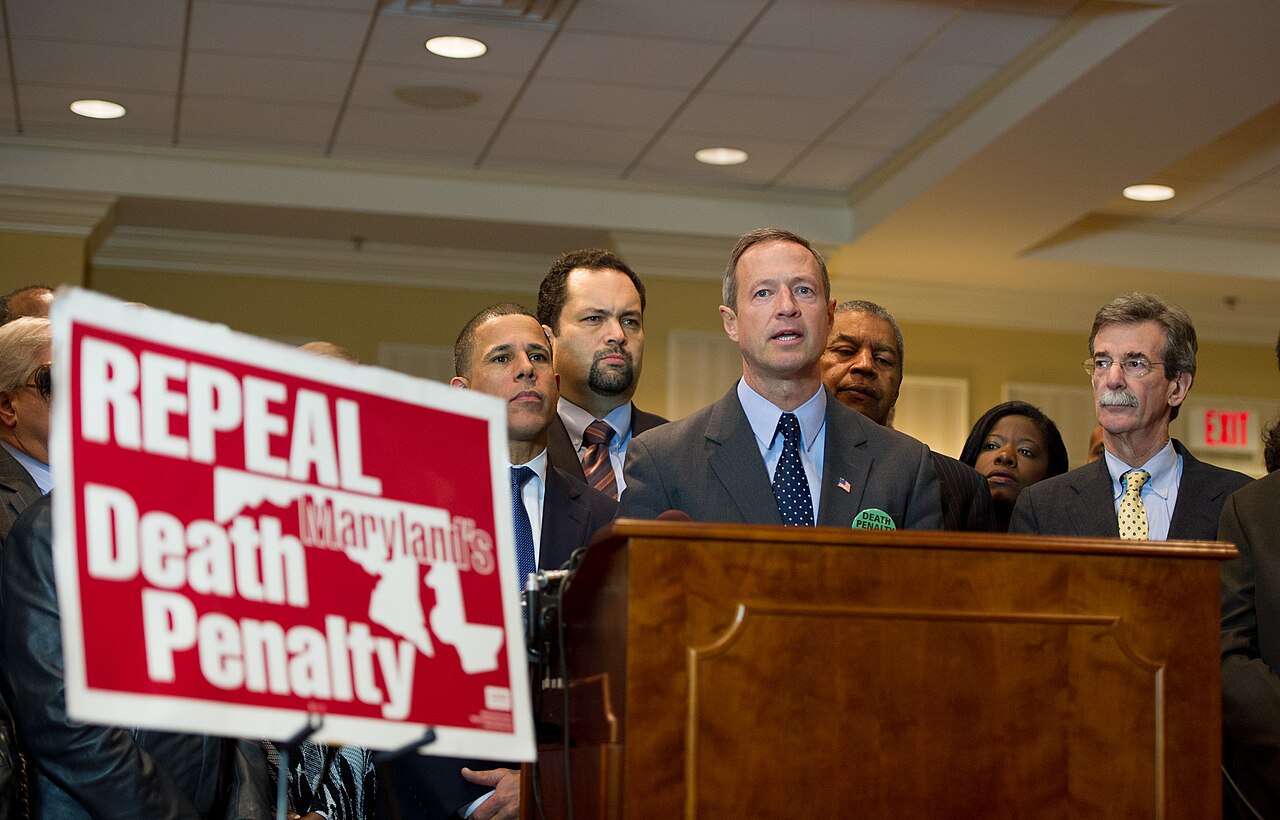
The most striking part of the Pew findings is the contradiction beneath the headline number. While 66% favor capital punishment for murder, 59% say the death penalty does not deter people from committing serious crimes. Only 39% believe it does.
That suggests many Americans are not supporting executions primarily because they believe the threat of death will stop the next murder. Instead, the numbers point toward another motivation: punishment.
Pew found that 68% of Americans believe the death penalty is morally justified when someone commits a crime such as murder. In contrast, 28% consider it morally wrong even in those circumstances.
The distinction matters. Americans can doubt the death penalty’s effectiveness as a crime-fighting tool while still believing that certain crimes deserve the most severe punishment available.
That helps explain why capital punishment has remained politically resilient even after decades of arguments about deterrence, cost, wrongful convictions and execution procedures.
The possibility of executing an innocent person still troubles voters.

Support becomes even more complicated when Americans are asked whether the justice system can always get the decision right.
Nearly 73% say there is at least some risk that an innocent person could be put to death. Only about one-quarter believe adequate safeguards exist to ensure an innocent person will not be executed. That is a remarkable level of concern surrounding an irreversible punishment.
A prison sentence can potentially be overturned if DNA evidence, witness testimony or other information later changes a case. An execution cannot. Yet the same public that overwhelmingly recognizes that danger still favors allowing capital punishment.
Even among death penalty supporters, complete confidence in the system is far from universal. Pew’s additional data show only 32% of supporters believe adequate safeguards exist to make sure no innocent person is put to death.
The debate is therefore not simply between people who trust capital punishment and those who reject it. Many Americans occupy a more uncomfortable middle ground: they support the punishment while recognizing that the system administering it can make catastrophic mistakes.
Republicans and Democrats remain far apart.
Political affiliation creates one of the clearest divides. Among Republicans and Republican-leaning independents, 84% favor the death penalty. Among Democrats and Democratic-leaning independents, support falls to 51%, leaving the Democratic coalition almost evenly divided.
The difference extends beyond whether executions should exist. Eighty-five percent of Republicans say the death penalty is morally justified for crimes such as murder, compared with 55% of Democrats. Republicans are also substantially more likely to believe capital punishment deters serious crime.
Race and fairness create an even wider gap. Overall, 49% of Americans believe Black people are more likely than White people to receive death sentences for similar crimes, while 48% believe Black and White defendants are equally likely to receive that punishment.
But 77% of Republicans believe Black and White defendants are equally likely to receive death sentences in comparable cases. Only 23% of Democrats agree.
Americans are therefore debating more than whether murderers deserve execution. They sharply disagree about whether the system itself delivers capital punishment fairly.
Trump is pushing federal policy in the same direction.
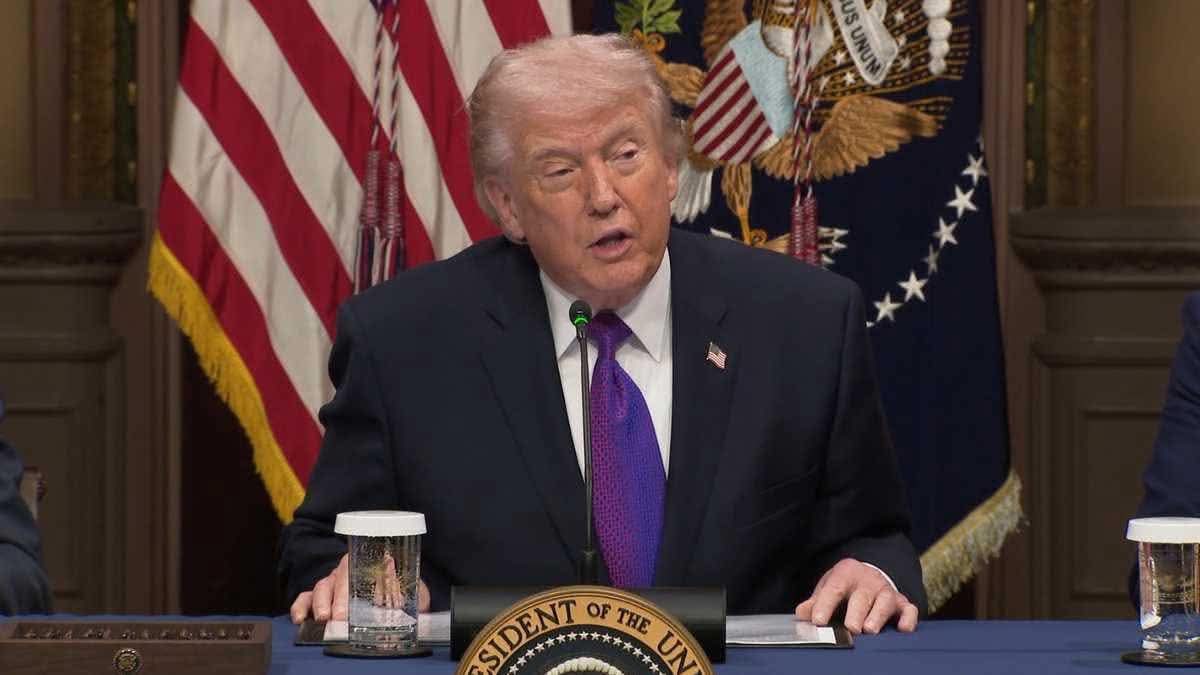
The new poll lands as the Trump administration moves aggressively to strengthen federal capital punishment.
In April 2026, the Justice Department announced that it had rescinded the federal execution moratorium imposed under the previous administration. It also moved to restore the federal lethal-injection protocol using pentobarbital and directed the Bureau of Prisons to expand available execution methods to include alternatives such as the firing squad.
The department also said it was streamlining internal procedures to speed death penalty cases. Earlier, in March, Attorney General Pamela Bondi announced a proposed rule aimed at making it easier for qualifying states to use an expedited federal review process for capital cases. The department said the change could reduce the period between conviction and execution by years.
Those actions stem from Trump’s January 2025 executive order directing the Justice Department to pursue capital punishment in appropriate cases and strengthen its availability at both the federal and state levels.
The administration argues that capital punishment helps punish the most serious crimes, protect public safety and deliver justice to victims’ families. But there is a notable tension between one part of that argument and the new polling.
The Justice Department has promoted deterrence as one justification for capital punishment. Yet 59% of Americans in Pew’s latest survey say they do not believe the death penalty deters serious crimes.
That tension could become increasingly important as the administration seeks broader use of executions.
Executions have already accelerated.
The debate is unfolding against a real increase in executions. The United States executed 47 people in 2025, compared with 25 in 2024. Eleven states carried out executions that year. Florida alone accounted for 19, or roughly 40% of the national total.
That represented a break from a decade-long period in which annual executions remained below 30. At the same time, the Death Penalty Information Center reported that new death sentences remained relatively rare, highlighting another unusual contradiction in the modern capital punishment landscape. The activity has continued in 2026.
As of July 29, 19 prisoners had been executed across four states this year, according to the Death Penalty Information Center. Florida, Texas, Oklahoma and Arizona accounted for those executions.
Those numbers show why the latest public opinion findings matter beyond polling.
Capital punishment is not merely being debated in campaign speeches, courtrooms or academic studies. States are actively carrying out executions while Washington explores ways to strengthen the federal system.
The 66% figure comes with an important polling caution.
There is another detail worth understanding before declaring that America has undergone a sweeping transformation on the death penalty.
Different national polls can produce different levels of support depending on how questions are asked and how respondents participate.
Pew specifically notes that its recent surveys primarily use its online American Trends Panel and should not automatically be treated as directly comparable with older telephone polling.
That helps explain why other surveys have sometimes produced lower death penalty support figures.
For example, the Death Penalty Information Center’s 2025 report cited a Gallup poll showing 52% support for capital punishment, substantially below Pew’s latest 66%. The methodologies and question wording differ, so the figures should not be treated as measurements from the same instrument.
Pew’s own trend is clearer: support increased from 60% in 2021 to 66% today, but remains close to the 65% level recorded in 2020.
That makes the story less about an unprecedented national reversal and more about capital punishment regaining support after a period of decline.
America wants the ultimate punishment, but confidence has limits.
The latest polling leaves the country with a clear contradiction.
A clear majority favors the death penalty. An even larger majority believes it can be morally justified for murder.
Yet most Americans do not believe it deters serious crime. Nearly three-quarters acknowledge the possibility that an innocent person could be executed. The country is almost evenly divided over whether race affects who receives a death sentence.
Those findings make the death penalty debate more complicated than a simple victory for supporters of capital punishment.
Trump’s administration is moving toward stronger enforcement at precisely the moment when Pew finds 66% support for the punishment itself. That gives advocates of the death penalty a powerful number. But the numbers beneath it tell another story.
Americans may increasingly believe that some murders deserve the ultimate punishment, but they remain deeply uncertain about whether the government can impose that punishment fairly, accurately and effectively.
That divide between support for the sentence and distrust of the system may ultimately prove more important than the 66% headline itself.
This version is ready to publish and keeps the 66% public-support angle as the centerpiece without overstating the poll as an unprecedented surge.