Doug Ford Fires Back After Trump’s Comment About Canada Becoming America’s 51st State
Doug Ford sounded like a man who had answered the same insult one too many times. After Donald Trump once again floated the idea of Canada becoming America’s “51st state,” the Ontario premier came back with the kind of blunt, chest-forward response that has become his political brand in moments of national tension.
This was not a soft diplomatic shrug. It was not the usual carefully polished statement designed to offend nobody. Ford’s message was simple: Canada is not joining the United States, Canada is not up for grabs, and Trump can stop pretending otherwise.
The latest flare-up came after Trump seized on Canada’s economic weakness and used it to revive one of his most provocative lines. To Trump, the phrase “51st state” works like political gasoline. It grabs headlines, rattles Canadian leaders, energizes supporters, and turns a serious trade relationship into a spectacle.
Ford clearly had no interest in letting the remark pass quietly. “Canada will never be the 51st state,” he said in essence, repeating a line that has become more than a political slogan. It has become a national boundary marker.
For Ford, the issue was no longer just Trump’s habit of trolling Canada. It was about sovereignty, pride, and the growing frustration many Canadians feel when their country is spoken of like a property listing rather than an independent nation.
Ford Turned the Insult Into a Fight Over Strength
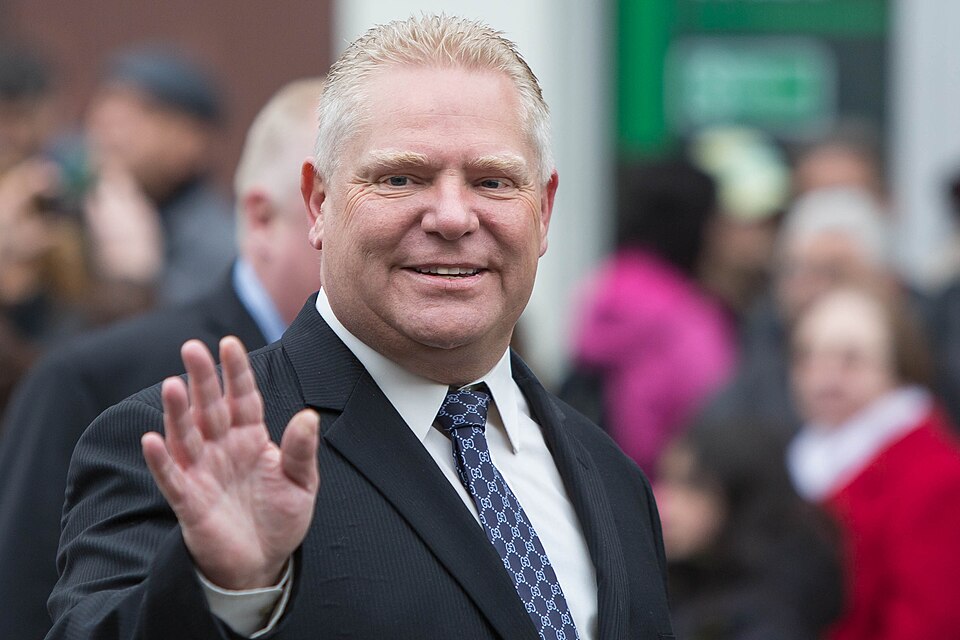
What made Ford’s response sharper was that he not only rejected Trump’s claim. He tried to flip the entire argument. Trump’s message leaned on the idea that Canada’s economy is struggling and, therefore, somehow weaker, smaller, or dependent. Ford answered by pointing to Ontario’s job numbers, arguing that the province had outperformed the United States in job creation when adjusted for population.
That was the real punch in Ford’s response. He did not simply say, “Leave us alone.” He said, in effect, “We are doing better than you think.” That matters because the “51st state” talk is no longer just a joke. It lands in the middle of a tense economic moment. Canada has been wrestling with weak growth, trade pressure, tariff anxiety, and uncertainty about its long-term relationship with Washington. For Trump, those cracks become political material. For Ford, they become a reason to defend the country even harder.
Ford understands something important about political theatre: you cannot always beat a spectacle with a spreadsheet. Sometimes you need a sentence that people can repeat. “Canada is not for sale” does the job. It is short, emotional, and impossible to misunderstand.
Why This Hit a Nerve Across Canada
Trump’s 51st-state comments land differently in Canada than they do in the United States. To some American audiences, the line may sound like classic Trump exaggeration, half joke, half threat, half campaign-rally punchline.
But in Canada, it taps into something deeper. Canadians have long lived beside the world’s biggest superpower, sharing trade, culture, security, sports, media, and an enormous border. The relationship is close, but closeness is not ownership.
That is why Ford’s reaction carried extra weight. He was not just defending Ontario. He was defending a line Canadians feel should never need defending in the first place.
Canada is not a distressed company. It is not a territory waiting for a buyer. It is not a bargaining chip in a trade dispute. It is a sovereign country with its own government, currency, identity, laws, and political culture. Ford’s response worked because it said what many Canadians were already thinking: enough.
The timing also made the exchange more explosive. Canada’s economy has shown signs of strain, and Trump knows how to weaponize weakness. But economic trouble does not erase national independence. A recession, slowdown, or rough quarter does not turn a country into an acquisition target. That is the argument Ford seemed determined to make.
The Bigger Story Is Not the Joke, It Is the Pressure
The danger of Trump’s “51st state” line is not that Canada will suddenly become part of the United States. That is not a realistic political path. The danger is that repeated insults change the tone of the relationship.
Canada and the U.S. are not casual neighbors. Their economies are deeply connected. Automakers, farmers, energy producers, border communities, steel workers, truckers, and small businesses all depend on a working relationship that does not collapse into daily political taunting.
When Trump says “51st state,” he turns partnership into dominance. He turns trade tension into identity politics. He turns a diplomatic relationship into a loyalty test.
Ford’s anger, then, was not only about one phrase. It was about the pattern behind it. Each time Trump repeats the line, Canadian leaders are forced to respond. If they ignore it, they look weak. If they answer too aggressively, the story grows bigger. Ford chose the direct route because silence would have looked like surrender.
And Ford knows his audience. In Ontario, where factories, auto jobs, energy costs, and cross-border trade are everyday issues, Trump’s comments are not abstract. They connect to paychecks, investments, and anxiety about what Washington may do next.
Ford’s Message Was Loud Because the Moment Required It
There is a reason Ford’s words traveled so quickly: they were built for a country tired of being poked. He did not bury the point under diplomatic fog. He did not offer a long lecture about constitutional law. He answered Trump in language ordinary people could understand. Canada will not become the 51st state. Canada is not for sale. Canada will stand on its own feet.
That kind of response may not solve the deeper trade fight. It will not erase economic weakness. It will not stop Trump from posting another provocation. But it does something politically important: it gives Canadians a clear voice at a moment when their sovereignty is being treated like a punchline.
Ford’s answer also shows how Trump has accidentally strengthened Canadian nationalism. Every time he suggests Canada would be better off absorbed into the U.S., he gives Canadian politicians a rare unifying issue. Conservatives, Liberals, premiers, federal leaders, business voices, and many ordinary citizens may disagree on almost everything else. But on this, the answer is almost always the same. No.
Canada’s Reply Is Becoming Harder to Ignore
The 51st-state remark may be designed to provoke, but the Canadian response is becoming just as predictable, and just as forceful.
Ford did not hold back because, in his view, there was no room left for polite confusion. Trump has said the line too many times for Canadians to treat it as harmless. The joke has worn thin. The message beneath it feels too pointed. And the economic pressure surrounding it makes the timing even harder to ignore.
So Ford answered in the only language that cuts through a political circus: plain, proud, and unmistakable.
Canada may have economic problems. It may have political divisions. It may have difficult negotiations ahead with the United States. But Ford’s message was that none of those challenges changes the most basic fact. Canada is Canada. And no matter how many times Trump says “51st state,” Doug Ford wants him to hear the answer just as loudly every time: never.