Ted Lieu Challenges Trump’s Reflecting Pool Vandalism Claims: “There’s 24/7 Video Surveillance”
The Lincoln Memorial Reflecting Pool has become the latest stage for a noisy Washington fight, and this time, the argument is not only about vandalism. It is about proof.
President Donald Trump has accused vandals of damaging the newly renovated Reflecting Pool, claiming that someone cut a long gash in the surface and poured corrosive chemicals into the water. But Rep. Ted Lieu, a California Democrat and one of Trump’s sharpest critics in Congress, is now pushing back with a simple question: if the damage happened the way Trump described it, where is the video?
Lieu pointed to the obvious problem. The Reflecting Pool sits in one of the most-watched public spaces in America. It is surrounded by tourists, law enforcement, cameras, monuments, and constant attention. His argument was blunt: a person making a massive cut into the pool should not vanish like a ghost in the middle of the National Mall.
A National Landmark Turns Into a Political Crime Scene

The Reflecting Pool is not just a body of water. It is one of the most photographed symbols in the United States, stretching between the Lincoln Memorial and the Washington Monument. Millions of visitors know the image: blue sky above, solemn stone below, and history mirrored in the water.
That is why the current mess has attracted so much attention. The pool recently underwent a multimillion-dollar renovation ahead of America’s 250th anniversary celebrations. Instead of a polished patriotic showcase, the project quickly became a public embarrassment, with algae blooms, peeling paint, and questions about whether the renovation itself was rushed, flawed, or badly managed.
Trump framed the damage as deliberate vandalism. He said repair work would begin immediately and suggested the pool may need to be drained. His language was fierce, calling the alleged vandals “sick” and “deranged,” and presenting the damage as an attack on a treasured American landmark.
Federal officials have said people connected to vandalism at the site could be prosecuted. U.S. Attorney Jeanine Pirro warned that anyone damaging the Reflecting Pool would face the criminal justice system. Reports also cited arrests, federal citations, and police reports connected to alleged vandalism.
Still, Lieu’s challenge cuts through the noise. He is not saying vandalism never happened at the site. He is questioning whether Trump’s most dramatic claim, the alleged long gash, has been publicly proven.
The Camera Question Trump Cannot Ignore
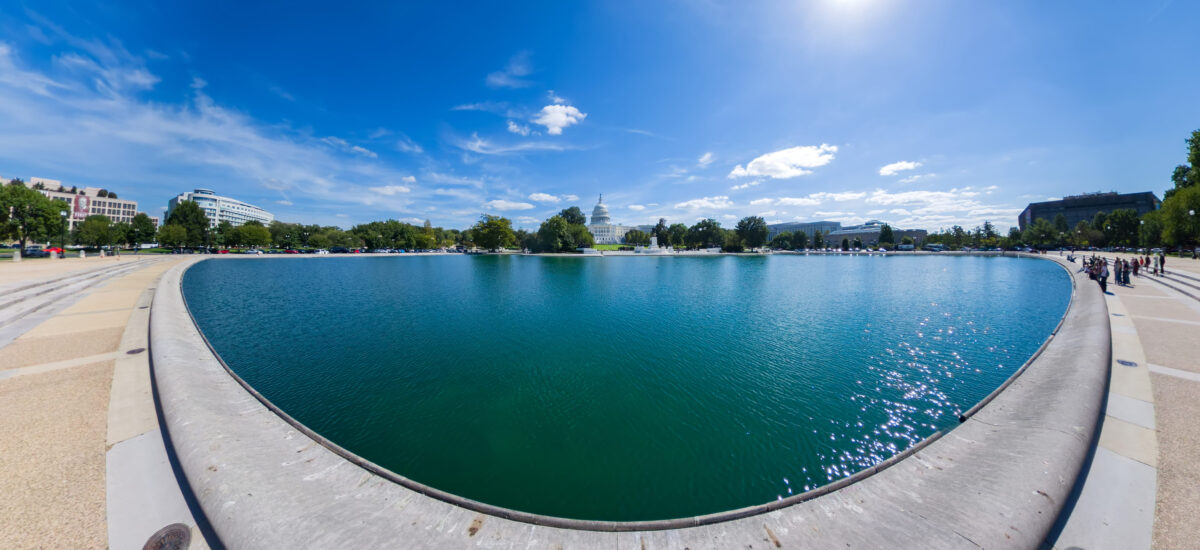
Lieu’s point is powerful because it is easy to understand. If there is a 24/7 video of the Reflecting Pool, then a person entering the pool and carving a massive slash should be visible. If the footage exists, the public may expect officials to show it.
That does not mean every security video must be released instantly. Investigations often require caution, especially when charges are possible. But Trump did not make a quiet statement about law enforcement. He made a loud public accusation against a national symbol, which raised the political stakes.
The issue now sits in an uncomfortable space between crime, maintenance failure, and presidential messaging. The pool clearly has problems. Algae has turned parts of the water green. Paint has visibly peeled. Workers have treated the water and tried to remove the algae. Those facts are not in dispute.
What remains murky is how much of the damage came from vandals, how much came from design or maintenance issues, and how much still needs evidence before becoming a settled public fact.
Lieu’s challenge hits that exact weak spot. In modern politics, video often settles arguments faster than press statements. A 250-foot gash would not be a tiny scratch hidden in a corner. It would be a dramatic act in a highly visible place.
That is why the question keeps echoing: show the footage, or explain why it cannot be shown.
When Patriotism Meets Public Accountability

The Reflecting Pool fight also carries a bigger message about how Washington handles public projects. Americans were told the renovation would beautify a beloved landmark. Instead, the story became a messy blend of green water, peeling surfaces, criminal allegations, and political finger-pointing.
For Trump, the pool is personal. He has promoted the renovation as part of a larger effort to make Washington look grand for the nation’s birthday. A damaged Reflecting Pool undercuts that image, especially when the project was supposed to shine.
For critics like Lieu, the controversy is about accountability. If officials blame vandals, they should provide evidence. If a renovation failed, they should explain why. If taxpayers paid millions for the project, they deserve more than slogans and outrage.
That is what makes the story so combustible. It is not only about a pool. It is about trust. Americans are being asked to believe that a major act of vandalism damaged one of the country’s most visible landmarks. Lieu is asking for the receipts.
The Reflecting Pool has always been a place where America sees itself. This week, the reflection is not flattering. It shows a capital quick to accuse, slow to explain, and trapped in another fight where facts compete with political theater.
If Trump’s claims are backed by clear evidence, the public should see enough to understand what happened. If the damage came from something less dramatic, the public deserves that truth, too.
Either way, the water cannot stay cloudy forever.