Musk’s Rocket Stage Crashes Into the Moon at 5,400 MPH
A discarded piece of a SpaceX rocket has ended its 18-month journey through space in spectacular fashion, slamming into the Moon at roughly 5,400 mph.
The object was not an entire Falcon 9 rocket. It was the vehicle’s spent upper stage, a hollow metal structure weighing about four metric tons and measuring approximately 45 feet long.
Tracking data indicate that the rocket stage struck the lunar surface near the Einstein and Bell craters at about 2:35 a.m. Eastern Time on August 5. However, scientists may need several days to obtain satellite images that definitively reveal the impact site and any newly formed crater.
A successful mission left something behind
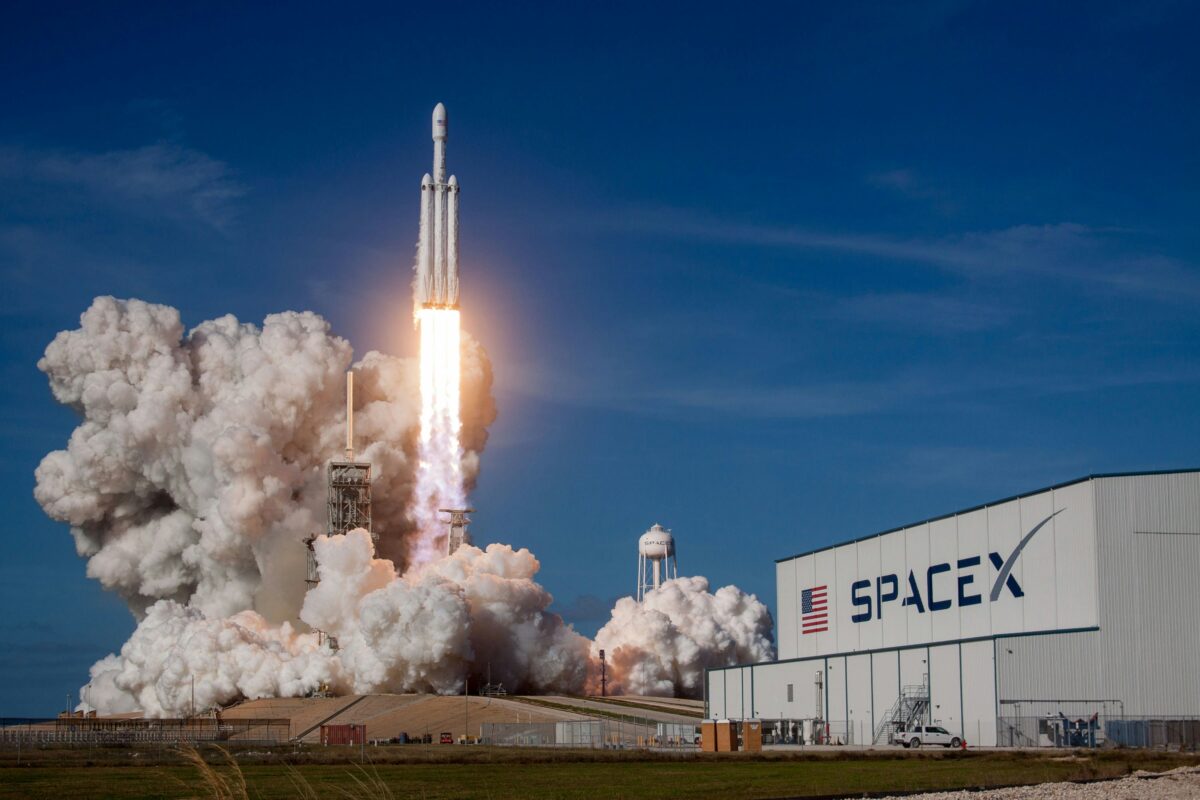
The rocket stage began its journey on January 15, 2025, when SpaceX launched two private lunar landers from Florida.
One was Firefly Aerospace’s Blue Ghost Mission 1, which later completed a successful landing on the Moon. The other was ispace’s Resilience lander, which crashed during its own landing attempt.
After releasing the spacecraft, the Falcon 9 upper stage remained in a highly elliptical orbit around Earth. Unlike the reusable first-stage booster, which returned for recovery, the upper stage did not have enough fuel to guide itself into Earth’s atmosphere.
For more than a year, the empty structure continued circling through space. Solar activity and the gravitational pull of Earth, the Moon and the Sun gradually altered its path until a collision became unavoidable.
Independent astronomers followed the object, cataloged as 2025-010D, through more than 1,000 observations. NASA’s Center for Near-Earth Object Studies eventually calculated that it had a 100 percent chance of hitting the Moon.
No atmosphere meant no fiery protection
Objects returning to Earth often burn, break apart, or slow down as they pass through the atmosphere. The Moon offers no such protective barrier.
With virtually no atmosphere to create drag, the Falcon 9 stage approached the surface at approximately 2.43 kilometers per second, or 5,400 mph. It likely remained largely intact until the moment of impact.
NASA estimated that the collision could excavate a crater about 60 feet wide and 12 feet deep. The violent strike was also expected to throw lunar rock and dust outward in a plume known as ejecta.
The impact sounds dramatic, but it presented no danger to Earth. No astronauts, operational landers or other sensitive equipment were believed to be near the predicted collision zone.
NASA also placed the force of the crash in perspective. A naturally occurring meteoroid carrying approximately the same amount of energy hits the Moon about once every six days.
The lunar surface has survived billions of years of impacts. This collision was unusual because the incoming object was built by humans.
Scientists see an accidental experiment
For researchers, the collision offers a rare opportunity to watch a known object strike a precisely predicted area.
Scientists already knew the rocket stage’s approximate weight, shape, speed and construction. Those details can help them compare computer models with the actual crater and debris field produced by the impact.
NASA’s Lunar Reconnaissance Orbiter and South Korea’s Danuri lunar spacecraft are expected to search for changes near the site. Researchers hope to compare images captured before and after the collision, although lighting conditions and orbital positions may delay the results.
Ground-based telescopes also attempted to detect the impact flash or the cloud of material rising above the lunar horizon. The site’s position near the Moon’s edge and the bright sunlight falling across the terrain made direct observation difficult.
Models suggested that some of the fastest debris could rise between 75 and 100 kilometers above the lunar surface. Studying that material could improve scientists’ understanding of how dust behaves in the Moon’s weak gravity and airless environment.
That knowledge could become increasingly important as more spacecraft, equipment and eventually astronauts operate on the Moon.
A new warning about debris beyond Earth
The Falcon 9 collision also raises a larger question: What should happen to rocket stages after they finish missions far from Earth?
SpaceX commonly guides spent stages toward controlled disposal paths. However, lunar missions require enormous amounts of energy, sometimes leaving too little fuel for an upper stage to return safely or move into a more stable orbit.
NASA says disposing of stages on the lunar surface can be a technically accepted option when operators choose a predictable, carefully tracked impact location. The problem in this case was not simply that the stage hit the Moon. It was that natural forces determined where and when the uncontrolled collision occurred.
Researchers warn that this challenge will grow as governments and private companies send more missions into the space between Earth and the Moon. A recent study described a rising population of poorly tracked objects in this region and argued that identifying their origins and destinations will become essential as permanent lunar infrastructure develops.
The Moon itself will barely notice one more crater. Future astronauts, scientific stations and commercial facilities may not have that luxury.
The mission ended, but the lesson remains
The rocket stage completed its original job successfully. It helped send two landers toward the Moon and then became an uncontrolled traveler, repeatedly passing Earth and its satellite until gravity finally chose its destination.
Its impact lasted only seconds. The questions it created could shape years of space policy.
As traffic around the Moon increases, mission planners will need to think beyond launches and landings. Every rocket, adapter and abandoned spacecraft will require a clearly defined final destination.
The Falcon 9 stage may have left only a modest scar on an already cratered world. Yet its 5,400-mph arrival delivered a powerful reminder: humanity is no longer leaving debris only around Earth.