“Bibi, You Can’t Hide”: Protesters Confront Netanyahu During Washington Visit as Gaza War Fuels Global Anger
A dramatic confrontation unfolded in Washington, D.C., as pro-Palestinian activists entered a hotel where Israeli Prime Minister Benjamin Netanyahu was reportedly dining, turning a private setting into a scene of political protest. The demonstrators chanted accusations against Netanyahu and demanded his arrest, highlighting the deep divisions surrounding Israel’s military campaign in Gaza and the wider international debate over accountability, security, and civilian suffering.
The protest took place while Netanyahu was in the U.S. capital for high-level discussions with President Donald Trump at the White House. The Israeli leader’s visit came at a time when the war in Gaza remained one of the most controversial foreign policy issues in the world, drawing strong reactions from supporters of Israel as well as critics of its military operations.
As activists gathered inside and outside the location, chants including “Bibi, you can’t hide!” echoed through the space. Protesters accused Netanyahu’s government of committing genocide, a claim Israel has strongly rejected. The demonstrations reflected the anger among pro-Palestinian groups who argue that Israel’s actions in Gaza have caused unacceptable civilian harm.
A protest follows Netanyahu into the heart of Washington
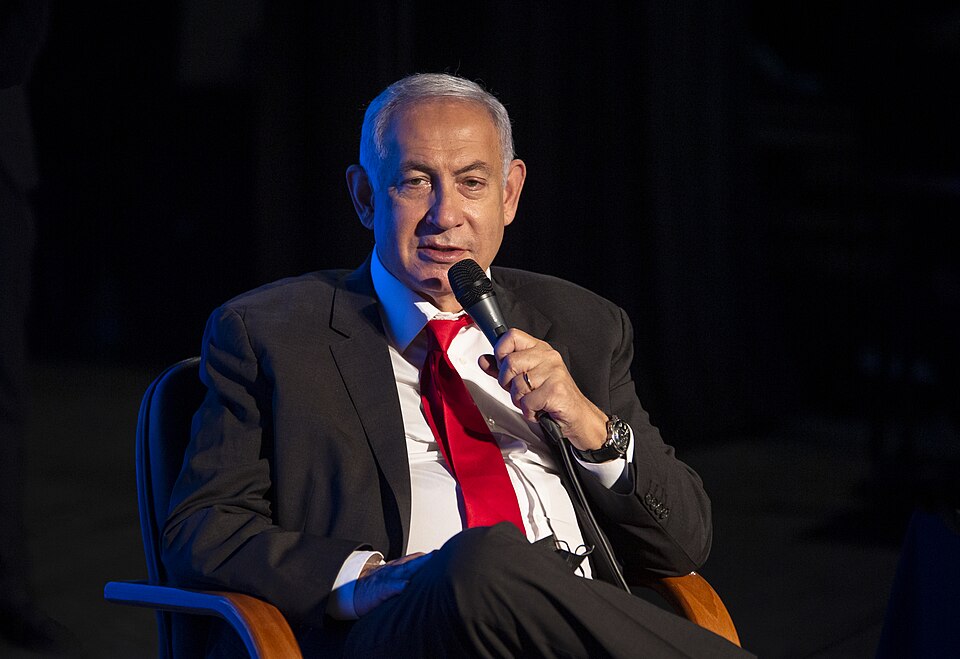
Alexander Khanin, CC BY-SA 4.0, via Wikimedia Commons
The demonstration was part of a broader wave of protests that have followed Israeli officials around the world since the outbreak of the Gaza war. Activists have increasingly targeted diplomatic events, public appearances, and political meetings to pressure leaders over their positions on the conflict.
Netanyahu has become one of the most recognizable figures connected to the war. Supporters view him as defending Israel’s security after the Hamas attack on October 7, 2023, while critics accuse his government of using excessive force in Gaza and failing to protect Palestinian civilians.
The protesters’ demand for Netanyahu’s arrest reflects a larger international debate over possible violations of international law. Some activists have called for legal action against Israeli leaders, while Israel has argued that its military campaign is focused on eliminating Hamas and preventing future attacks.
The confrontation in Washington showed how the conflict has moved beyond the battlefield. It has become a major political issue in cities across the globe, including in the United States, where debates over U.S. support for Israel have intensified.
Gaza war remains at the center of international controversy

The Gaza conflict began after Hamas-led militants attacked Israel on October 7, 2023, killing about 1,200 people and taking hostages, according to Israeli authorities. Israel responded with a military campaign aimed at destroying Hamas’ military and governing capabilities.
The fighting has resulted in a humanitarian crisis in Gaza, with thousands of Palestinian civilians killed and millions affected by displacement, according to Palestinian health officials and international humanitarian organizations. The scale of destruction has led to growing calls for ceasefire efforts and increased humanitarian assistance.
Israel has repeatedly said Hamas bears responsibility for civilian casualties because the group operates within densely populated areas and uses civilian infrastructure for military purposes. Hamas has denied using civilians as human shields.
The competing claims have fueled one of the most intense international disputes in modern politics. Supporters of Israel argue that the country has the right to defend itself against terrorism, while critics argue that the response has caused widespread suffering among Palestinians.
Netanyahu’s U.S. meetings come amid political pressure
Netanyahu’s trip to Washington placed him directly in the middle of the American political debate over the Middle East. His discussions with President Donald Trump focused on issues connected to regional security, Gaza, and the future of the conflict.
The relationship between Israeli and American leadership has long been a central factor in Middle East diplomacy. The United States has historically been one of Israel’s strongest allies, providing military, diplomatic, and economic support.
However, public opinion in the United States has become increasingly divided over the war. While many Americans continue to support Israel’s right to defend itself, others have raised concerns about civilian casualties and U.S. involvement.
The protests against Netanyahu reflected that division. For demonstrators, the Israeli prime minister represents policies they believe have caused devastating consequences in Gaza. For his supporters, Netanyahu represents Israel’s effort to survive ongoing security threats.
The hotel confrontation also highlighted the challenges world leaders face during periods of intense global conflict. Public appearances that once focused only on diplomacy can quickly become stages for political confrontation.
As the Gaza war continues to shape international relations, protests like the one in Washington show that the debate is far from settled. The conflict has created deep disagreements over justice, security, and responsibility, with both sides demanding that the world recognize their concerns.
For Netanyahu, the message from protesters was clear: they want international attention placed on Gaza and accountability for Israeli actions. For Israel and its supporters, the focus remains on defeating Hamas and ensuring that the events of October 7 do not happen again.
The confrontation in Washington was not just about one dinner or one political leader. It represented a much larger struggle over how the world understands one of the most painful and contested conflicts of the modern era.