Self-Storage Becomes One of Real Estate’s Most Resilient Winners in America as Investors Double Down on Quiet Demand.
In a commercial real estate landscape still adjusting to higher borrowing costs, shifting work patterns, and uneven demand across major property sectors, self-storage has emerged as one of the most unexpectedly resilient performers.
What was once considered a secondary, almost invisible corner of the property market is now attracting sustained attention from institutional investors, REITs, and private equity firms. According to recent market analysis highlighted by CNBC, the sector continues to stand out as a rare blend of stability, predictable cash flow, and long-term demand growth—even as office towers struggle with vacancies and retail continues its structural reinvention.
The reason is deceptively simple: self-storage is not driven by trends. It is driven by life.
People do not rent storage units for speculation or lifestyle aspirations. They rent them because something is changing—moving homes, downsizing, separating households, relocating for work, or managing transitions that create temporary gaps between space and need.
That consistent demand cycle has turned self-storage into one of the most quietly powerful real estate plays in the United States.
A Sector That Outperforms by Staying Unremarkable
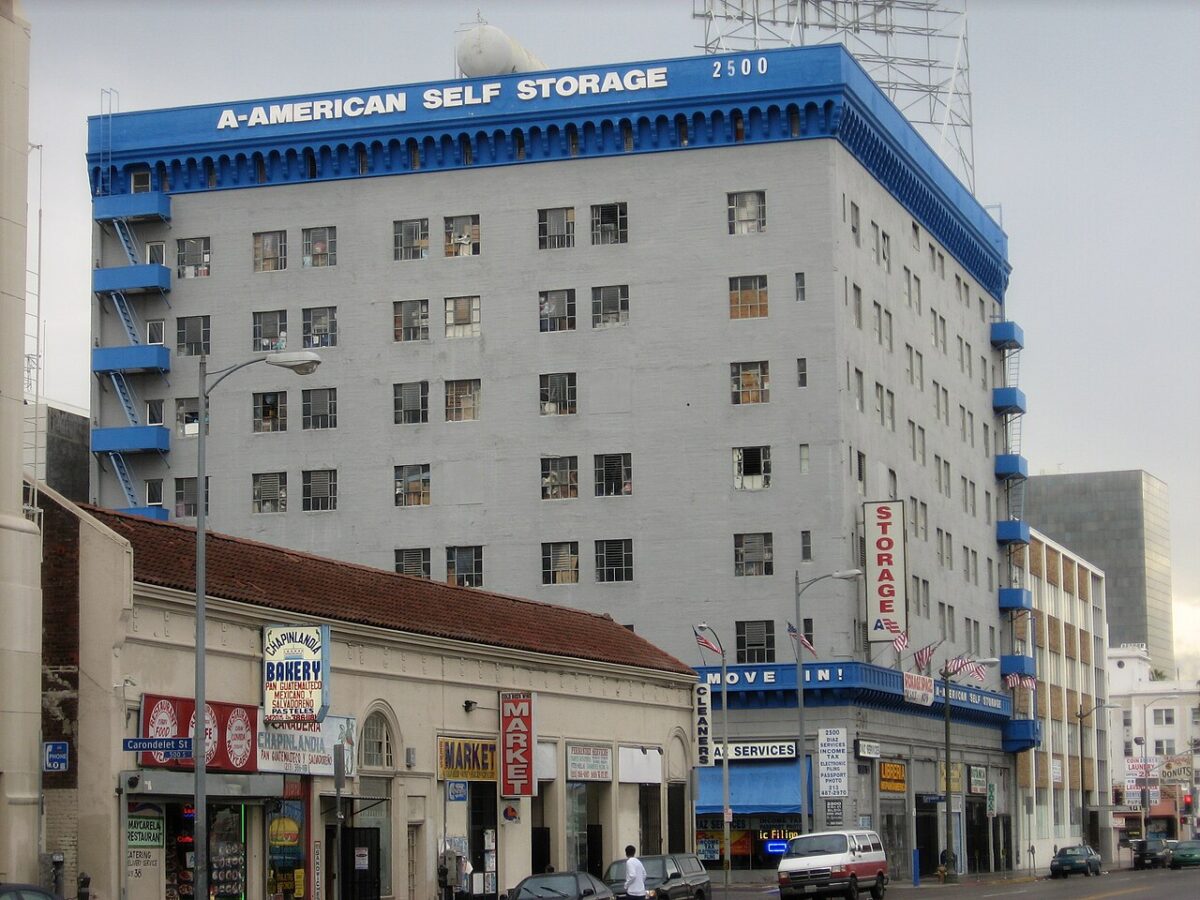
For decades, self-storage operated in the background of commercial real estate. Windowless buildings on the edge of cities rarely attracted attention compared to high-rise offices, shopping malls, or luxury apartments.
Yet over time, the sector developed a reputation among institutional investors for something far more valuable than visibility: performance consistency.
Industry data over the past 20 years show that self-storage has frequently delivered among the strongest risk-adjusted returns across real estate asset classes. During periods of economic stress—such as the 2008 financial crisis, the early pandemic shock in 2020, and the interest-rate spikes of the early 2020s—the sector demonstrated relatively stable occupancy compared to more cyclical property types.
Occupancy rates across major U.S. operators have often remained in the mid-to-high 80% range even during downturns, while top-performing markets frequently approach or exceed 90% utilization depending on supply conditions. That stability has made the sector especially attractive to REITs seeking predictable income streams.
Major publicly traded players such as Public Storage and Extra Space Storage have become central benchmarks for performance in the sector, with their scale and diversified portfolios helping define investor expectations around returns and resilience.
Why the Sector Is Gaining Momentum Again

The renewed investor interest in self-storage is not happening in isolation. It is unfolding against the backdrop of one of the most challenging periods in commercial real estate in over a decade.
Higher interest rates have significantly increased financing costs for developers and investors. At the same time, transaction volumes across commercial property markets have slowed as buyers and sellers adjust their expectations regarding valuations.
Office real estate has been particularly affected, with persistent vacancy challenges driven by hybrid and remote work. Retail has stabilized in many regions but continues to adapt to long-term e-commerce pressures. Even multifamily housing, which had been one of the strongest segments, is now experiencing supply pressures in certain metro areas. Self-storage has benefited from being structurally distinct from these categories.
Unlike office buildings that depend on corporate leasing cycles, or retail centers tied to consumer spending patterns, self-storage demand is rooted in household movement and demographic transitions.
This gives the sector a unique form of insulation: it is less sensitive to economic cycles and more responsive to personal life events.
The “Life Event Economy” Behind the Demand
At the core of self-storage performance is what industry analysts often describe as the “life event economy.” Demand is largely driven by predictable but unavoidable human transitions often summarized as the “4Ds”: death, divorce, downsizing, and displacement.
Each of these events creates temporary or extended storage needs. A family settling an estate, a couple separating households, a retiree moving into smaller housing, or a worker relocating for employment may all require storage during a transition period.
These drivers do not disappear during recessions or expansions. In fact, some increase during economic stress, when job mobility rises, or housing transitions become more complicated. This structural demand base has helped stabilize revenue streams even when broader economic conditions weaken.
Unlike discretionary spending sectors, self-storage is not easily delayed or eliminated. When people need space, they tend to find it quickly.
Housing Constraints Are Quietly Fueling Growth

One of the strongest long-term tailwinds for self-storage is the ongoing pressure in the housing market.
In many U.S. cities, elevated home prices and higher mortgage rates have reduced housing turnover. Homeowners are staying in properties longer, while renters are also facing affordability constraints in dense urban areas.
This creates a dual effect. On the one hand, fewer direct home-to-home moves reduce some of the traditional storage demand tied to relocation. On the other hand, longer holding periods increase demand for temporary space during renovations, life transitions, or delayed moves.
At the same time, shrinking living spaces in urban centers have increased reliance on external storage. In cities where apartment sizes remain small, residents increasingly use storage units to manage excess belongings without upgrading housing.
Millennials and Gen Z renters, in particular, are contributing to this trend. These populations tend to be more mobile, more urban, and more likely to live in compact housing environments, all of which support long-term storage demand.
Supply Discipline Strengthens the Investment Case
Another important factor shaping the current opportunity is supply-side discipline. During the late 2010s and early 2020s, the U.S. experienced a wave of self-storage development driven by strong investor returns and relatively easy access to capital. This expansion led to localized oversupply in some metro areas, temporarily pressuring rental rates.
However, the environment has shifted significantly. Higher interest rates and tighter lending conditions have slowed new development pipelines across the country. Many planned projects have been delayed, scaled back, or canceled entirely.
This slowdown in construction is particularly important because self-storage is highly sensitive to supply balance. Even modest increases in new capacity can affect pricing power in localized markets. Conversely, reduced construction activity allows existing operators to stabilize occupancy and gradually increase rents over time.
As a result, the sector is now entering what many analysts describe as a normalization phase—where growth is not driven by rapid expansion, but by disciplined pricing and steady utilization.
Institutional Investors Are Scaling Up Exposure
The combination of stable demand and constrained supply has attracted increasing interest from institutional capital.
Real estate investment trusts (REITs), pension funds, and private equity firms have expanded exposure to self-storage through acquisitions and platform investments. Large operators continue to consolidate smaller assets, building economies of scale across national portfolios.
Public companies such as Extra Space Storage have also pursued aggressive acquisition strategies in recent years, expanding their footprint across key U.S. metropolitan markets. Meanwhile, Public Storage remains one of the largest global operators in the sector, often serving as a benchmark for pricing power and operational efficiency.
This institutional involvement has further professionalized the sector by introducing more standardized management practices, technology integration, and revenue optimization strategies, such as dynamic pricing models.
It has also increased competition for high-quality assets, particularly in dense urban markets where land constraints limit new development.
Technology and Operational Efficiency Are Reshaping the Sector
Although self-storage is often viewed as a traditional real estate category, the industry’s operations have evolved significantly.
Modern facilities increasingly rely on digital leasing platforms, automated gate access systems, real-time pricing tools, and remote management operations. These improvements have reduced staffing costs while increasing revenue per square foot.
At the same time, data-driven pricing strategies now allow operators to adjust rental rates dynamically based on occupancy levels, demand patterns, and seasonal trends.
These changes have improved margins and made large-scale operators more competitive, further widening the gap between institutional owners and smaller independent facilities.
A Quiet Sector With Loud Momentum
Despite its understated appearance, self-storage has become one of the most closely watched segments in commercial real estate. It does not depend on hype cycles, speculative development booms, or rapid technological disruption. Instead, its strength comes from structural necessity and predictable human behavior.
People move. People downsize. People accumulate belongings. And in between those transitions, space becomes a requirement rather than a luxury.
That simple reality has transformed self-storage into a durable investment category that continues to attract capital even during uncertain economic periods. As CNBC’s reporting highlights, the sector’s appeal is not about sudden growth spikes. It is about consistency in a market where consistency has become increasingly rare.
And in a real estate environment defined by volatility, that quiet reliability may be exactly what investors are now searching for most.