Europe’s Record Heat Has Overwhelmed Paris Mortuaries And Left Families In Distress.
Europe’s latest heatwave has moved beyond uncomfortable summer weather and into a public health emergency measured in full mortuaries, unanswered family questions and the quiet deaths of people who were too isolated to survive the night. In Paris, funeral workers have been forced into the grim role of gatekeepers, fielding repeated calls from families and funeral directors asking whether there is space for one more body.
The answer, too often, has been no.
The crisis has exposed one of the most painful realities of extreme heat. It does not always kill in the open. It often kills behind closed doors, inside apartments that never cool down, among older residents who live alone, and in neighborhoods where social contact may be too thin to become a lifeline.
France is now facing a heat emergency that has revived memories of the deadly summer of 2003. But this time, the warning signs are arriving with sharper evidence, faster reporting and a disturbing sense that Europe’s cities are still not ready for the climate pressure already at their doors.
France’s record heat has pushed Paris funeral services to the edge.
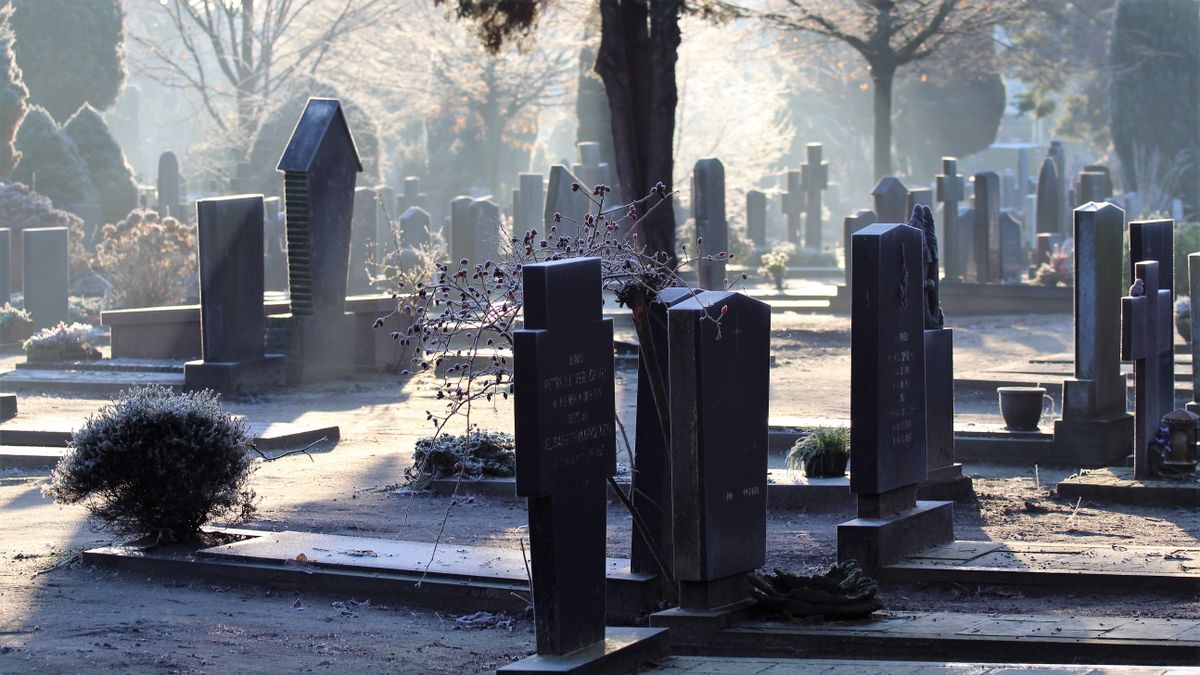
The pressure on Paris mortuaries became visible almost immediately as the heatwave began taking lives and shrinking the already limited cold storage available across the capital. One mortuary near Orly airport had all 32 spaces in its cold room filled, leaving its owner to decline repeated requests from funeral homes and grieving families seeking immediate help.
That detail captures the scale of the problem better than any abstract number. A heatwave becomes a civic crisis when bodies cannot be stored close to home, when families cannot move forward with funeral arrangements, and when workers who deal with death every day begin describing the situation as catastrophic.
Paris officials attempted to relieve the pressure by adding temporary storage capacity. Two temporary units with twenty places each were installed for municipal mortuaries, while city hospitals provided fifty additional places. Even that extra capacity has not erased the strain.
Funeral professionals described bodies being sent far from Paris, including to Chartres, about fifty miles from the capital. That means heat not only brought medical consequences. It also disrupted mourning, burial planning, and the basic dignity families expect in the first hours after a death.
For readers outside France, the mortuary crisis is the clearest sign that heat emergencies do not end at hospitals. They move through emergency calls, care homes, funeral homes, cemeteries, transport networks, and family kitchens. A heatwave is not one disaster. It is a chain reaction.
The death count is still incomplete, and it may rise.
Public health officials have warned that the first numbers are preliminary. That matters because heat deaths are not always counted in real time, especially when people die at home or inside care facilities where death certificates may take longer to process.
The early picture is already severe. France recorded more than one thousand two hundred deaths on June 24, followed by more than one thousand four hundred deaths on both June 25 and June 26. Before the heatwave, daily deaths in April and May were between 900 and 1,000.
That gap is why authorities have described roughly one thousand additional deaths during the peak period. The final figure may climb as more records arrive.
The hardest hit group so far has been older adults. People aged sixty-five and above accounted for the overwhelming majority of recorded deaths during the period reviewed by public health officials. Deaths at home also rose sharply, particularly in the Paris region, where dense urban living can turn apartments into heat traps when nights stay dangerously warm.
The delayed nature of heat mortality complicates the official count. Some people die during the hottest hours. Others deteriorate after days of dehydration, exhaustion, heart strain, or kidney stress. A person may survive the peak temperature but still collapse later because the body never fully recovers.
That delayed danger is one reason heatwaves can look less dramatic than floods, fires or storms, even as they cause enormous loss of life.
Why nighttime heat is so dangerous in dense cities
Daytime temperatures above forty degrees Celsius are alarming, but the nights may be just as dangerous. When temperatures remain high after sunset, the body loses its recovery window. Sleep becomes shallow, dehydration worsens, and existing health conditions can become life-threatening.
For older residents, this is especially risky. Aging bodies regulate temperature less efficiently. Some medications can affect hydration or sweating. Chronic illnesses can make the heart and kidneys work harder under heat stress. People living alone may not realize how quickly mild weakness can become a medical emergency.
Urban heat makes the problem worse. Paris, like many major cities, has densely built-up areas, paved streets, and limited airflow in some neighborhoods. Concrete and stone absorb heat during the day and release it slowly at night. Apartments on upper floors can become dangerously hot, especially if residents cannot afford air conditioning or are reluctant to open windows because of noise, pollution, or safety concerns.
This is why the phrase “record heat” does not fully explain the danger. The lethal factor is not one temperature reading. It is the combination of scorching afternoons, warm nights, isolation, fragile health, and limited access to cooling.
The painful lesson from 2003 has returned.
France has been here before. The 2003 heatwave became a national trauma after thousands of people died, many of them older residents who were alone, unnoticed, or unable to get help in time. That disaster forced a reckoning over elder care, emergency planning, and neighborhood responsibility.
The current heatwave suggests that some systems improved, but not enough.
Care homes, hospitals, and public health agencies are more aware of extreme heat than they were two decades ago. Warning systems are stronger. Public messaging is more direct. Cooling advice is widely circulated. Yet the rise in at-home deaths shows that official alerts can still miss the people who need help most.
The most vulnerable person in a heatwave may not be someone on a hospital ward. It may be a retired neighbor behind a closed apartment door. It may be a widower who does not want to bother anyone. It may be a person with limited mobility who cannot reach a cooling center. It may be someone whose phone has stopped ringing because social contact faded years ago.
That is the deeper failure exposed by the Paris crisis. Heat protection cannot rely only on weather warnings. It must also rely on human contact.
Paris families are facing grief with fewer options.
For families, the mortuary shortage has added another layer of distress to sudden loss. When funeral homes cannot secure nearby storage, relatives face delays, uncertainty, and the emotional shock of learning that the system is full.
Funeral directors are trained to guide families through grief, not to tell them there is nowhere to place a loved one. Yet that is what some have had to do as demand surged beyond capacity.
This matters because death care is part of public trust. Families expect a society to protect dignity after death, just as it tries to protect life before death. When that system buckles, people experience the disaster twice, first in the loss and again in the struggle to handle what follows.
The situation also places heavy emotional pressure on funeral workers. They are dealing with grieving families, overloaded colleagues, and the constant knowledge that every unavailable cold room space represents another family waiting for answers.
Europe’s heatwave is no longer a seasonal inconvenience.
The wider European context is important. Extreme heat has affected multiple countries, with dangerous temperatures, wildfire risks, transport disruptions and stress on power systems. This is not an isolated French event. It is part of a continental pattern in which heatwaves are becoming more intense, more frequent, and more disruptive.
Scientists have repeatedly warned that climate change is making European heat more severe. Western Europe has warmed quickly, and cities built for older climate patterns are now confronting conditions they were not designed to handle.
That mismatch is visible in schools that overheat, hospitals that see emergency surges, rail systems that slow under temperature stress, and residential buildings that trap heat through the night. It is also visible in the private anguish of families unable to find immediate mortuary space.
The policy challenge is now unavoidable. Europe cannot treat heat as a temporary weather event. It must be treated as a recurring public health threat.
What stronger heat protection should look like
The Paris crisis points toward practical solutions that go beyond telling people to drink water. Public warnings matter, but warnings alone cannot knock on doors, check on older residents, or move someone to a cooler place.
Cities need updated heat registries for isolated and vulnerable residents. Local authorities need rapid check-in systems that activate during red alerts. Building managers, health workers, community groups, and neighbors need clear roles before temperatures peak.
Cooling centers also need to be easy to reach, widely advertised, and suitable for older adults. A cooling center that requires a long walk, confusing transit, or stairs may be useless to the very people most at risk.
Housing policy is another part of the answer. Better insulation, shading, ventilation, and access to affordable cooling are no longer comfort upgrades. They are life-saving infrastructure. In many European cities, older buildings were designed to retain warmth rather than release heat. That design problem now has public health consequences.
Hospitals and emergency services also need surge planning for heat, including staffing, hydration support, triage capacity, and communication with care homes. Mortuary capacity should be included in that planning, because the Paris experience shows what happens when death care is treated as an afterthought.
The neighbor test may define the next heatwave.
Extreme heat tests governments, but it also tests communities. The people most at risk may not call emergency services early enough. They may not understand the danger. They may not have family nearby. They may be embarrassed to ask for help.
That is why the simplest intervention can be one of the most powerful. A phone call. A knock on the door. A bottle of water. A ride to a cooler place. A reminder to close shutters during the day and ventilate when temperatures fall. A check on whether someone has eaten, slept, or become confused.
Heat can isolate people physically and socially. The response must do the opposite.
France’s latest heatwave has already left families in distress and funeral services overwhelmed. The final death toll may take weeks or months to confirm, but the message is already clear. Europe’s climate future is not waiting politely in the distance. It is arriving through overheated apartments, crowded emergency rooms, and full mortuaries.
The next test is whether cities can turn warning into action before another family is told there is no room.