6 Foods That Can Be More Difficult to Prepare for a Large Family
Cooking dinner for two or three people often leaves room for recipes that involve a little extra fuss. Scale that same meal up for six or more, though, and the hands-on work can suddenly feel much bigger.
Some dishes scale easily: increase the ingredients, grab a larger pot, and keep going. Others require nearly the same individual steps for every serving or piece. That can mean more rolling, folding, frying, stirring, or standing at the stove while the rest of the meal waits.
None of these foods is off-limits for a large family. They simply show how quickly repeated tasks can add up when dinner needs to feed a crowd.
Tamales
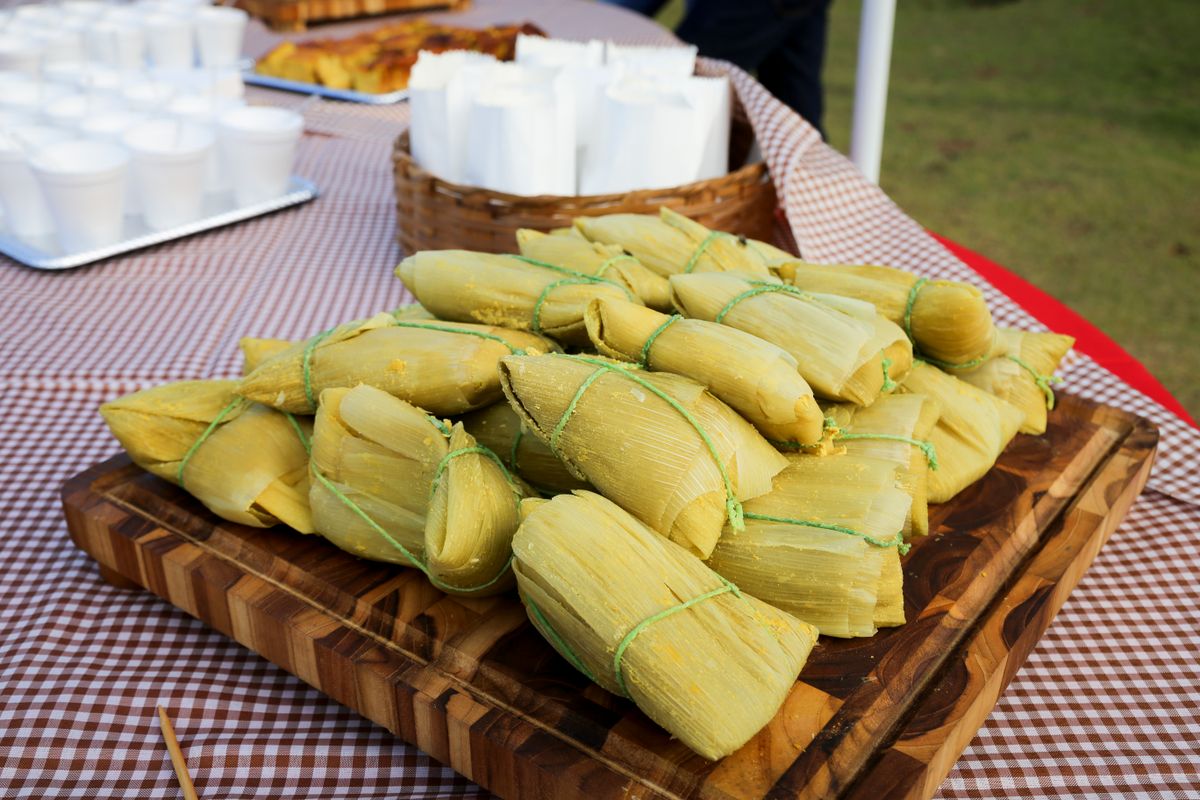
Tamales are a clear example of a food where the workload grows one piece at a time. The process can involve whipping and hydrating masa, preparing corn husks, spreading the masa, adding filling, folding each husk, steaming the tamales, and letting them rest afterward.
For a small batch, that can feel like an enjoyable kitchen project. For a large family, the repetition becomes much more noticeable because every tamale still needs individual attention. You cannot simply make one oversized version and call it dinner.
That is why tamale-making often works well as a group effort. Serious Eats has described tamales as a “labor of love”, and it has also noted that homemade pasta and similar hands-on projects can benefit from more than one person in the kitchen. Dividing the tasks can turn the assembly line into part of the fun.
Homemade Ravioli or Tortellini
Fresh filled pasta tends to pile up the hands-on work before the pot of water even enters the picture.
The dough has to be prepared and rolled, then cut into workable pieces. After that comes the filling, sealing, and shaping. Ravioli and tortellini are not shaped exactly the same way, but both require cooks to deal with many individual pieces rather than one large portion of pasta.
That distinction matters when feeding a bigger household. More diners generally mean more pieces to roll, fill, seal, and shape. Hand-rolling the dough can add even more time and effort compared with using a pasta machine.
The recipe itself may not be especially complicated. It is the sheer number of small, repeated steps that can make homemade filled pasta feel like a larger production. Serious Eats describes DIY filled pasta as labor-intensive, which is exactly why it can be better saved for a weekend, a special occasion, or a dinner where someone else can help with the shaping.
Related: The Boomer Food Traditions That Still Bring People to the Table
Fried Chicken
Fried chicken creates a different scaling problem: the chicken often has to be cooked in batches.
A large family may need more pieces than a typical home skillet or Dutch oven can comfortably handle at the same time. Recipes commonly caution against overcrowding the cooking vessel, which means the cook may need to work through several rounds.
That creates a repeating rhythm: prepare the chicken, fry one batch, keep an eye on it, remove the finished pieces, and start again. Meanwhile, earlier batches may need to be kept warm while the remaining chicken cooks.
Nothing about that makes fried chicken unsuitable for a crowd. It simply means the cook is managing several separate cooking cycles instead of putting the entire main dish into one pan and letting it finish together. Serious Eats advises cooks feeding a crowd to fry chicken in waves and keep finished pieces warm in a low oven.
Risotto
Traditional risotto is less about assembling dozens of pieces and more about staying involved while it cooks.
The conventional method calls for adding stock gradually, stirring repeatedly, allowing the rice to absorb the liquid, and continuing until the rice becomes tender and creamy. Serious Eats has characterized the traditional process as involving roughly 20 to 30 minutes of frequent or constant stirring.
For a larger family meal, that stove-side attention can become inconvenient because the cook may also be trying to handle other dishes at the same time. The quantity itself is not necessarily the problem. The challenge is that the traditional method asks for active attention during a busy part of dinner preparation.
Modern approaches can reduce that workload. Pressure-cooker methods, for example, can make risotto considerably less hands-on.
Related: 7 Surprisingly Healthy Foods That Can Leave You Bloated
Stuffed Cabbage Rolls
Stuffed cabbage rolls eventually spend time baking in sauce, but first every roll has to be assembled.
Preparation can involve blanching cabbage leaves, removing tough stems and veins, adding filling, wrapping each leaf, arranging the finished rolls, and then baking them. For a large family, the oven portion may be fairly straightforward; getting all those individual rolls ready is where the work accumulates.
It is another recipe where repetition matters more than technical difficulty. One wrapped cabbage leaf becomes two, then six, then enough to fill the baking dish.
Because so much of the effort happens during assembly, advance preparation can help spread out the workload. The dish is entirely manageable for a bigger household, but the amount of hands-on prep rises along with the number of portions.
Crêpes
Crêpe batter may be simple enough to work with, but cooking the crêpes is an individual process.
In a typical home-kitchen setup with one pan, the cook pours in batter, quickly swirls it into a thin layer, cooks the crêpe, turns it, removes it, and starts the next one. That cycle repeats until there are enough crêpes for everyone.
For two people, the repetition may not feel especially demanding. For a larger family, it can turn into a lengthy stretch of pan-side work.
Filled crêpes add another round of individual handling because each one also needs to be filled and folded. Again, the challenge is not an unusually complicated recipe. It is that increasing the number of servings also increases the number of times the cook has to repeat the same steps.
These six foods can absolutely be prepared for a large family, and many are well worth the effort. The difference is in how they scale.
Meals that depend on individual assembly, multiple cooking batches, or repeated last-minute attention can demand more active work than dishes that come together in one large pot or pan. For a crowd, the repetition is often what turns dinner into a project.