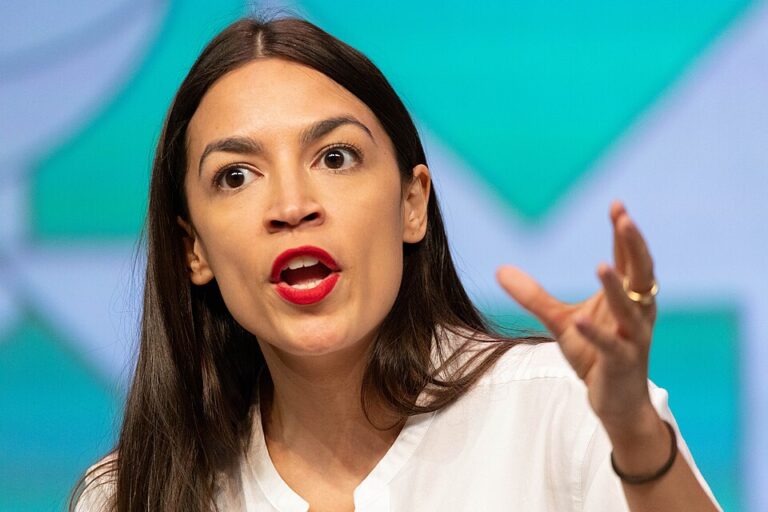
Former Navy SEAL Sen. Tim Sheehy Turns Iran War Vote Into Emotional Senate Showdown
The Senate floor is usually built for procedure, polished talking points and the occasional dramatic pause. Sen. Tim Sheehy brought something far more personal: a bracelet bearing the name of a fallen friend.
The Montana Republican and former Navy SEAL delivered an emotional defense of continued U.S. military operations against Iran on July 23. His remarks came as senators considered a resolution that would have required President Donald Trump to end hostilities not explicitly authorized by Congress.
Sheehy’s speech was raw, graphic and unmistakably shaped by his military service. It also contained several historical claims that require context, especially as Congress wrestles with the human cost, legal authority and uncertain endgame of the conflict.
A bracelet changed the temperature in the chamber

Sheehy opened by discussing the dignified transfer of four U.S. soldiers at Dover Air Force Base one day earlier. Trump, senior military officials and the service members’ families watched as flag-draped transfer cases were carried from an aircraft.
Before leaving for Dover, Trump said, “We’re going to honor them. For me it’s one of the hardest things to do as a president.”
For Sheehy, the moment was not an abstract exercise in national mourning. He told senators that he had personally participated in dignified transfers while serving and had carried friends from aircraft after they were killed overseas.
Pointing to his bracelet, Sheehy said it commemorated a friend killed by an Iranian-made explosively formed penetrator. Such devices were used by Iran-backed militias against American troops during the Iraq War, giving his argument a deeply personal edge.
Sheehy is a former SEAL officer who served combat deployments in Iraq and Afghanistan. His official biography lists the Bronze Star with Valor, Purple Heart and other military decorations among his awards.
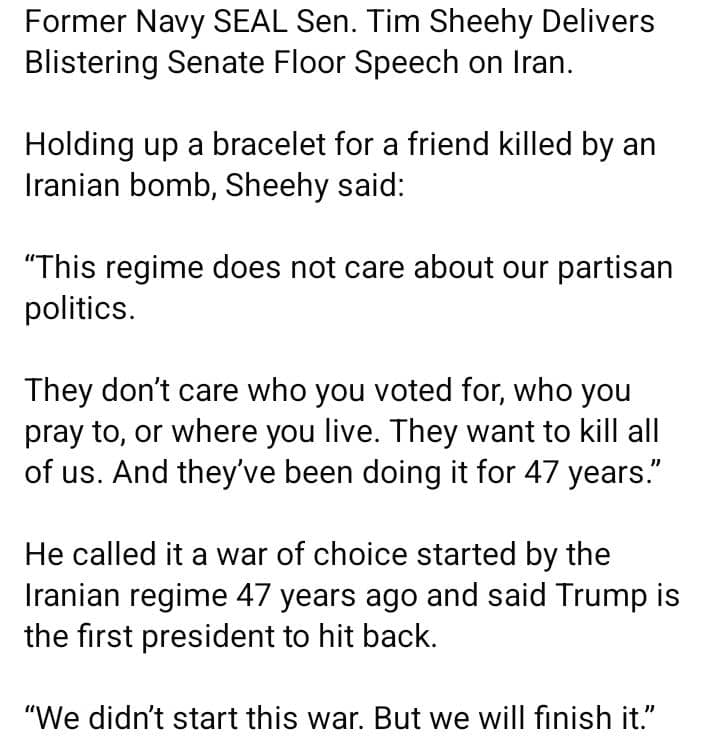
He then embraced a phrase normally used by opponents of the conflict. “This is a war of choice. The Democrats are correct,” Sheehy said, before arguing that Iran’s revolutionary government had made that choice through decades of attacks and support for armed groups.
Sheehy made a sweeping case, but the history needs precision
Sheehy’s central argument was that the confrontation did not begin with Trump’s Operation Epic Fury on February 28. In his telling, it began after Iran’s 1979 revolution and continued through attacks conducted by Tehran or groups receiving Iranian backing.
He cited the 1983 bombing of the U.S. Marine barracks in Beirut. That attack was carried out by Hezbollah, an organization backed by Iran, and killed 241 American military personnel, including 220 Marines. Sheehy incorrectly described the toll as 280 Marines.
He also mentioned the USS Cole bombing and the 1985 hijacking of the Achille Lauro. Those attacks belong to the broader history of Middle Eastern terrorism, but neither was carried out by Iran.
The FBI concluded that al-Qaeda planned and executed the USS Cole attack, which killed 17 American sailors in Yemen in 2000. The Achille Lauro was hijacked by members of the Palestine Liberation Front, who murdered American passenger Leon Klinghoffer.
Sheehy also invoked CIA officer William Buckley. The CIA says Islamic Jihad operatives kidnapped Buckley in Beirut in March 1984 and that he died after 14 months in captivity, on June 3, 1985. Its public account does not confirm the specific graphic description Sheehy gave during his speech.
Those distinctions matter. Iran has a well-documented record of supporting Hezbollah and other armed organizations, but combining every major regional terrorist attack into one Iranian chain can blur responsibility rather than clarify it.
Still, Sheehy’s broader message was unmistakable. He believes decades of restraint encouraged Tehran and that withdrawing now would leave another generation of Americans facing the same threat.
“We didn’t start this war. We did not, but we will finish it,” he declared.
The Senate rejected the resolution, but the argument is far from settled
The measure Sheehy opposed was S.J. Res. 180, introduced by Democratic Sen. Chris Van Hollen of Maryland. It stated that Congress had neither declared war on Iran nor approved a specific authorization for military force.
The resolution would have directed the president to remove U.S. forces from unauthorized hostilities. It also preserved the military’s ability to defend American personnel and facilities against attack, meaning it was not a blanket ban on self-defense.
Van Hollen urged senators to reassert Congress’s constitutional war-making authority. Senate Democratic leader Chuck Schumer argued that American troops had been placed in danger without a clear strategy for bringing them home.
“You cannot hide the wounded and call it peace,” Schumer said ahead of the vote.
The Senate ultimately rejected the effort to advance the resolution by a 49-47 vote. Sheehy voted against it, helping the Trump administration retain broad freedom to continue military operations.
The conflict has already carried a heavy price. Reuters reported shortly before the vote that 18 U.S. service members had died, more than 500 had been injured, and the war had cost American taxpayers at least $37.5 billion.
Since Sheehy’s speech, the battlefield has entered another uncertain pause. The United States halted its bombing campaign after 13 nights of strikes, while an Iranian official said Tehran would also hold fire as long as Washington did the same. U.S. officials described the pause as an opportunity for diplomacy, although both sides remained deeply skeptical.
That leaves Washington with two competing interpretations of the same war. Sheehy sees a long-delayed reckoning with a violent regime. His opponents see an unauthorized conflict with rising casualties, enormous costs and no clearly defined finish line.
His speech may not have resolved that argument, but it ensured nobody could pretend the debate was merely procedural. Behind every vote are deployed troops, grieving families and a question Congress still has not fully answered: who gets to decide when America goes to war?