7 Fruits That Can Be Frustrating to Cut and Prepare
Fruit seems like one of the easiest things to prepare in the kitchen. Pick one, grab a knife, make a few cuts, and you’re ready to eat. At least, that’s how it should work.
Then comes the pineapple with its stubborn little eyes, the mango with a pit that seems determined to block your knife, or the pomegranate that makes you work for every juicy seed.
Some fruits simply demand more effort than their appearance suggests. Between thick skins, awkward shapes, sticky interiors, and extra preparation steps, a simple snack can become a surprisingly involved kitchen project.
These seven fruits aren’t necessarily difficult to enjoy. Getting them ready to eat is where things get interesting.
Pineapple
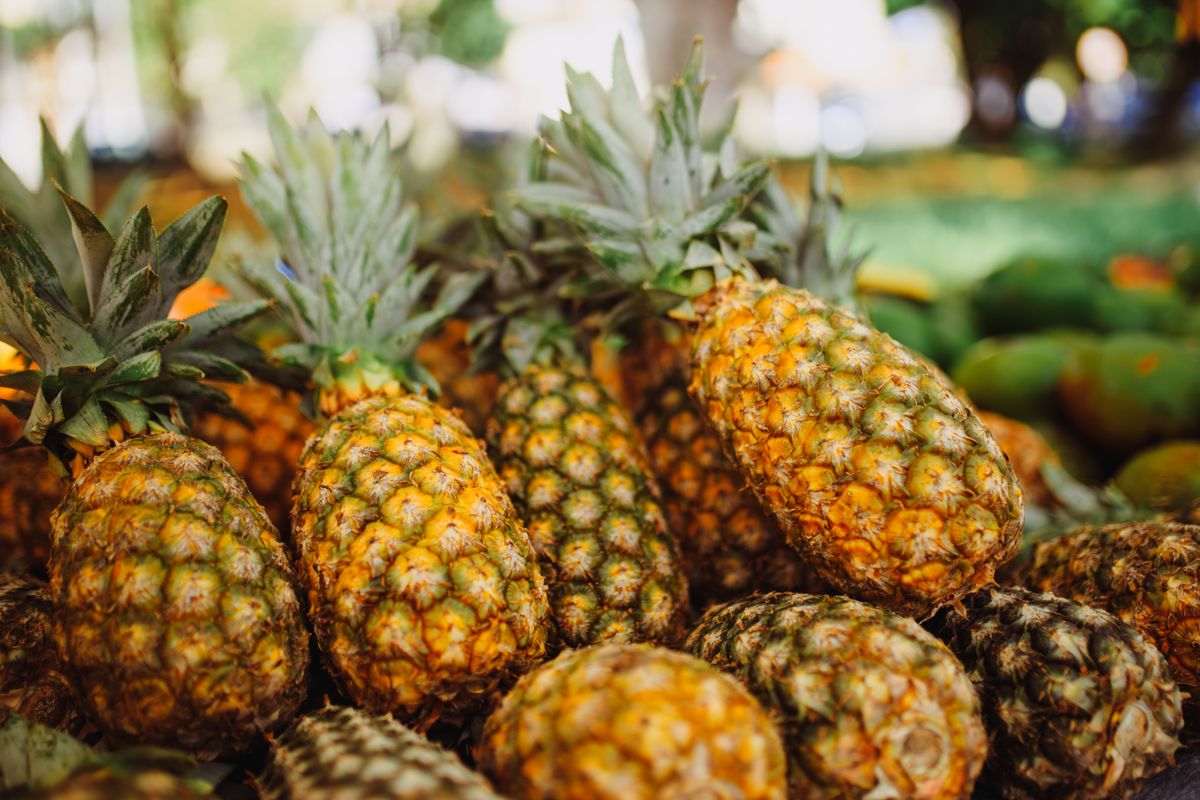
A pineapple can make you feel like you’ve finished preparing it, only to reveal another task waiting underneath.
The tough exterior is the obvious obstacle. First, you cut away the top and bottom, stand the pineapple upright, and carefully remove the skin. That should be enough, right?
Not quite. Those little brown eyes can remain embedded in the flesh, leaving you with another round of trimming. You can remove them individually or cut diagonal grooves along the fruit, creating that familiar spiral pattern.
And if you’re planning to serve pineapple chunks, there’s still the core to deal with. Quartering the fruit and trimming away the core adds another step before chopping.
By the time you’ve finished, peeling the pineapple may feel like the easiest part of the assignment.
Mango
A mango looks like it should split neatly into two halves. Unfortunately, the pit has other plans.
The hard pit occupies the center, exactly where you might expect your knife to travel. Instead of cutting straight through, you need to work around it.
The usual approach involves slicing down either side of the pit to create two fleshy sections known as cheeks. If your knife encounters the pit, move the cut farther from the center.
You can then score the flesh into a crisscross pattern without cutting through the skin. Turning the skin outward exposes the cubes. Another option is using the rim of a glass to separate the flesh from the skin.
It’s manageable once you understand the technique, but that central pit certainly complicates what looks like a straightforward slicing job.
Related: 7 Fruits and Juices That Can Help Support Energy Levels
Pomegranate
A pomegranate doesn’t exactly cooperate with the usual idea of cutting fruit into a few convenient pieces.
Instead, you’re faced with numerous juicy seeds tucked among sections of white pith. Getting those seeds out without cutting straight through them is the real challenge.
One approach involves scoring the skin into quarters without cutting into the seeds. The fruit can then be pulled apart in a bowl of water.
Here’s the helpful part: the white pith floats while the seeds sink, making separation easier. You can skim away the pith and drain the seeds afterward.
Another method involves tapping a halved pomegranate over a bowl with a wooden spoon.
Either way, preparing this fruit involves more separating than slicing. It’s a lot of individual pieces to collect when all you wanted was a bowl of fruit.
Watermelon
Watermelon brings an entirely different challenge to the cutting board: size and shape. Its rounded exterior can make it awkward to keep steady, especially when you’re trying to turn the whole thing into tidy cubes.
The first useful step is trimming the top and bottom to create flat surfaces. This helps stabilize the watermelon and gives you a better starting point for cutting.
From there, your approach depends on what you’re serving. For cubes, the rind can be removed by slicing along the curve of the fruit. The remaining flesh is then cut into slabs and smaller pieces.
Wedges involve a different process, with the stabilized melon being halved, quartered, and sliced.
Neither approach is particularly mysterious, but watermelon preparation can demand considerably more cutting-board space than you initially planned.
Mature Coconut
Most fruit preparation happens with a knife. A mature, brown-shell coconut may send you looking for a hammer. That’s because its hard exterior isn’t something you can simply peel away.
Before you even reach the flesh, there’s the matter of draining the coconut. One established method involves making a hole through one of its eyes to release the liquid.
Then comes the shell. A common approach is to wrap the drained coconut in a kitchen towel, place it on a solid surface, and strike around its middle with a hammer or mallet. Rotating the coconut as you work helps crack the shell. Fingers should stay clear of the striking area.
It’s a preparation process that feels noticeably different from slicing an apple or peeling a mango.
When opening your fruit involves equipment normally associated with household repairs, it’s fair to call the process a little inconvenient.
Related: 9 Fruits You Cannot Grow in Certain U.S. States
Jackfruit
Fresh, ripe jackfruit can turn fruit preparation into a much bigger undertaking than expected.
A whole jackfruit has a bulky exterior, but getting through that outer layer is only the beginning.
Inside are individual fruit bulbs surrounded by fibrous material. Each bulb contains a seed, meaning there’s plenty of separating to do before the fruit is ready.
The usual preparation involves cutting the fruit into manageable sections, removing the core, separating the bulbs from the surrounding fibers, and taking out the seeds.
Then there’s the sticky natural latex, which can cling to your hands and tools during preparation.
A light coating of cooking oil on your hands and knife is one commonly suggested way to reduce sticking. However, oil can also make the knife slippery, so extra care is needed.
With its multiple layers and individual pieces, jackfruit is certainly more involved than a quick peel-and-slice snack.
Prickly Pear
With a name like prickly pear, you might suspect this fruit has a little surprise waiting on the outside.
And you’d be right. Unlike fruits where the main challenge is a pit or thick rind, prickly pear can require extra attention before peeling even begins.
Commercially sold prickly pears often have their prickles removed, but that doesn’t mean every fruit is completely free of them.
New Mexico State University recommends using tongs when handling the fruit during preparation.
Once the spines have been safely removed, the process becomes more familiar. Cut off the ends, make a lengthwise slit through the skin, and peel the exterior away from the flesh.
If you’re preparing smooth juice or syrup, the pulp can also be mashed and strained to remove the seeds.
It’s an unusual case where simply handling the fruit can be part of the preparation challenge.
A Little Extra Effort Comes With the Territory
Not every fruit is designed for a quick slice and a place on the plate. Some require a little strategy, extra counter space, or several rounds of preparation before they’re ready.
That doesn’t make them poor choices. It simply means knowing what you’re getting into can make the process less annoying.
Sometimes, the biggest challenge isn’t deciding what fruit to eat. It’s figuring out how to get to the part you actually want.