George Zimmerman Said He Had No Income and $2.5 Million in Debt During 2018 Stalking Case
George Zimmerman, whose 2013 acquittal in the killing of 17-year-old Trayvon Martin became one of the most divisive criminal verdicts in modern America, returned to a Florida courtroom controversy five years later under very different circumstances.
In May 2018, Zimmerman told a Seminole County court that he had no income and was carrying roughly $2.5 million in debt while facing a misdemeanor stalking charge involving private investigator Dennis Warren. The financial disclosure is not a new 2026 development, despite the story resurfacing on social media. It came from court proceedings eight years earlier.
According to Associated Press reporting at the time, Zimmerman sought court-appointed representation while detailing his financial condition. A public defender subsequently entered a not-guilty plea on his behalf and requested a jury trial.
The case grew out of Warren’s work connected to “Rest in Power: The Trayvon Martin Story,” a documentary series produced by Jay-Z and others. Warren had contacted Zimmerman in 2017 while working on the project.
Investigators Said the Contact Became Intense
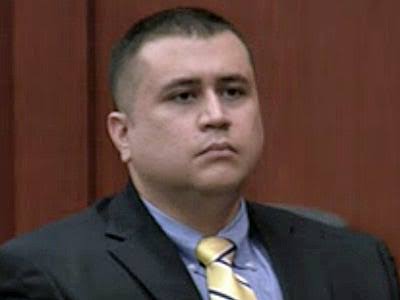
Court records and a probable-cause affidavit described a burst of communications that investigators characterized as threatening and harassing.
ABC News reported that Warren said he received 21 phone calls, 38 text messages and seven voicemails from Zimmerman during a two-hour period on December 16, 2017. Authorities said the contacts continued over several days. From December 16 through December 25, the affidavit alleged totals of 55 calls, 36 voicemails, 67 texts and 27 emails.
Zimmerman was accused of reacting angrily after people connected to the documentary contacted members of his family. Warren told investigators that he had initially made limited contact with Zimmerman about the production before the communication allegedly escalated.
At that stage, however, the accusations remained allegations. Zimmerman had not been convicted simply because a criminal charge had been filed, and his public defender initially entered a not-guilty plea.
There was also a separate effort by Warren to obtain a restraining order. A Seminole County judge denied that request in May 2018. The decision on the restraining order did not end the separate criminal stalking case.
The criminal case ultimately did not go before a jury. In October 2018, Zimmerman’s attorney entered a no-contest plea to resolve the misdemeanor stalking charge. A Florida judge placed Zimmerman on probation for one year and ordered him to have no contact with Warren and Warren’s wife for 10 years. Under the arrangement, adjudication was to be withheld if Zimmerman met the conditions of the plea.
The Trayvon Martin Case Still Shapes How Zimmerman Is Viewed
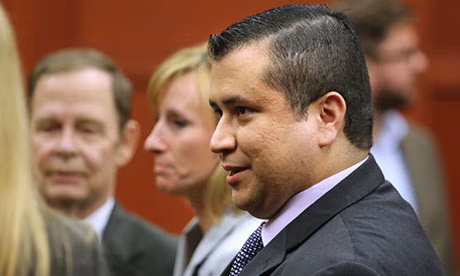
Any story involving Zimmerman inevitably returns to February 26, 2012, when he fatally shot Trayvon Martin in Sanford, Florida. Martin was 17 and unarmed. Zimmerman, then a neighborhood watch volunteer, maintained that he acted in self-defense.
Florida prosecutors charged Zimmerman with second-degree murder. Jurors were also allowed to consider the lesser offense of manslaughter. On July 13, 2013, a six-person jury found Zimmerman not guilty.
The verdict produced demonstrations and intensified national arguments about race, self-defense, neighborhood policing and the criminal justice system. It also directly helped inspire the phrase and hashtag Black Lives Matter. Alicia Garza, Patrisse Cullors and Opal Tometi developed #BlackLivesMatter following Zimmerman’s acquittal, while the broader movement gained far greater national recognition during protests after Michael Brown’s death in Ferguson, Missouri, in 2014.
The federal government separately examined whether Zimmerman could be prosecuted under federal civil-rights law. On February 24, 2015, the Justice Department announced that investigators had found insufficient evidence to meet the demanding legal standard required to pursue federal criminal civil-rights charges.
What People Still Get Wrong About the Case
One of the biggest mistakes in modern retellings is collapsing several different legal questions into one.
Zimmerman’s acquittal did not mean a jury determined that every choice he made that night was wise, harmless or beyond criticism. A criminal acquittal means the prosecution failed to establish the charged offense beyond a reasonable doubt under the evidence and law considered by the jury.
At the same time, describing Zimmerman as legally convicted of murdering Martin would contradict the actual court record. He was acquitted of the state criminal charges, and the Justice Department later declined federal prosecution after concluding that the evidence could not satisfy federal criminal civil-rights standards.
Another mistake is treating every later allegation involving Zimmerman as though it somehow changed the Martin verdict. The 2018 stalking case was separate. It involved different conduct, a different complainant and an entirely different legal proceeding.
What the later case demonstrated was that Zimmerman remained a public and legal flashpoint years after the trial that made him nationally known. His 2018 declaration that he had no income and approximately $2.5 million in debt added another unexpected chapter to that history.
The most accurate way to discuss the Zimmerman-Martin case today is to hold two facts separately: the 2013 acquittal remains the legal outcome of the criminal case, while the national debate about race, self-defense and justice that surrounded Martin’s death has continued long after the courtroom emptied.