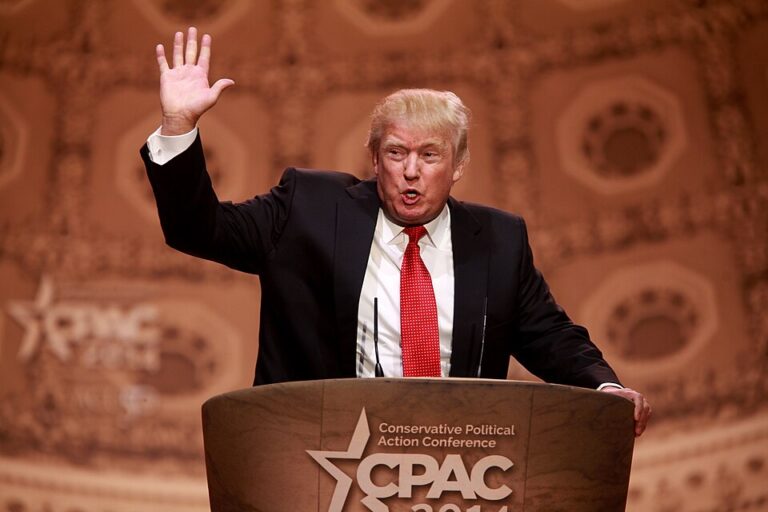
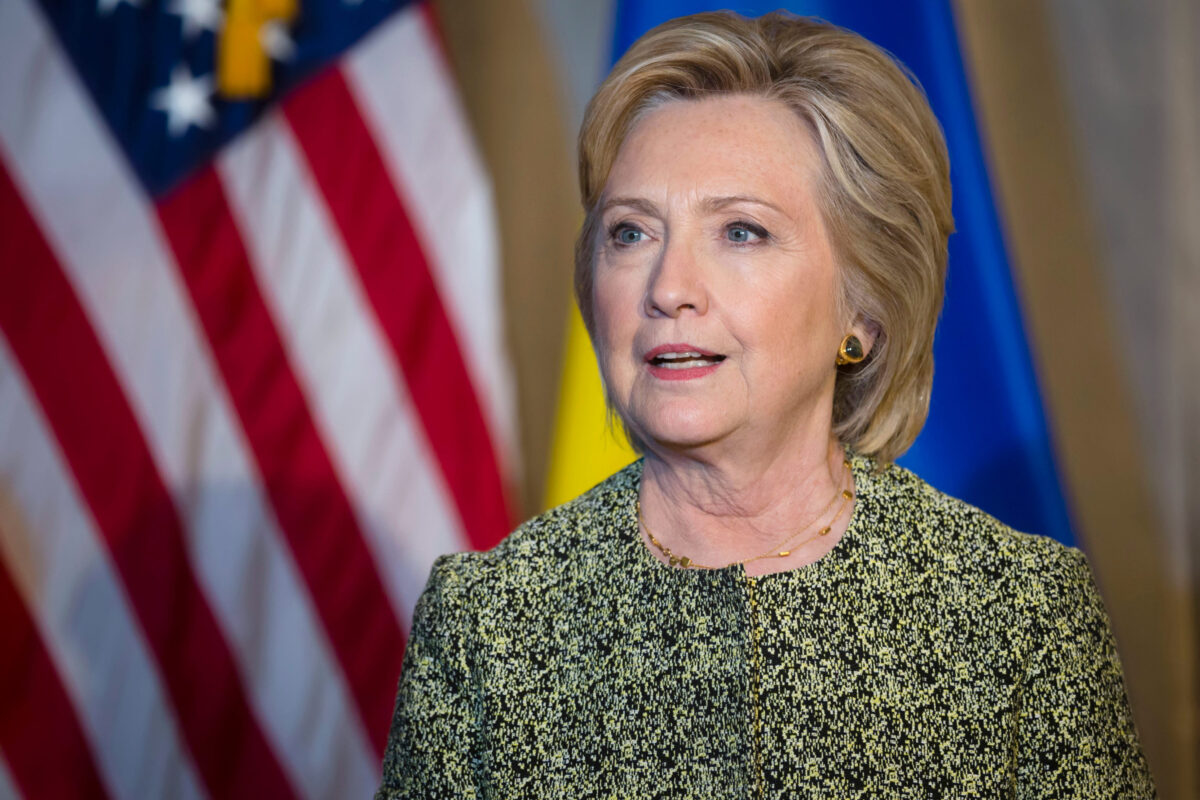
Hillary Clinton says Trump can’t “clean a pool” or run a “real 250th party,” arguing it reflects not just incompetence but also “corruption.”
Hillary Clinton has never needed many words to reopen an old political wound. This time, her target was not a campaign rally, a courtroom battle, or a policy speech. It was a green pool, a troubled national birthday celebration, and a pointed accusation that President Donald Trump’s latest controversies reveal something deeper than bad management.
Clinton’s criticism landed as the Lincoln Memorial Reflecting Pool and America’s 250th anniversary planning became unlikely flashpoints in the wider fight over Trump’s second-term use of public power. Her message was blunt: Trump cannot “clean a pool” or throw a “real 250th party,” and the problem, she argued, is not merely incompetence but corruption. That framing matters because it connects two stories that might otherwise seem separate: a botched renovation at one of the country’s most symbolic landmarks and a growing fight over who gets to shape the nation’s semiquincentennial celebration.
The Pool That Became a Political Symbol
The Lincoln Memorial Reflecting Pool is not just water between two monuments. It is one of the most photographed civic spaces in the United States, a place tied to memory, protest, mourning, and national identity. When Americans picture the National Mall, they often picture the Washington Monument mirrored across that long stretch of water.
That is why the controversy around the pool has cut so sharply. A renovation promoted by Trump ahead of the July 4, 2026, anniversary was meant to freshen the site and give it a bold patriotic look. Instead, the pool quickly became a national punchline after algae returned, coating problems appeared, and the administration blamed vandalism for at least some of the damage. The project has drawn scrutiny because the renovation cost reportedly exceeded $14 million, yet the pool still exhibited visible problems soon after completion.
The visual contrast was brutal. A project sold as patriotic renewal produced images of murky green water at one of America’s most solemn spaces. For Clinton and other critics, that image became a metaphor for Trump’s governing style: loud promises, costly execution, and a scramble for blame when the result does not match the branding.
Why Clinton’s “Corruption” Claim Hit Hard
Clinton’s attack did not stop at mockery. The sharper part was her claim that corruption, not just incompetence, explains the mess. That is politically explosive because it moves the discussion from aesthetics to accountability.
The pool renovation has faced questions because contracts connected to the work were reportedly awarded without competitive bidding. One company involved in the work had prior links to Trump properties, while another water-cleaning contract went to a company owned by a Trump donor. Those details gave Clinton’s criticism more force than a standard partisan jab.
No-bid contracts are not automatically illegal. Governments sometimes use them for urgent or specialized work. But when a highly visible public project goes to politically connected entities and then fails in front of the entire country, the optics become damaging. Clinton’s argument is powerful because it asks a simple question many Americans understand without reading a procurement memo: if taxpayers are paying millions, why does the result look like this?
America’s 250th Birthday Becomes a Fight Over Power.
The pool controversy feeds into a larger battle over America’s 250th birthday. The official national commemoration was supposed to mark the signing of the Declaration of Independence and invite Americans into a broad reflection on the country’s past, present, and future. The U.S. Semiquincentennial Commission was established by Congress in 2016 to help lead that national observance.
Trump later created a White House task force for the anniversary through an executive order, calling for a “grand celebration” of American independence on July 4, 2026. That move gave the administration a major role in shaping the anniversary’s tone, programming, and public image.
The conflict is not simply about fireworks or festivals. It is about who gets to narrate America at 250. One vision treats the anniversary as a shared civic milestone. Another turns it into a stage for political branding, ideological messaging, and loyalty-driven spectacle. Clinton’s criticism hits that divide directly.
Freedom 250 and the Money Trail
A major part of the controversy centers on Freedom 250, the Trump-aligned anniversary operation that has drawn criticism from watchdog groups and Democratic lawmakers. Public Citizen and the Revolving Door Project said the Trump administration directed nearly $103 million in federal contracts and grants toward a network tied to Freedom 250 events and entities, representing roughly 80 percent of the federal awards reviewed in their report.
That is the kind of figure that changes the story. A troubled party can be dismissed as the result of poor planning. A taxpayer-funded celebration flowing through politically connected channels raises a different concern. It invites questions about favoritism, transparency, donor access, and whether a national commemoration is being used to reward allies.
The 250th anniversary should have been one of the easiest civic moments to unify around. Instead, it has become another stress test for public trust. If Americans believe the birthday celebration is being used as a political marketplace, the event loses the moral weight it was supposed to carry.
A National Celebration With Partisan Shadows
Trump’s anniversary plans have leaned heavily into spectacle. The administration’s vision has included major public events, patriotic displays, entertainment programming, and branded experiences meant to project strength and grandeur. Supporters see that as exactly what the country needs: a confident celebration of American power at a historic milestone.
Critics see something else. They argue that the celebration has become too centered on Trump, too partisan in tone, and too eager to convert history into political theater. Recent reporting has described tension between the official America250 framework and the more Trump-aligned Freedom 250 effort, with concerns over funding, donor influence, and ideological messaging.
That is why Clinton’s wording matters. She did not merely say Trump was throwing a bad party. She suggested the party itself reveals a governing pattern. In her framing, the failed pool and the troubled birthday celebration are not accidents. They are symptoms.
The Real Risk Is Public Cynicism
The most serious damage may not come from algae, peeling coating, canceled performances, or embarrassing headlines. The more serious damage comes when Americans begin to assume that every public project is just another opportunity for insiders to profit.
Public cynicism is dangerous because it makes corruption feel normal. If people expect public money to flow toward friends, donors, and loyalists, outrage turns into resignation. A national anniversary should fight that cynicism by reminding citizens that some things still belong to everyone. Instead, this controversy risks doing the opposite.
The Lincoln Memorial Reflecting Pool carries extra symbolic weight because of its location. It is linked to Abraham Lincoln, the March on Washington, and Martin Luther King Jr.’s “I Have a Dream” speech. When that space becomes a story about no-bid contracts, algae, and political blame, the country is not just debating maintenance. It is about respecting public memory.
Why This Fight Is Bigger Than Clinton and Trump
It would be easy to reduce the whole story to another chapter in the Clinton-Trump rivalry. That would be a mistake. Their political history makes the exchange louder, but the underlying issue is bigger than both of them.
The real question is whether major national projects can still be handled with seriousness, transparency, and broad public purpose. America’s 250th birthday should not feel like a private brand activation. It should not feel like a donor opportunity. It should not feel like a loyalty test. It should feel like a national moment large enough to include people who disagree.
That is the standard Clinton is using against Trump. Whether voters accept her argument may depend on how much they already trust or distrust the president. But the facts surrounding the pool renovation and anniversary funding have given critics a strong opening.
Trump’s 250th Problem Is Now a Trust Problem.
Trump has always understood spectacle. He knows how to turn buildings, rallies, slogans, and ceremonies into political symbols. But spectacle has a weakness: it has to look convincing. When the image cracks, the whole performance suffers.
The green Reflecting Pool became a devastating image because it contradicted the promise. The 250th-anniversary controversy proved damaging because it turned a shared national milestone into a fight over money and influence. Clinton’s attack worked because it fused those two problems into one simple charge: this is not just mismanagement; this is corruption hiding inside patriotic theater.
America’s 250th birthday should invite the country to look honestly at its founding ideals and unfinished promises. Instead, it has become a test of whether public celebration can survive private ambition. If the nation’s most symbolic pool cannot be cleaned without controversy, and its biggest birthday cannot be planned without suspicion, Americans may ask an even harder question: who is the celebration really for?