Former SpaceX Welder Juan Hernandez Turns Stock Grant Into $1 Million After Historic IPO
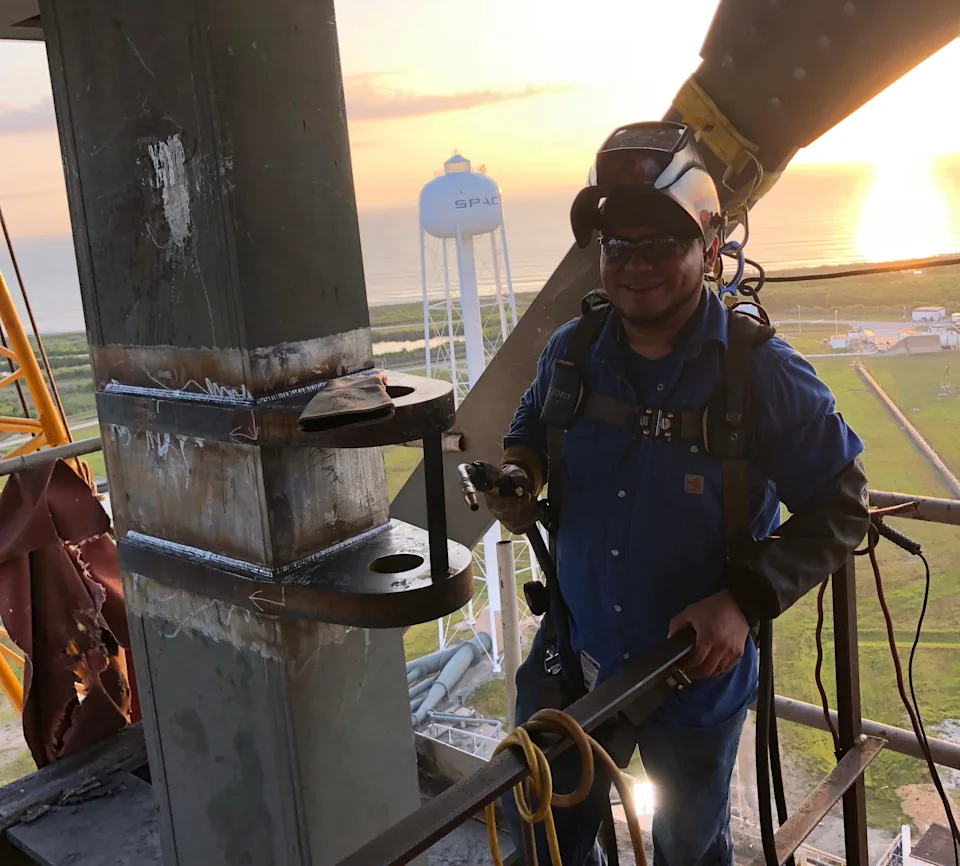
Juan Hernandez did not enter SpaceX as a Wall Street insider, venture capitalist, or Silicon Valley founder. He entered as a welder, taking what first looked like another skilled-trade job, and then spent a decade helping build the physical systems that supported one of the most ambitious rocket companies in the world.
Now, after SpaceX’s historic public debut, Hernandez has become one of the clearest human faces of the company’s massive IPO moment. His roughly 6,500 shares were valued at more than $1 million after SpaceX stock closed its first day of trading at $160.95, turning a once-modest employee stock package into life-changing wealth.
For many investors, the SpaceX IPO is a market story. For Hernandez, it is a work story, an immigrant story, and a reminder that company stock can quietly become one of the most powerful benefits a worker ever receives.
SpaceX IPO Turns Employee Stock Into Real Wealth
SpaceX’s public listing was not just another market debut. The company’s offering was reported as a $75 billion IPO, placing it among the largest public offerings ever and giving the rocket and satellite business a valuation that immediately pushed it into the top ranks of publicly traded companies.
That scale matters because it changed the meaning of stock awards held by employees and former employees. A share package that once looked abstract on paper suddenly had a public market price. For Hernandez, that meant a holding of about 6,500 shares became worth $1,046,175 at the closing price cited after the first day of trading.
We often talk about IPOs through bankers, founders, and institutional investors, but the Hernandez story gives the SpaceX debut a sharper human frame. It shows how equity compensation can move beyond executive suites and reach workers whose hands helped build the company’s core infrastructure.
Juan Hernandez Took a Job Before He Knew What SpaceX Could Become
Before joining SpaceX in 2015, Hernandez reportedly knew little about the company. He heard about the opportunity through a friend who had been hired as a welder and thought Hernandez’s background made him a strong fit.
That detail is important because it strips the story of hindsight. Hernandez was not trying to predict the future of commercial space, satellite internet, or public market appetite for Elon Musk’s aerospace empire. He was taking a job that matched his skills.
The decision became more valuable over time because SpaceX was building toward something much larger than a standard manufacturing operation. Its rockets, launch systems, Starlink network, and defense-related work helped create the kind of growth story public investors were eager to buy when shares finally reached the Nasdaq under the ticker SPCX.
The $10,000 Stock Grant That Changed Everything.
When Hernandez was hired, he said SpaceX offered him stock worth about $10,000. At the time, the stock did not feel like a major reward because he had come from hourly jobs where paychecks were simple, direct, and immediate.
That is the quiet power of early employee equity. It often looks small when granted, especially to workers who are not used to being paid partly in equity. Years later, if the company grows, that same grant can become a financial asset far larger than the worker expected.
Hernandez’s story is now being discussed because the stock did what equity is supposed to do at its best. It connected a worker’s long-term effort to a company’s long-term success. He did not simply collect wages for a decade of work. He also carried a stake in the business that benefited when the market finally gave SpaceX a public price.
A Welder’s Role Inside a Rocket Company
Hernandez’s job was not symbolic. During his time at SpaceX, he worked on structures and infrastructure tied to rocket launches, including the systems that supported rockets before liftoff. He later rose to a supervisor role.
That detail gives the story its weight. SpaceX’s IPO did not come from software alone, branding alone, or investor excitement alone. It came from years of engineering, manufacturing, launch operations, welding, testing, and repeated execution under pressure.
A rocket company depends on precision at every level. The people who fabricate, assemble, inspect, and support launch hardware are not background figures. They are part of the chain that allows a company to turn a mission plan into a physical launch.
SpaceX’s Wall Street Debut Was Bigger Than a Typical IPO

SpaceX’s IPO drew attention for its size, valuation, and unusual approach to public markets. Reuters reported that SpaceX set a $135 IPO price ahead of the offering, aimed to raise $75 billion, and planned to begin trading on Nasdaq the next day.
Those numbers placed SpaceX in rare territory. A $75 billion offering is not just large. It is the kind of market event that forces investors to rethink how large private technology and aerospace companies can become before going public.
The public debut also arrived with intense attention from retail investors. Reuters reported that individual investors competed for access to the offering, while SpaceX and its underwriters had planned to set aside a large share of the IPO for retail buyers.
Why Hernandez Still Plans to Keep Working
One of the most striking parts of the story is that Hernandez is not presenting the IPO as an exit from work. CBS reported that he now works at Blue Origin, the rocket company owned by Jeff Bezos, and still plans to keep working after the SpaceX stock windfall.
That choice gives the story a grounded tone. Becoming a millionaire on paper does not automatically erase identity, ambition, discipline, or family responsibility. Hernandez has described his work ethic as part of how he was raised, and the sudden rise in the value of his shares does not appear to have changed that.
This is also a reminder that stock wealth is different from cash wages. A worker may be a millionaire based on share value, but that wealth can fluctuate with the stock price. Taxes, selling decisions, lockup rules, family planning, and long-term investment strategy all matter