Chicago Tops America’s Bed Bug List for the 6th Straight Year
Chicago has been named America’s worst city for bed bugs for the sixth consecutive year, while Los Angeles climbed to No. 2 and two U.S. cities jumped 10 places in the latest national ranking.
Chicago has claimed an unwanted No. 1 title for the 6th year in a row, leading Orkin’s 2026 list of U.S. metropolitan areas with the highest number of residential and commercial bed bug treatments.
The ranking arrives as Chicago’s tourism economy is booming. The city welcomed 56.8 million visitors in 2025, nearly 1.5 million more than the previous year, generating a record $21.5 billion in visitor spending and supporting more than 135,000 jobs.
Those numbers do not prove that visitors caused Chicago’s bed bug problem. They show why awareness matters in a city where millions of suitcases, hotel rooms, apartments and transit routes are constantly in motion.
Orkin based its 2026 ranking on 12 months running from May 12, 2025, through May 12, 2026. The company counted treatments across 50 metropolitan areas.
Chicago Leads a Midwest-Heavy Top 10
Chicago finished ahead of Los Angeles, Detroit, Cleveland and Indianapolis, giving the Midwest 4 of the top 5 positions.
The full top 10 includes Chicago, Los Angeles, Detroit, Cleveland, Indianapolis, Springfield, Washington, D.C., Columbus, Pittsburgh and Grand Rapids, in that order.
Seven of those 10 cities sit in Illinois, Michigan, Ohio, Indiana or nearby Pennsylvania, creating a clear corridor of heavy treatment activity across the Midwest and Great Lakes.
Los Angeles rose 2 places from No. 4 in 2025 to No. 2 in 2026. Cleveland fell 2 spots to fourth, while Detroit and Indianapolis held steady at Nos. 3 and 5.
Springfield climbed 3 positions to No. 6, and Pittsburgh gained 3 spots to enter the top 10 at No. 9.
Two Cities Jumped 10 Places
Oklahoma City surged 10 places to No. 24, while Nashville also climbed 10 positions to No. 34. Hartford and Seattle each advanced 9 spots, and San Diego gained 8 to reach No. 41.
Several cities moved sharply in the opposite direction. Knoxville fell 11 places to No. 40, Youngstown and Omaha each dropped 10 spots, and Norfolk and Minneapolis declined 8 positions.
A 10-place move does not mean a city’s bed bug population changed by a known percentage. It means Orkin completed more or fewer treatments there relative to the other 49 ranked markets.
Three New Cities Enter the Top 50
The 2026 list added 3 newcomers: Tampa at No. 46, Kansas City at No. 49 and Myrtle Beach at No. 50.
Their arrival shows why travelers should inspect accommodations in every region.
Ohio had more ranked cities than any other state, placing 6 metropolitan areas in the top 50. Cleveland ranked No. 4, Columbus No. 8, Cincinnati No. 15, Youngstown No. 32, Dayton No. 38 and Toledo No. 42.
What the No. 1 Ranking Really Measures
The phrase “worst bed bug city” sounds like a government count, but the 2026 list measures something narrower: treatments performed by 1 pest-control company.
Orkin does not publish the exact treatment total for each of the 50 cities. Population, customer demand, housing density, awareness and access to professional pest control can all affect placement.
The ranking does not mean every Chicago hotel or neighborhood has bed bugs. Still, holding No. 1 for 6 consecutive years suggests that treatment demand remains consistently high across the metropolitan area.
One Bed Bug Can Travel Home in a Suitcase
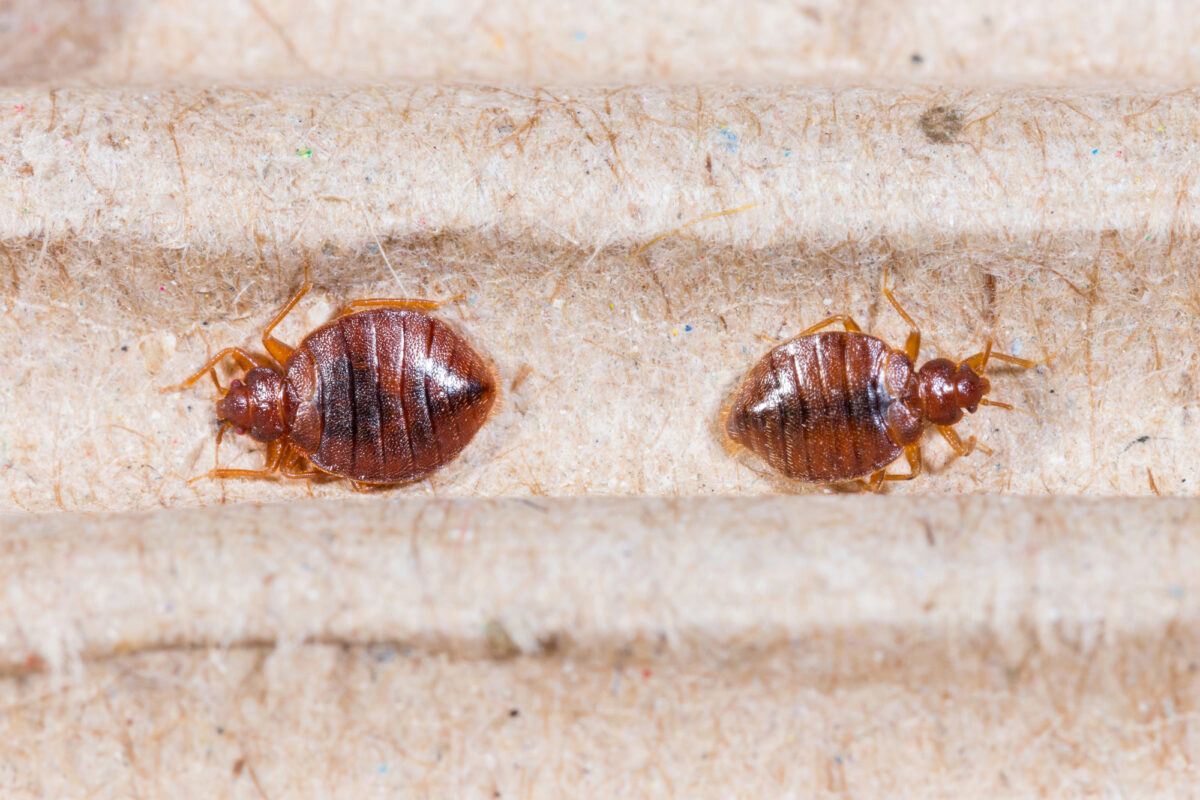
Adult bed bugs are roughly 3/16 of an inch long, while the Centers for Disease Control and Prevention says they can range from about 1 to 7 millimeters.
Their flat bodies allow them to hide in mattress seams, headboards, furniture joints, folded clothing and luggage. Bed bugs do not fly. They spread largely by hitchhiking with people.
A bed bug can travel more than 100 feet in 1 night, although the CDC says the insects usually remain within about 8 feet of where people sleep.
That makes mattresses, box springs, headboards and nearby furniture the first 4 areas travelers should inspect after entering a room.
Even a 5-Star Hotel Can Have Bed Bugs.
Bed bugs are not proof that a room is dirty. The CDC says they can appear in 5-star hotels and resorts, and cleanliness alone cannot prevent an introduction.
A spotless room can receive its first bed bug from 1 suitcase. Expensive décor, premium rates and high guest scores offer no guaranteed protection.
Bed bugs are not known to spread disease, but their bites can cause itching, anxiety and sleeplessness. Marks may take up to 14 days to appear, meaning travelers can return home before noticing a problem.
Four common warning signs are live bugs, rusty or dark spots on bedding, shed skins and a sweet, musty odor.
The 5-Step Hotel Check Travelers Should Use
Orkin recommends the 5-step S.L.E.E.P. method before unpacking in a hotel or short-term rental.
Search the room, lift sheets and cushions, elevate luggage on an inspected rack, examine bags before leaving, and place dryer-safe clothing in a high-heat dryer for 30 to 45 minutes after returning home.
The EPA also recommends keeping luggage off beds and floors because sustained high heat, not washing alone, is what kills bugs hidden in fabric.
Chicago’s Ranking Is a Warning, Not a Travel Ban

Chicago’s 6-year streak should encourage caution, not panic. The city’s 56.8 million annual visitors do not need to abandon their plans because of 1 commercial ranking.
A 5-minute inspection, keeping luggage away from the bed, and using 30 to 45 minutes of high-heat drying after a trip can reduce the chance of bringing an unwanted passenger home.
With 50 cities ranked, 3 new entries, and several metropolitan areas moving between 8 and 10 places, bed bugs remain a mobile national problem capable of traveling wherever people do.