Homemade Stuffing Turns Out Better When You Do This to the Bread a Day Early
Every family has a stuffing story. Maybe it was the year it came out of the oven as a soggy, gluey mess, or the time it was so dry nobody could swallow it without a river of gravy. For a dish made mostly of bread and broth, stuffing can be surprisingly tricky to get right.
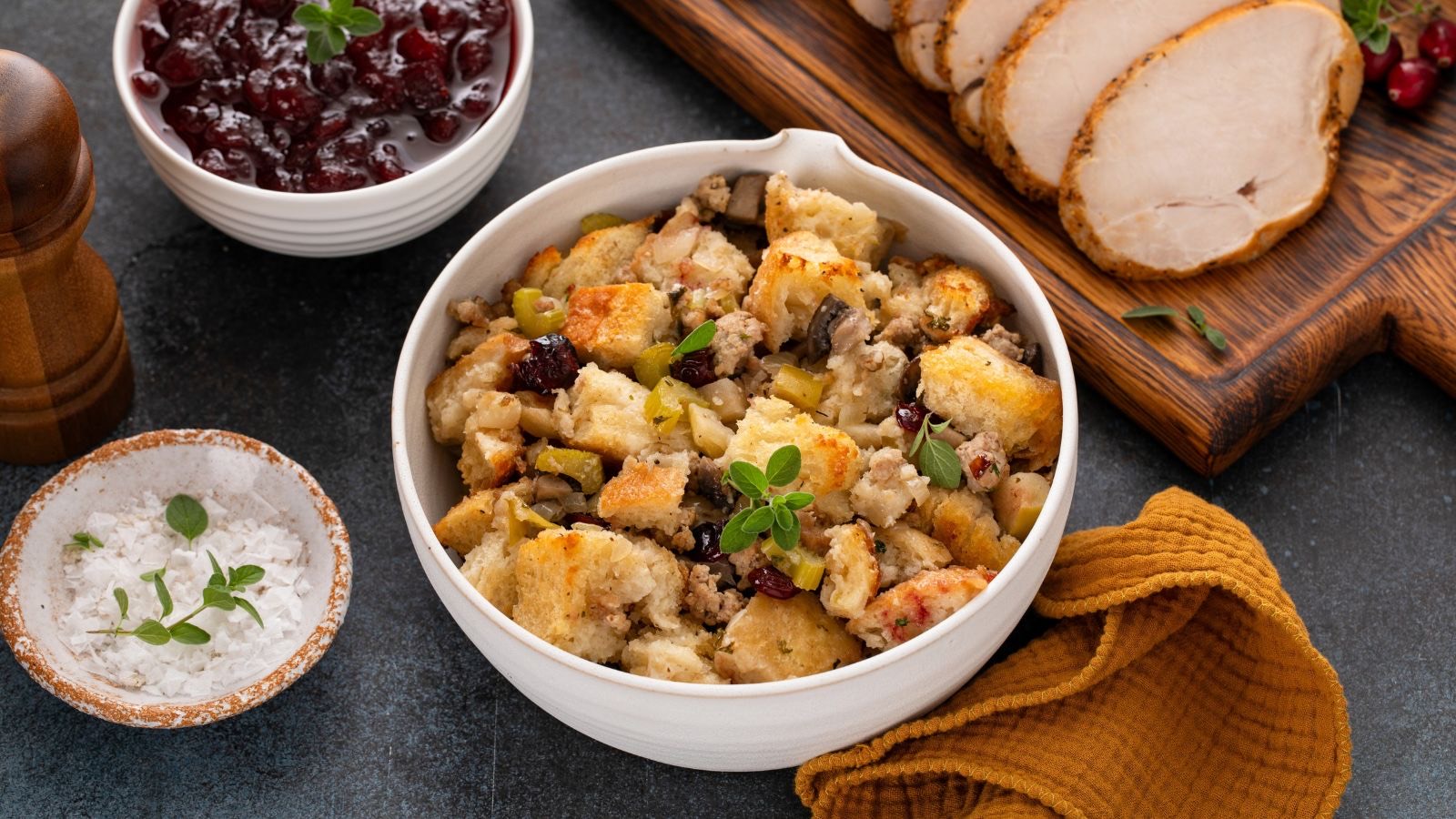
Grandma rarely seemed to have that problem. Her stuffing came out with crisp, golden edges on top and a moist, tender middle that held together on the fork. Plenty of home cooks have tried to copy it and ended up with something closer to bread pudding.
The secret wasn’t a special recipe or a fancy loaf. It was something Grandma did a day or two before Thanksgiving, often without thinking twice about it. She cut her bread into cubes and let them dry out. That simple step changes everything about how stuffing turns out, and food scientists have since explained exactly why it works.
Why Fresh Bread Turns to Mush
Fresh bread is soft and full of moisture. That’s great for sandwiches, but it’s a problem in stuffing. When you pour warm broth over fresh bread, the bread is already holding so much water that it can’t soak up much more. Instead, the bread collapses and turns into a dense, pasty mass.
That’s the soggy stuffing so many families have suffered through. The broth has nowhere to go, so it pools at the bottom of the dish, and the bread loses all its structure. No amount of extra baking time fixes it, because the problem started before the dish ever went into the oven.
Dry Bread Works Like a Sponge
Dry bread behaves completely differently. Once most of the moisture has been removed, each cube becomes like a little sponge. It soaks up broth, butter and all the flavors of onions, celery and herbs, but it still holds its shape.
The result is stuffing with texture. The cubes stay distinct, the inside is moist and flavorful and the top turns golden and crunchy in the oven. That contrast between the soft middle and the crispy top is exactly what people love about a great homemade stuffing.
Stale Is Not the Same as Dry
Here’s where many cooks get confused. A lot of recipes say to use “stale bread,” and people assume that means any bread that has been sitting around for a few days. But stale bread and dried bread are not the same thing.
America’s Test Kitchen explains that bread goes stale mainly because the starches inside it change and firm up, not because it loses much water. A loaf that feels hard and stale can still be holding plenty of moisture. In a side-by-side test, the test kitchen found that oven-dried bread soaked up liquid much better than stale bread, which left more liquid behind.
The Day-Early Trick
So what should you do a day early? Cut your bread into cubes and spread them out in a single layer to dry. Cubing the bread exposes much more surface area to the air, which allows moisture to escape far faster than it would from a whole loaf sitting in a bag.
The simplest method is to cut the bread into roughly one-inch cubes the day before you plan to make stuffing, spread them out on a couple of baking sheets and leave them uncovered on the counter overnight. By the next day, the outsides will feel dry and firm. If you live in a humid climate, you may need a little more time.
The Faster Oven Method
If you forgot to plan ahead, you can still get the same results in the oven. Spread the bread cubes on baking sheets and bake them at a low temperature, around 250 to 300 degrees, until they’re dry and crisp but not browned. This usually takes 30 to 50 minutes, depending on the bread and the size of the cubes.
Stir the cubes once or twice so they dry evenly. Let them cool completely before using them. Many cooks actually prefer this method even when they have plenty of time, because it gives more predictable results than leaving bread out overnight.
Which Bread Works Best
Almost any sturdy bread works for stuffing. A good-quality white sandwich bread, a French loaf, sourdough or Italian bread all make great stuffing. Cornbread is the classic choice for Southern dressing, and it benefits from the same drying step. Some families use a mix of breads for extra flavor.
Avoid very soft, sweet breads, which can turn mushy even when dried. If you love a little extra flavor, try adding some cubes of sourdough for tang or a bit of rye for an old-fashioned taste. A rustic bread with a chewy crust holds up especially well.
A Few More Tips for Better Stuffing
Drying the bread is the biggest step, but a few other habits help too. Add your broth gradually rather than all at once, and stop when the bread is moist but not swimming. Sautéing your onions and celery in plenty of butter first adds a lot of flavor.
Baking stuffing in a separate dish instead of inside the turkey also helps it get those crispy edges, and it’s the approach many cooks prefer for food safety. You’ll find this classic side on most tables in the country, with plenty of regional twists. Here’s a fun look at stuffing’s popularity across the states.
Why Grandma Knew This All Along
Grandmothers didn’t need food science to figure this out. For generations, frugal cooks saved the ends of loaves and leftover bread in a bag or a bread box, then dried them out for stuffing, bread pudding or breadcrumbs. Nothing went to waste, and the dried bread happened to make the best stuffing.
That habit of saving and drying bread was part of a whole kitchen philosophy. Many of the kitchen tips handed down over the years started out as ways to save money and turned out to make food taste better too.
Give It a Try This Year
If your stuffing has ever turned out soggy, this is the easiest fix you’ll find. Cube your bread and let it dry a day ahead, or toast it low and slow in the oven if you’re short on time. Your stuffing will hold its shape, soak up all that flavor and come out with the golden top everyone fights over.
Do you dry your bread before making stuffing, or do you use the boxed kind? And in your family, is it called stuffing or dressing?